
7 Key Factors to Evaluate When Searching for a Top Rated Dog Trainer Near Me
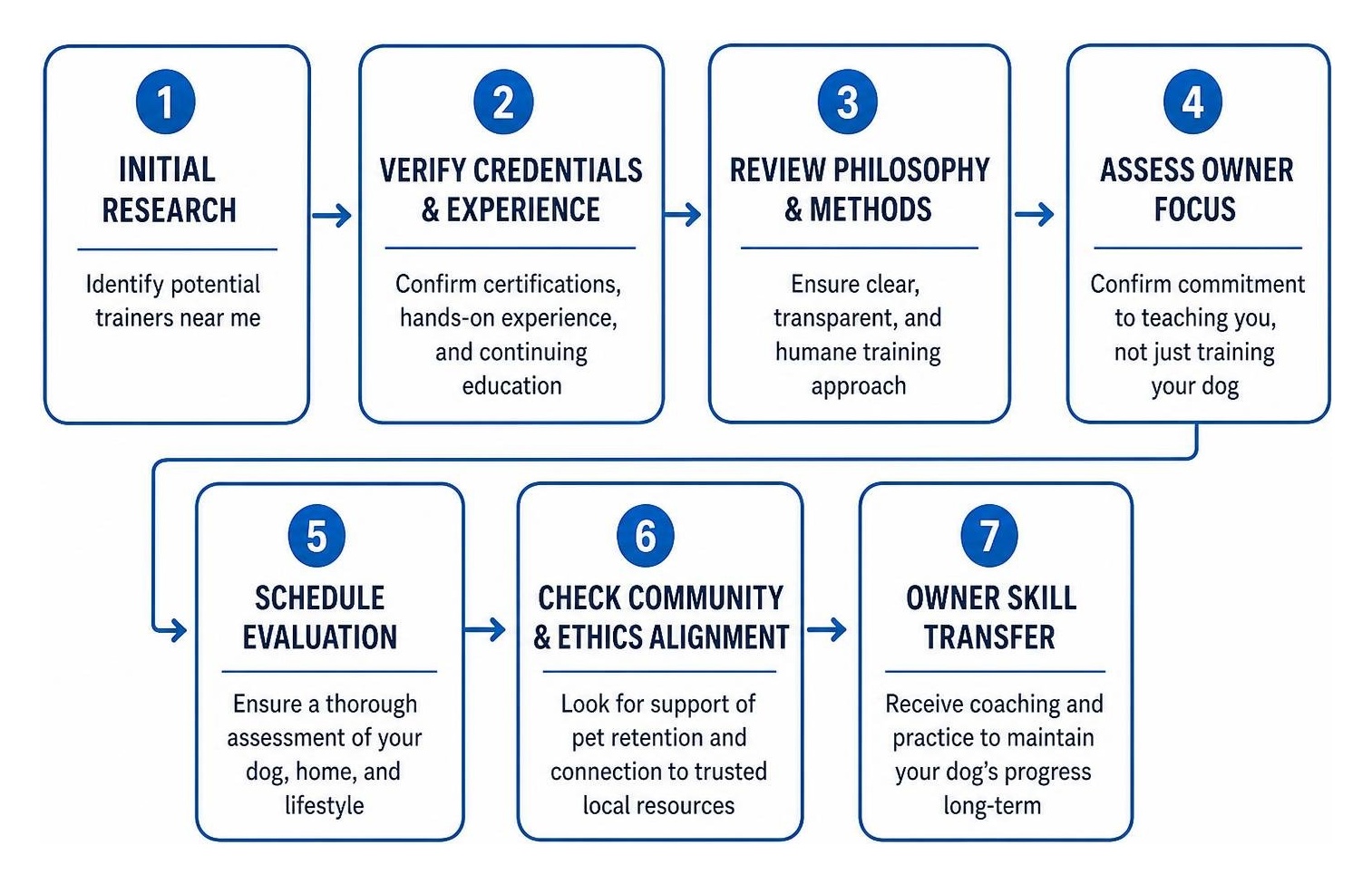
When evaluating a top rated dog trainer near me, look for a clear explanation of their training approach, documented hands-on experience, coaching for you as the owner, transparent use of tools and methods, a detailed assessment process, continuing education, and verified credentials. Because the dog training industry is largely unregulated in the United States, anyone can buy a set of slip leads, set up a social media profile, and claim to be a behavioral specialist. As dog owners across Seattle, West Seattle, Magnolia, and Madison Park quickly discover, selecting the wrong professional can cost valuable time, lead to unnecessary frustration, and make your dog's behavior challenges worse.
When comparing your options, evaluate these core pillars:
- Clear Training Approach: The trainer should clearly explain how they communicate with dogs. We believe in "Freedom Through Balanced Training," using structured guidance, positive reinforcement, and clear boundaries to help dogs navigate real-world environments safely.
- Documented Hands-On Experience: Book knowledge matters, but trainers also need plenty of hands-on experience with dogs of different personalities, motivations, and behavior challenges.
- Coaching for You: A trainer who can only get your dog to behave while holding the leash themselves has not solved your problem. Look for trainers who spend time teaching you how to guide your dog and maintain progress.
- Open Discussion of Tools and Methods: Trainers should openly explain the tools, rewards, and corrections they use, including why each technique suits your dog and how to use any tools safely and properly.
- Detailed Assessment Process: Look for professionals who evaluate your dog's temperament, home environment, and daily routine before recommending a training package.
- Continuing Education: Ask how trainers keep learning about dog behavior and practical handling skills.
- Support for the Community and Rescues: Trainers who support keeping pets in their homes may also point you toward regional educational sources like Pet Training and Behavior Resources.
1. Professional Certifications and Continuing Education
While hands-on experience is vital, formal certifications and professional associations demonstrate a trainer's dedication to ongoing growth and professional ethics. Organizations like the Association of Professional Dog Trainers (APDT), the Certification Council for Professional Dog Trainers (CCPDT), and the International Association of Canine Professionals (IACP) set standards for continuing education and understanding the science of how dogs learn.
Look for a trainer who can explain how dogs learn in terms you can use at home. That includes operant conditioning (learning through consequences) and classical conditioning (learning associations between events). Ask how their continuing education informs humane handling, meeting your dog's needs for activities such as play and exploration, and giving clear, consistent cues rather than relying on outdated myths about "pack dominance."
When interviewing candidates, ask:
- What seminars, workshops, or hands-on mentorships have you attended over the last two years?
- How do you use what you've learned about dog behavior to help with barking or lunging on leash, or struggling to wait calmly?
- What professional associations or training networks do you actively participate in?
2. Tailored Programs for Specific Temperaments and Behavioral Needs
Every dog is an individual. An energetic Belgian Malinois living in Magnolia may need a different mix of mental activity and exercise than an anxious French Bulldog in Madison Park. Look for a trainer who considers your dog's personality, instincts, and daily routine rather than using a one-size-fits-all training plan.
Starting young gives you a chance to build good habits early. Structured puppy head start programs focus on building confidence, helping puppies stay calm around everyday sights and sounds, and establishing crate and house-training routines while they are developing.
If your adult dog struggles with fear-driven barking or lunging, aggression toward other dogs, or serious difficulty controlling their reactions, ask about specialized dog behavior modification training. Look for an individualized plan that addresses your dog's behavior challenges and teaches you how to manage everyday situations safely.
Training Formats: Comparing Board and Train, Private Lessons, and Day Camps
Choosing the right format depends on your lifestyle, available time, and the severity of your dog's behavioral needs.
| Training Format | Best Suited For | Owner Time Commitment | Typical Cost Range | Primary Benefit |
|---|---|---|---|---|
| Board and Train | Busy owners, complex behavioral issues, high-level off-leash obedience | Low during training; High during handoff | $2,000 – $5,000+ per program | Daily practice with a trainer to help your dog learn skills faster |
| Private Lessons | Hands-on owners, targeted manners, foundational skills | High (Daily practice required) | $50 – $125+ per hour (APDT avg.) | Direct 1-on-1 coaching in your everyday environment |
| Day Camps | Mild obedience, daily structure, supervised socialization | Moderate (Reinforcement at home) | $600 – $1,800 per month | Regular physical and mental stimulation during workdays |
If you want to be actively involved at every step, dog private individual training lessons offer personalized coaching to improve your leash handling, timing, and communication with your dog at home.
If your schedule makes daily training difficult, dog obedience training camps and board-and-train programs give professionals time to work on foundational skills through consistent, daily practice. Planned handoff lessons should then teach you how to maintain those skills at home.
Choosing a Top Rated Dog Trainer Near Me for In-Home vs. Facility Training
The choice between in-home sessions and facility-based programs depends on where your dog's behaviors occur:
- In-Home Training: Ideal for addressing territorial barking at the front window, stealing food from counters, becoming distressed when left alone, or rushing out through open doors. It allows trainers to see your daily routines, how family members interact with your dog, and what in your home sets off unwanted behavior.
- Training at a Facility or Away from Home: Beneficial for building focus around controlled distractions, teaching dogs to remain calm around unfamiliar people and dogs, and practicing coming when called off leash in busy urban parks.
A program can combine both settings: start with basic obedience in quiet environments, then practice those skills around distractions in busy public areas as your dog is ready.
Essential Questions and Red Flags to Watch For During Consultations
Before committing to any program, schedule an initial consultation to evaluate how the trainer interacts with both you and your dog. A professional evaluation should feel informative, structured, and collaborative.
Key Questions to Ask
- "What happens when my dog performs the desired behavior correctly?" (Look for rewards such as food, play, praise, or permission to sniff or explore.)
- "What happens when my dog makes a mistake or does not respond to a cue they've learned?" (Ask for a clear explanation of redirection, boundaries, and any corrections or tools, including how they are used safely.)
- "How do you tailor your approach to my dog's breed and personality?"
- "How many hours of direct training will my dog receive daily?" (For board-and-train programs.)
- "How will you coach me, and what follow-up support is included?"
Red Flags to Avoid
- "Guaranteed" Behavior Outcomes: Dogs have emotions and do not always respond predictably. Look for a clear commitment to the training process and support, not a promise of perfection.
- Refusal to Discuss Tools: A trainer should explain the tools and methods they recommend, why they fit your dog, and how to use them safely and properly. A lack of transparency is a warning sign.
- Heavy Reliance on Harsh, Unfair Corrections: Training should help your dog learn, not intimidate them. Be wary of excessive force or handling that leaves your dog frightened.
- Zero Focus on Owner Education: Look for thorough lessons that teach you how to maintain your dog's skills, along with homework you can fit into your routine.
To see how an individualized assessment works, you can contact us for dog evaluation to review your dog's history and map out a clear training plan.
How to Verify Reviews for a Top Rated Dog Trainer Near Me
With 94% of dog owners checking multiple reviews before hiring a trainer, knowing how to interpret feedback is an important skill:
- Seek Unedited Video Proof: Look for video evidence highlighting "before, during, and after" progress across different environments, especially around distractions.
- Look for Specific Case Details: The most reliable reviews describe specific challenges (e.g., "our dog used to lunge at bicycles on Alki Beach, but now walks calmly on a loose leash") rather than generic praise.
- Review Multi-Platform Feedback: Check Google Business Profiles, Yelp, and regional community boards across Seattle, West Seattle, Magnolia, and Madison Park to ensure consistent feedback.
- Ask for References: Reputable trainers are happy to connect prospective clients with past owners who managed similar behavioral issues.
Frequently Asked Questions About Local Dog Trainers
How much does hiring a professional dog trainer cost?
Use $50 to $125 per hour for private lessons and $1,500 to upwards of $4,000 for board-and-train programs as rough budgeting ranges, not guaranteed quotes. Specialized training for severe barking, lunging, or aggression may also involve a higher upfront investment. Ask each trainer for current pricing, the amount of training included, and details about owner coaching and follow-up support.
How quickly will my dog show measurable behavioral improvement?
Progress depends on consistency, the dog's learning history, and the complexity of the issue. However, according to an American Kennel Club (AKC) survey, 82% of dog owners who hired a professional trainer reported significant behavioral improvement within their first three sessions. Lasting success relies on your commitment to maintaining rules and practice routines at home.
Can older dogs with severe aggression still be rehabilitated?
Older dogs can still learn, but improvement is not a guarantee that aggression will disappear. Ask a qualified professional to assess what triggers your dog's behavior, such as fear or guarding food and other valued items, and explain what safe management and realistic progress could look like. A balanced training plan should be tailored to your dog and include coaching for you. You can explore our frequently asked questions about dog training to learn more about how we help dogs work through serious behavior challenges.
Find the Right Training Partner ✨
Hiring the right dog trainer is one of the most impactful decisions you will make for your pet's safety, mental well-being, and long-term place in your family. By focusing on proven experience, balanced training methods, transparent communication, and comprehensive owner support, you can confidently choose a professional who sets your dog up for lifelong success.
At Free Reign K9 LLC, our mission is simple: providing clarity, reliable obedience, and lasting freedom through structured, balanced training.
Ready to take the first step toward a calmer, more confident companion? Explore our complete list of comprehensive training programs and schedule your personalized behavioral consultation today.