
Start Dachshund Crate Training with Calm, Short Sessions
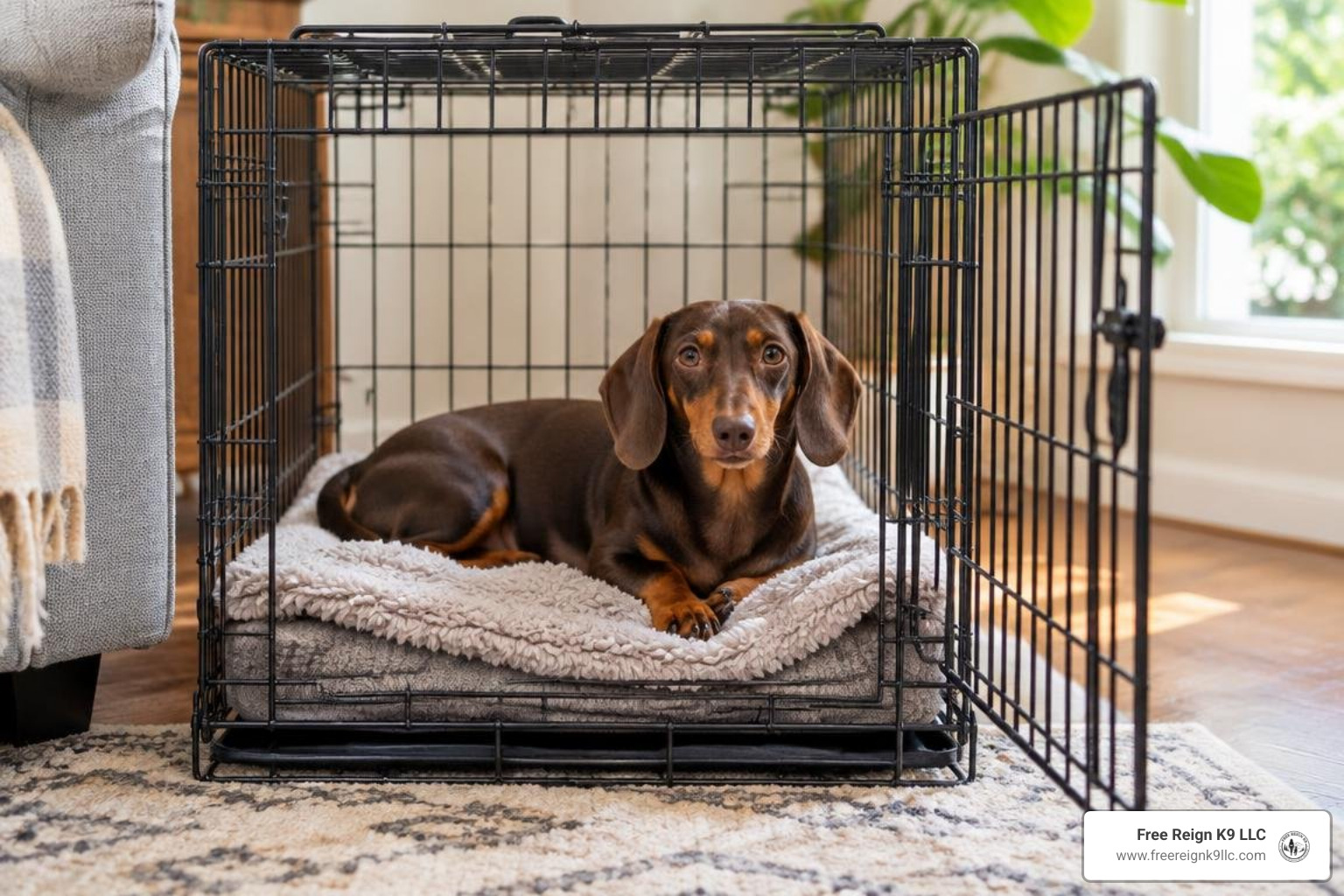
Dachshund crate training works best when the crate becomes a safe resting spot, not a place your dog is sent when they misbehave. Start by leaving the door open, placing treats or meals inside, and rewarding your Dachshund for choosing to enter. Then build up from a few calm seconds with the door closed to longer naps, nighttime sleep, and short periods alone.
This training matters beyond housebreaking. A familiar crate can prevent unsafe jumping when you cannot supervise, make travel easier, and help your dog cope with veterinary confinement. Dachshunds also face a high risk of intervertebral disc disease (IVDD), a condition affecting the cushioning discs between the bones of the spine. If your veterinarian prescribes crate rest during recovery, having a dog who already feels comfortable in the crate can make confinement easier.
Expect progress to take weeks rather than days. Keep sessions brief, use rewards your dog loves, and increase time only while your dog remains relaxed.
I am Kim Blanton, a Dog Trainer with Free Reign K9 LLC in Tacoma, Washington. Through our balanced, humane training approach, I help owners build reliable routines, including dachshund crate training that supports calm behavior, safety, and long-term confidence.
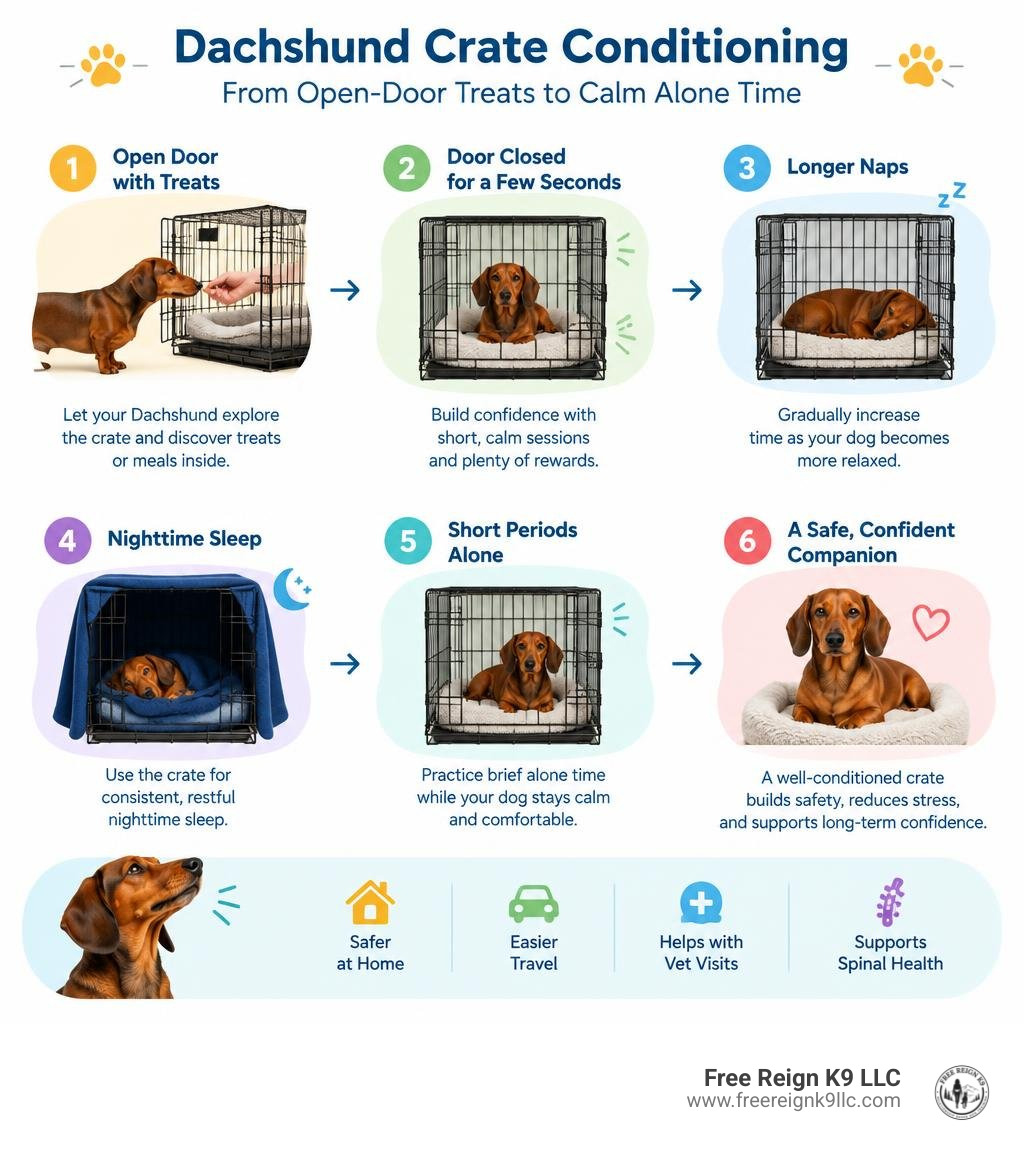
Why Crate Training Is Crucial for Dachshund Spinal Health and Housebreaking
Dachshunds can be independent and eager to stay close to their people. Originally bred to dig into burrows and confront badgers underground, they may enjoy exploring cozy spaces. You may also notice that your dog wants to follow you from room to room. Build comfortable alone time gradually, and watch for unwanted chewing, frustration when a barrier keeps them from reaching you, or distress when you leave.
Gradual crate training helps you introduce the crate as a comfortable retreat. As highlighted in Seattle Humane crate conditioning guidance, introducing crate time gradually helps your dog see it as a reassuring resting place rather than somewhere they are left alone. A secure crate can prevent unwanted chewing while you cannot supervise, give your pup a familiar place to sleep, and support a consistent potty-training routine. For car rides, use a crate designed and secured for vehicle travel.
Preventing IVDD Complications and Aiding Medical Recovery
Protecting your dog's back is an important reason to build calm crate habits. Dachshunds are at increased risk of intervertebral disc disease (IVDD), which affects the cushioning discs in the spine. A crate can help you limit unsupervised movements such as jumping off couches or rushing down stairs. Ask your veterinarian about precautions suited to your dog's health and activity.

After an IVDD flare-up or surgery, your veterinarian may prescribe strict crate rest for several weeks. Follow their instructions for your dog's recovery. Sudden confinement can be stressful for a dog who is unfamiliar with the crate, so practicing comfortable crate time beforehand can help prepare them for restricted rest. If your dog has a herniated disc, where material inside a spinal disc pushes out of place, ask your veterinarian how to move and handle them safely. When lifting your dog in and out of the crate, support their chest with one hand and their hindquarters with the other, keeping their back level to avoid twisting it.
Speeding Up Housebreaking and Bladder Control
Housebreaking can test your patience, especially when your Dachshund is reluctant to go outside in wet or cold weather. Their small bladders mean they need regular potty breaks. Because dogs generally avoid soiling their sleeping area, a properly sized crate can help support housebreaking alongside a consistent outdoor potty routine.
During early puppyhood, keeping a consistent schedule is important. For puppies needing foundational structure, enrolling in puppy head start programs can help you build a routine for meals, crate naps, and outdoor potty breaks. The common estimate of one hour longer than a puppy's age in months, or roughly 3 hours for a 2-month-old puppy at rest, is only a rough guide, not a guarantee. Plan breaks around your puppy's needs rather than waiting for that limit. Pair supervised time and crate naps with regular outdoor trips to give your puppy successful potty breaks every day.
Choosing the Right Setup: Sizing, Placement, and Comfort
Choosing the right crate can help your dog feel cozy and comfortable inside. Wire crates are a practical option for home use because they provide airflow, accommodate adjustable dividers, and allow you to add a breathable cover for a cozy resting spot. For car travel, choose a crate designed and secured for vehicle use rather than relying on heavy-duty plastic alone. Reserve soft-sided fabric carriers for calm, fully trained adult dogs during travel.
Avoid buying a giant crate without an internal divider panel. If your puppy has enough floor space to sleep on one side and eliminate on the other, housebreaking will stall completely. The table below outlines breed specifications and maximum crating durations:
| Dachshund Variety | Typical Adult Weight | Recommended Crate Dimensions | Maximum Crating Duration (Puppy under 6 mos) | Maximum Crating Duration (Adult) |
|---|---|---|---|---|
| Miniature Dachshund | Under 11 lbs | 24" L x 18" W x 21" H | 30 minutes to 2 hours | 4 hours (daytime) |
| Standard Dachshund | 16 to 32 lbs | 30" L x 19" W x 21" H | 1 to 2 hours | 4 hours (daytime) |
Preparing Your Home for Dachshund Crate Training
Where you place the crate can help your dog settle comfortably. During the initial training phase, keep it where your family spends time, such as the living room or beside your bed. A new puppy may feel more comfortable near you; leaving them alone in an empty basement or drafty hallway can leave them upset and barking or crying.
Position the crate away from direct heat sources, open windows, and cold drafts. A white noise machine or soft fan nearby may help mask sudden outdoor noises, passing traffic, or hallway footsteps. Keeping you in sight can also help your puppy feel less alone and more settled.
Miniature vs. Standard Sizing and Essential Bedding
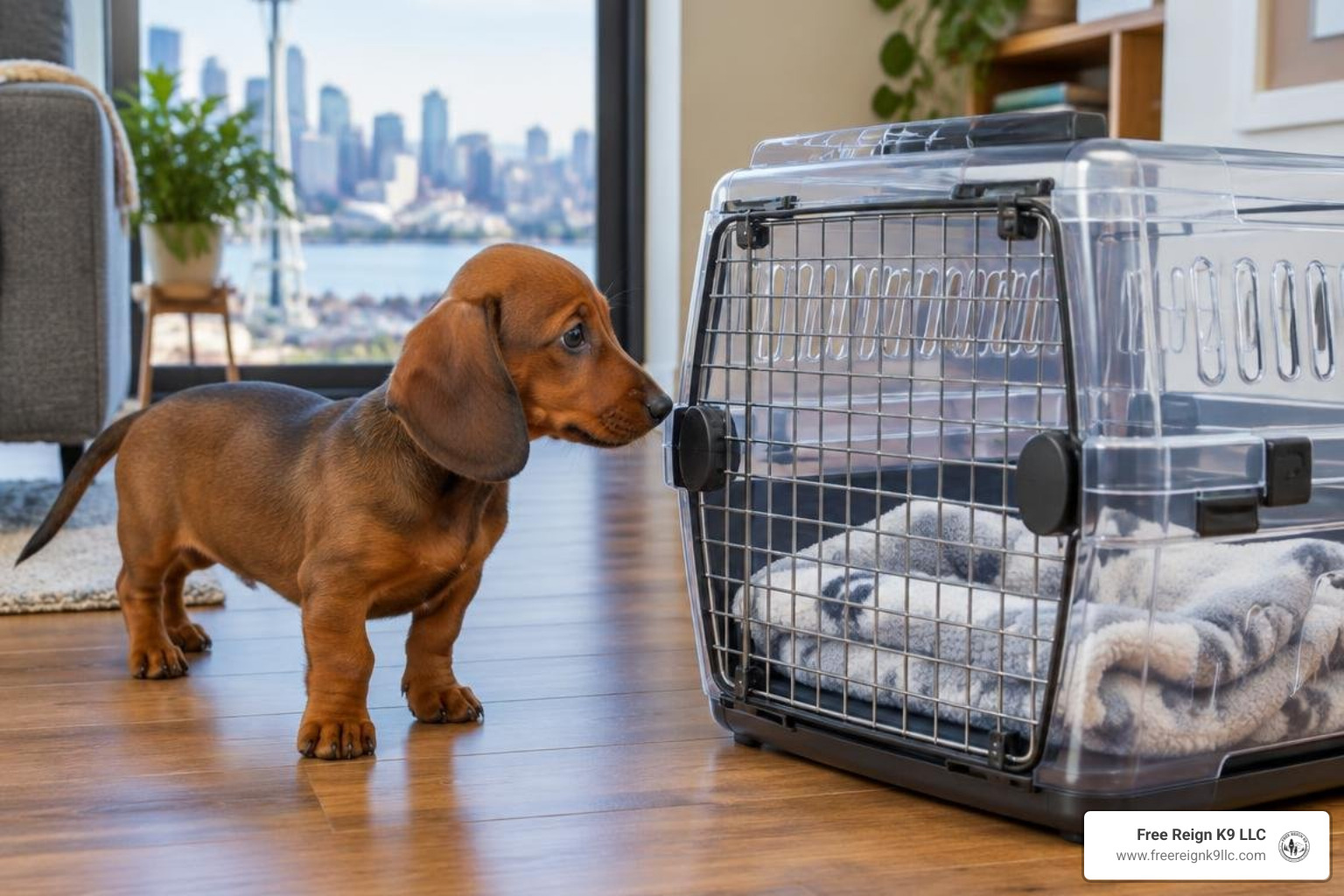
A properly fitted crate provides about six inches of clearance beyond your dog's nose and tail, giving them room to stand up, turn around easily, and lie down and stretch out without crouching. For a growing puppy, choose an adult-sized crate with a metal divider panel, and move the panel back as your dog grows.
Choose a supportive orthopedic mat, designed to cushion and support your dog's body. Pick one that stays in place and is low enough for your dog to step onto easily. Avoid bulky, loose sheepskin beds during early puppyhood, when curious puppies may shred them and swallow the stuffing. Simple, durable, easily washable mats work best. For young puppies missing their littermates, add a heartbeat plush toy and a soft t-shirt carrying your scent. Always remove your dog's collar, tags, and harness before closing the crate door to prevent them from snagging and creating a strangulation hazard.
A Step-by-Step Guide to Dachshund Crate Training
Introduce the crate gradually and keep sessions low-stress. Never shove, drag, or corner your Dachshund to force them inside. Forcing them in can make the crate feel unsafe and take patient training to undo. Instead, use rewards, patience, and clear communication. For more practical ideas, review Dogster's vet-approved crate tips on helping your dog build calm crate habits.
Phases 1 to 3: Positive Associations, Mealtimes, and Brief Door Closures
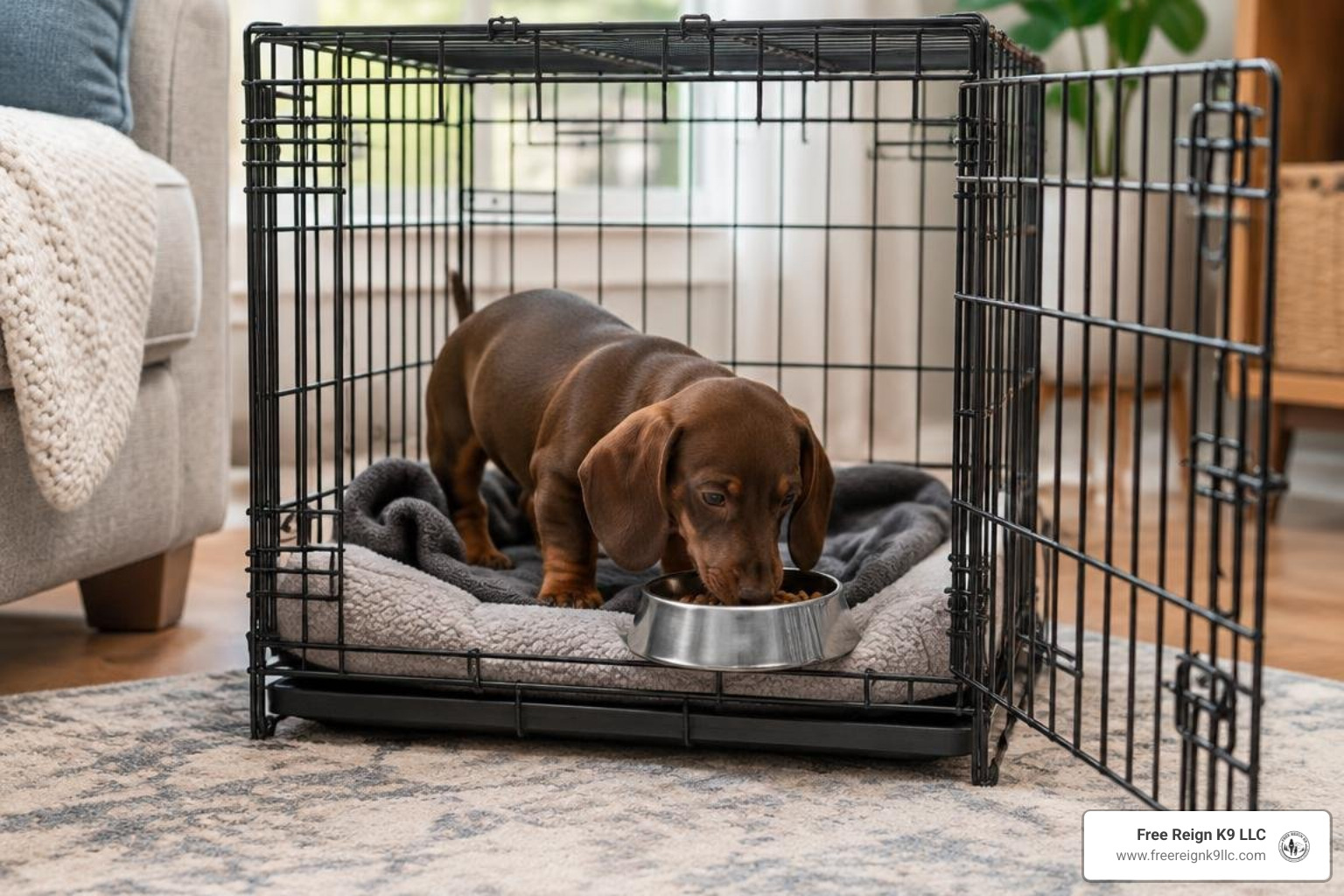
- Phase 1: Casual Exploration (Days 1–3): Secure the crate door open so it cannot swing shut and startle your dog. Scatter treats your dog loves, such as tiny pieces of freeze-dried liver or cooked chicken, near the entrance and inside the crate. Let your dog walk in, take a treat, and leave freely without pressure.
- Phase 2: Getting Comfortable at Mealtimes (Days 4–7): Begin serving regular meals inside the crate. Start with the bowl near the entrance, then move it farther back over several feedings as your dog becomes comfortable. Keep the door open while they eat.
- Phase 3: Brief Door Closures (Week 2): While your dog eats a meal or enjoys a suitable chew, quietly close and latch the door for 5 to 10 seconds. Open it before they finish eating. Gradually work toward 30 to 60 seconds over several short sessions, rewarding relaxed, quiet behavior. Treat these dates as a guide, not a deadline, and move ahead only when your dog is comfortable.
Phases 4 and 5: Settling in the Crate and Building Alone Time
- Phase 4: Quiet Crate Time with a Food Toy (Week 3): Offer a suitable frozen lick mat or KONG toy filled with wet food or peanut butter that contains no xylitol, a sweetener toxic to dogs. Latch the door and sit nearby for 5 to 10 minutes while your dog stays relaxed. Gradually practice standing up, walking around the room, and returning calmly.
- Phase 5: Building Out-of-Sight Time (Month 2 and Beyond): Invite your dog into the crate with a clear spoken cue such as "kennel" or "bed." Close the door, leave the room for 2 to 5 minutes if your dog is ready, and return calmly. Practice "boring returns": walk back in, reward a calm moment, and open the latch without an excited reunion. Gradually build toward 15 minutes, then an hour, and eventually 3- to 4-hour resting periods only if your dog's comfort and potty needs allow. These timelines are guides, not deadlines; shorten sessions if your dog becomes distressed.
Managing Nighttime Routines, Barking, and Whining
Nighttime with a new puppy can feel daunting when you are short on sleep. Dachshunds can have surprisingly loud voices for their size, and barking does not always tell you what is wrong. Check whether your puppy needs a potty break, feels frightened, or seems uncomfortable before assuming they are asking for attention.
If ongoing barking, whining, or separation issues are making your household routine difficult, our team at Free Reign K9 LLC can help. We offer dog private individual training lessons across Seattle, Madison Park, Magnolia, and West Seattle, with guidance tailored to your dog and your daily schedule.
Establishing a Calming Nighttime Routine
A calm night begins well before bedtime. Play with your doxie in the evening, then give them something to think about by practicing a few familiar cues, and limit heavy water gulps right before lights-out.
Place the night crate directly beside your bed on an elevated nightstand or low table so your puppy can smell your scent and hear your breathing. Drape a breathable blanket or towel over three sides of the crate to reduce visual stimulation while preserving proper airflow. Take your dog on a quiet outdoor potty break immediately before putting them into their kennel. If your puppy fusses softly during the first 3 to 7 nights of adjustment, simply rest your fingers against the wire mesh to provide silent reassurance without opening the door.
Troubleshooting Common Dachshund Crate Training Setbacks
When your Dachshund fusses, take a breath and check what might be bothering them before reacting:
- Potty-Break Whining: If a sleeping puppy suddenly wakes up whining after 3 or 4 hours of rest, they may need a potty break. Carry them calmly outside on a leash to their designated potty spot. Keep the potty break quiet and low-key, without turning it into playtime. Once they finish, carry them back to the crate and help them settle.
- Barking After Crate Time Begins: If your puppy barks right after being placed in the crate, check their potty needs and comfort rather than assuming they are testing a boundary. If they seem comfortable and are not distressed, wait for 5 to 10 seconds of quiet before opening the latch, so you reward quiet rather than barking. If they struggle to settle, return to shorter sessions.
- Possible Panic or Pain: Heavy panting, excessive drooling, frantic digging at the tray, or high-pitched shrieking can be signs of distress or physical discomfort, including spinal pain related to IVDD. Pause the session, calmly release your dog, check for signs of pain or discomfort, and return to shorter training sessions. Contact your veterinarian if you suspect pain.
Frequently Asked Questions About Dachshund Crate Care
If you have additional questions regarding puppy behavior or foundational manners, explore our frequently asked questions about local dog training for deeper insights into balanced training methods.
How long can a Dachshund puppy or adult safely stay in a crate?
Keep daytime crate sessions short for young puppies. For puppies under 3 months, plan around 30 to 60 minutes or less while they are awake, since they need frequent potty breaks and help settling. By 6 months, some puppies can manage 2 to 3 hours. A healthy, crate-comfortable adult may rest for up to 4 hours during the day or 7 to 8 hours overnight, but these are guides, not guarantees. Adjust the routine to your dog's comfort, health, and potty needs. Arrange a break if your schedule would otherwise leave them crated for more than 4 daytime hours without exercise or interaction.
Should I ignore my Dachshund when they cry in the crate at night?
Do not use a blanket "ignore it all" rule when your Dachshund cries. Respond based on what your puppy needs. Brief, soft whimpers may settle with you nearby, but check calmly if the crying continues or becomes more intense. Rule out a full bladder, an upset stomach, or physical discomfort. Keep needed potty breaks quiet and low-key, and shorten future sessions if your puppy is struggling to settle.
What is the biggest mistake to avoid during crate training?
The biggest mistake is using the crate as a place for punishment. Dragging your dog into it after an accident or unwanted behavior can make them feel unsafe there. Keep the crate comfortable and rewarding. Other pitfalls include choosing an oversized crate without a divider, skipping pre-crate potty breaks, and increasing the time before your dog can settle calmly.
Building Calm Crate Habits
Crate training your Dachshund takes patience, a consistent routine, and attention to their comfort and health. Start with small, rewarding steps and build time gradually so the crate becomes a familiar place to rest. Calm crate habits can fit into your busy household routine and help prepare your dog for travel or veterinarian-prescribed confinement.
Whether you are raising a lively miniature puppy or managing an adult rescue hound, establishing calm crate habits creates a lifetime of confidence, household harmony, and peace of mind. For hands-on support, structured guidance, or comprehensive board-and-train solutions, connect with our professional training team through our balanced dog training programs at Free Reign K9 LLC to help your dog thrive.