
Why Dog Obedience Training Builds Safer, Clearer Communication
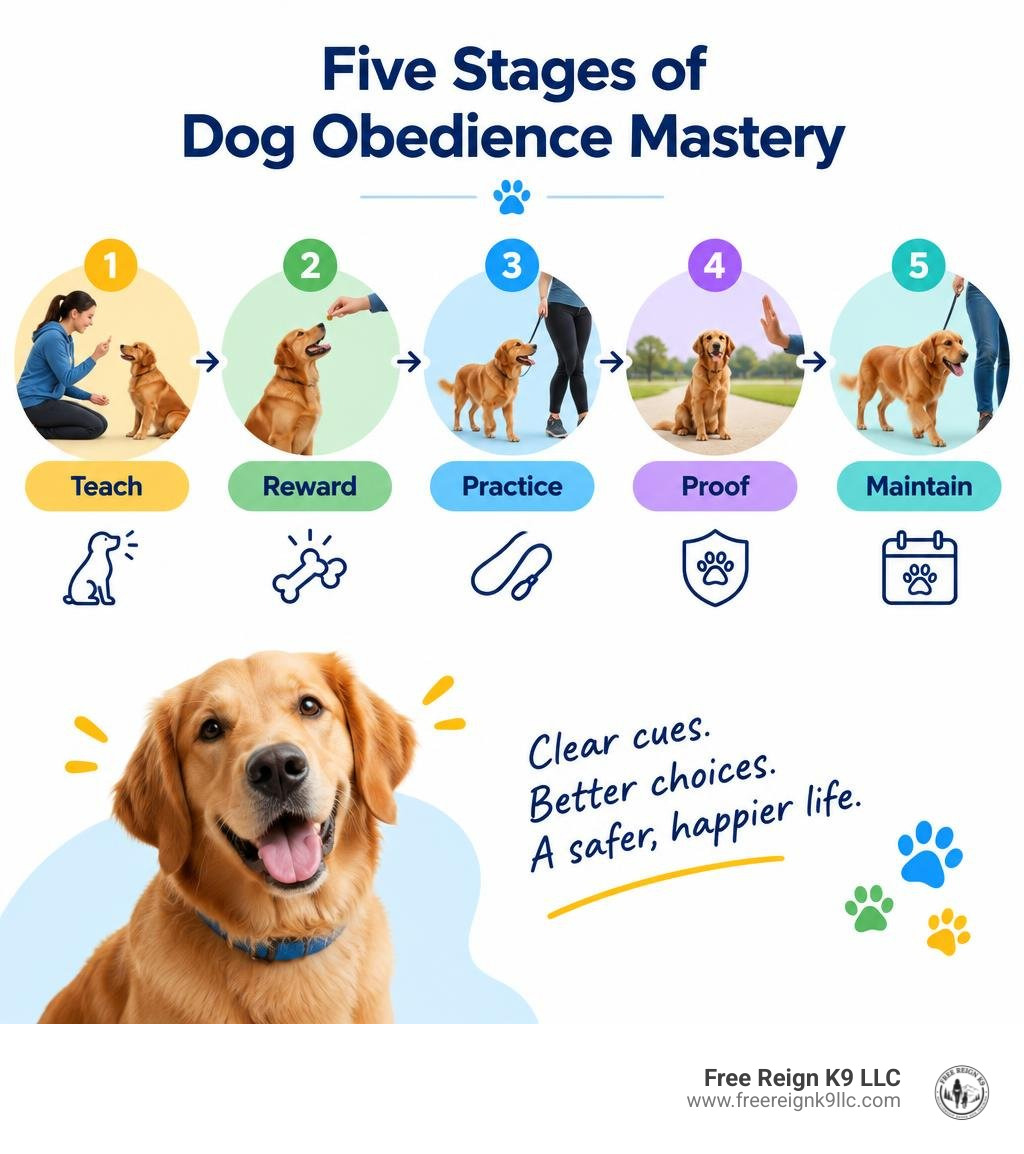
Dog obedience training teaches your dog clear cues for everyday safety and calm behavior. Start with short, reward-based practice in a low-distraction space: teach sit, down, stay, come, leave it, and loose-leash walking one skill at a time. Keep sessions brief, reward the right choice quickly, and practice the same cue in gradually busier places.
These skills are more than party tricks. A reliable recall can help stop a dog from running toward a road. A solid leave it can prevent them from grabbing something dangerous. A stay gives your dog a clear job when guests arrive, the door opens, or life gets noisy.
The goal is not a robotic dog. It is a shared language that helps your dog understand what earns rewards, makes daily routines easier, and creates more freedom safely.
I am Kim Blanton, a dog trainer with Free Reign K9 LLC in Tacoma, Washington, where I help owners build practical, reliable dog obedience training through humane, balanced methods, with education and safe, proper use of training tools chosen for each dog and situation. Let us start with the core principles that make every command clearer for you and your dog.
Core Principles of Dog Obedience Training
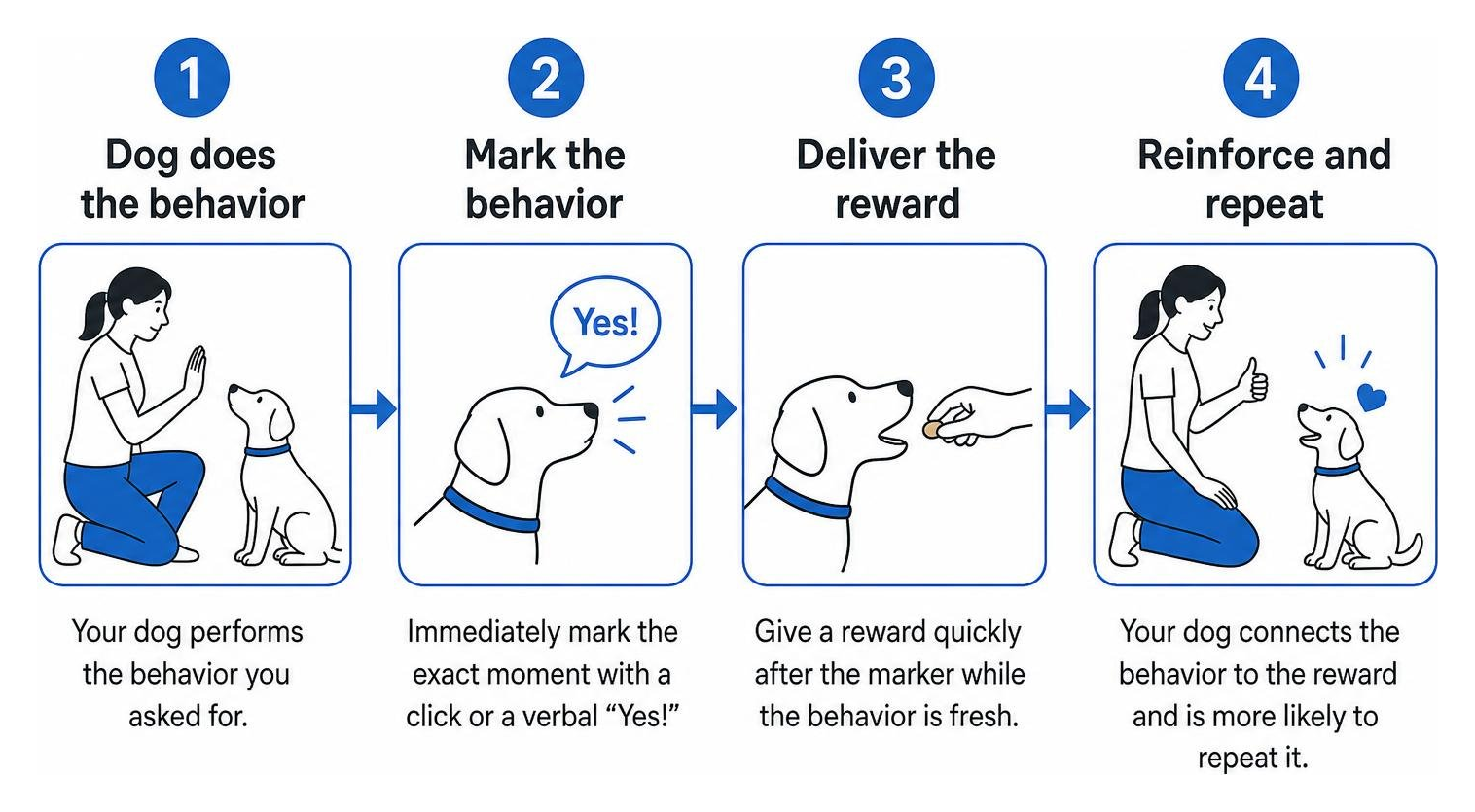
Obedience training starts with clear communication, good timing, and rewards for the behaviors you want. Dogs learn from what happens after their actions. Rewarding a behavior helps encourage them to repeat it. A clear marker cue, such as "Yes!", helps your dog know which action earned the reward.
A clear reward marker helps your dog know when they got it right. A marker is a distinct signal, such as the click of a handheld clicker or a word like "Yes!", that marks the moment your dog does what you asked. Use it as your dog performs the action, then follow it promptly with a reward to help connect the two. For more help understanding canine body language and behavior, regional resources like Pet Training and Behavior Resources offer helpful community guidance.
Positive Reinforcement and Reward Timing
Positive reinforcement means adding something your dog values immediately after they offer the correct behavior. Reward value is personal to each dog:
- High-value rewards: Tiny slivers of hot dog, freeze-dried liver, or real cheese (reserved for difficult environments or new cues).
- Medium-value rewards: Commercial soft training treats or crunchy biscuits.
- Low-value rewards: Standard dry kibble.
Keep training treats pea-sized or smaller. If your dog has to stop and chew for ten seconds, it can interrupt the session. Deliver the reward within one to two seconds of your marker cue. Once your dog knows the cue well, move from giving a treat every time to giving treats less predictably. Keep rewarding good responses without needing to show food before your dog follows the cue.
Essential Gear and Setup for Dog Obedience Training at Home
Setting yourself up for success requires minimal but purposeful equipment:
- Standard 6-foot, 1/2-inch braided leather leash: Free Reign K9 recommends a leash made from quality leather as its best overall choice.
- Flat buckle collar: Ensures safe, gentle physical connection.
- Hands-free treat pouch: Keeps rewards instantly accessible so your hands are free to guide your dog with a treat and use your reward marker.
- Boundary mat or cot: Gives your dog a specific spot to go to and settle.
- High-value, non-crumbly treats: Keeps motivation elevated without mess.
Free Reign K9 also uses tools such as prong collars and e-collars, or electronic training collars, to teach dogs through feedback. Tool selection and safe, proper use depend on the individual dog and situation and should begin with professional guidance.
Start somewhere quiet, such as your living room or hallway. Put toys away, reduce background noise, and keep other pets elsewhere while your dog learns what the cue means.
Structuring Micro-Sessions for Maximum Focus
Canine attention spans are short. Marathon thirty-minute drills lead to mental fatigue, frustration, and sloppy reps. Instead, structure your day around micro-sessions:
- Duration: Keep sessions strictly between 3 to 5 minutes.
- Frequency: Practice 2 to 4 micro-sessions spread throughout the day.
- Rule of Thumb: Always end on a successful repetition while your dog is still eager for more.
If your dog makes two mistakes in a row, lower the difficulty, achieve one clean repetition, mark, reward, and end the session.
Essential Obedience Commands and the Step-by-Step Order to Teach Them
Teach one skill at a time, building on what your dog already knows. For example, teaching sit before asking for a stay gives you a familiar starting point. Keep each new step manageable so you and your dog can practice with confidence.
Foundational Cues: Sit, Down, and Stay
These three stationary behaviors form the bedrock of home manners:
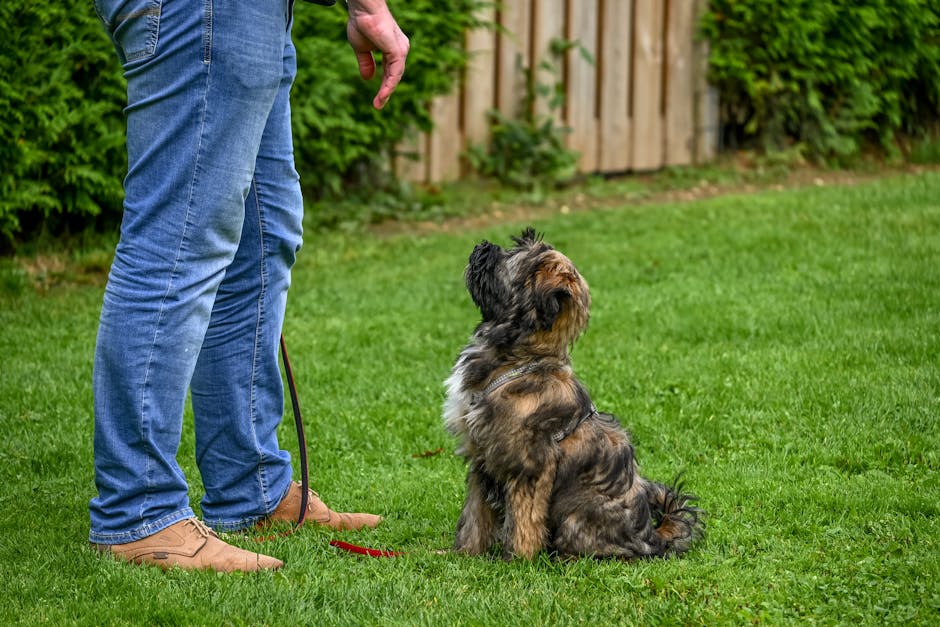
- Sit: Hold a high-value treat at your dog's nose level. Slowly move it upward and back over their head toward their tail. As their nose follows the food, watch for their rear to touch the floor. The moment it does, mark ("Yes!") and reward.
- Down: Start with your dog in a sit. Lower the treat to the floor between their front paws, then move it slowly along the ground toward you in an "L" shape. As their elbows touch the floor, mark and reward.
- Stay: Build a reliable stay by working on the Three Ds: how long your dog stays (duration), what is happening nearby (distraction), and how far you move away (distance). Ask your dog to sit or lie down. Pause for two seconds without moving, mark, and reward while they remain in position. Use a release word like "Free!" to tell your dog the exercise is over. Gradually add time before taking steps backward.
Safety Commands: Recall, Leave It, and Loose-Leash Heel
Safety commands protect your dog from real-world dangers:
- Recall (Come): An emergency recall must always carry a positive association. Start indoors just a few feet away. Call your dog's name followed by "Come!" in an upbeat tone. When they reach you, mark, grasp their collar gently, and deliver an exceptional jackpot reward (several treats in succession). Never call your dog to you to administer medication, give a bath, or deliver a correction.
- Leave It: Place a low-value treat inside a closed fist and present it to your dog. They will sniff, lick, or paw at your hand. Remain still. The instant they pull their nose away and disengage, mark and deliver a high-value treat from your opposite hand. They learn that ignoring available temptations leads to an even better reward.
- Loose-Leash Heel: Position your dog on your left side with the leash relaxed in a "J" loop. Take two paces forward. If your dog remains by your hip, mark and give the reward beside your hip. If they pull ahead, stop immediately like a tree. Wait for them to turn back and release leash tension before stepping forward again. For detailed step-by-step guidance on private coaching, check out our dog private individual training lessons.
Helping Your Dog Follow Cues in New Places and Around Distractions
Dogs learn cues partly by where they practice. Your dog may sit reliably on your living room rug but need more help on a busy sidewalk in West Seattle or Magnolia. Practice in different places and gradually add distractions so your dog learns to respond wherever you are.
Follow the Three-D progression rule:
- Increase Duration (holding a stay for 30 seconds).
- Increase Distance (stepping 10 to 20 feet away).
- Increase Distraction (bouncing a ball, having a family member walk past).
Only increase one "D" at a time. If you increase distance, drop the distraction level back down to zero until your dog succeeds.
Progression Timelines: Starting a Puppy vs. Training an Adult Dog
How long training takes depends on your dog's age, readiness to learn, and past habits and experiences.
Puppy Foundations and Early Socialization
Start building your puppy's confidence early with gentle exposure to new surroundings. Early training also includes learning to control how hard they use their mouth, getting comfortable with a crate, and learning what marker words mean. Structured puppy head start programs can help you get started with guided practice and exposure to new experiences.
Adult dogs may be ready for longer practice sessions, but changing long-standing habits at home can take patience.
Expected Timelines and Milestones in Dog Obedience Training
Every dog learns at their own pace, but standard training milestones provide a realistic roadmap for consistent owners practicing daily micro-sessions:
| Obedience Command | Difficulty Level | Typical Session Count | Estimated Mastery Timeline |
|---|---|---|---|
| Sit | Beginner | 3 to 7 micro-sessions | 1 to 3 days |
| Down | Beginner | 5 to 10 micro-sessions | 3 to 7 days |
| Leave It | Intermediate | 10 to 15 micro-sessions | 1 to 3 weeks |
| Stay (with Duration) | Intermediate | 15 to 25 micro-sessions | 2 to 4 weeks |
| Wait at Doors | Intermediate | 15 to 20 micro-sessions | 2 to 4 weeks |
| Place (Boundary) | Intermediate | 20 to 30 micro-sessions | 2 to 5 weeks |
| Loose-Leash Heel | Advanced | 30 to 45 micro-sessions | 3 to 6 weeks |
| Reliable Recall | Advanced | 40+ micro-sessions | 2 to 4 months |
Most beginners achieve usable responses to basic cues within four to six weeks of regular practice. While a basic sit can click in a single afternoon, a reliable recall around wildlife or passing dogs takes several months of practice in different places and around distractions.
Exploring AKC Competition Levels and Titles
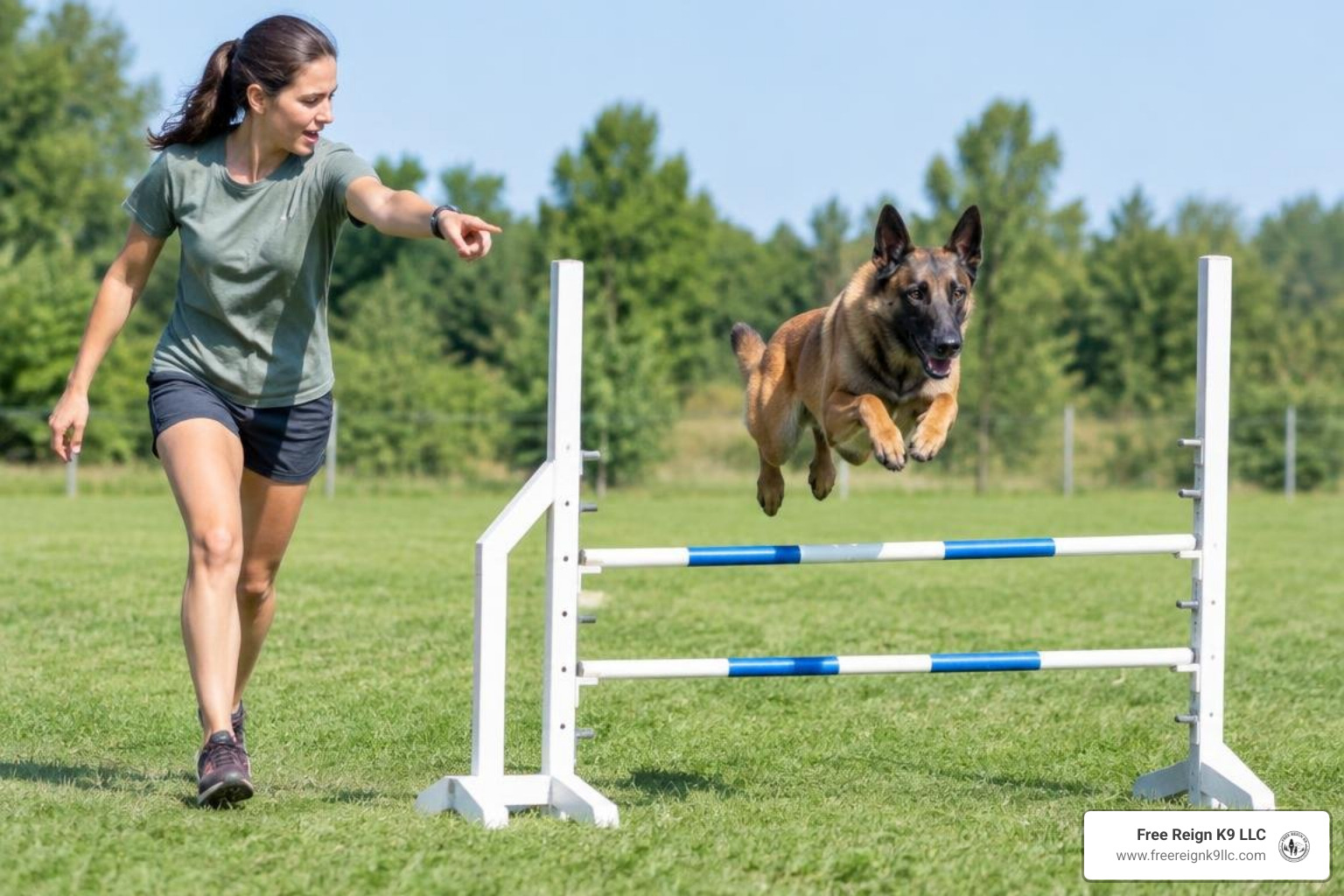
For handlers who want to take their teamwork further, organized obedience events through the American Kennel Club (AKC) provide clear performance standards. Explore Getting Started in Obedience to learn about trial entry requirements and club events.
Novice, Open, and Utility Class Breakdown
AKC obedience tests practical skills with progressive difficulty, as detailed in the official Obedience Classes – American Kennel Club guide:
- Novice (Companion Dog, or CD, title): Tests foundational obedience skills. Exercises include Heel on Leash and Figure Eight (walking beside the handler on a set route), Stand for Examination (standing while a judge lightly touches the dog's head and back), Heel Free (off-leash heeling), Recall (coming when called), and Sit Stay - Get Your Leash (remaining seated while you retrieve the leash).
- Open (Companion Dog Excellent, or CDX, title): Asks for more precise responses. Exercises include Command Discrimination (responding to position cues from 15 and 30 feet away), Drop on Recall (lying down while coming when called), Retrieve on Flat (bringing back a dumbbell thrown at least 20 feet), Retrieve Over High Jump (retrieving a dumbbell over a jump), and Broad Jump (clearing a wide jump made of several low boards).
- Utility (Utility Dog, or UD, title): The highest regular class level. Exercises include the Signal Exercise (responding to hand signals without verbal cues), Scent Discrimination (finding handler-scented leather and metal articles among unscented ones), Directed Retrieve (bringing back the glove the handler indicates), and Directed Jumping (moving away from the handler and returning over the indicated jump).
Regular, Preferred, and Optional Titling Tracks
The AKC offers multiple paths to accommodate dogs of varying experience levels and physical capabilities:
- Optional Titling Classes: Beginner Novice, Graduate Novice, and Graduate Open offer stepping stones between major tiers.
- Preferred Classes: Mirror Novice, Open, and Utility exercises but allow modified jump heights to protect older dogs or specific body types.
- Canine Good Citizen (CGC): A 10-step behavioral evaluation testing everyday etiquette around crowds, strange dogs, and novel sights.
Knowing When to Seek Professional Training Support
While basic household manners can be taught in your living room, certain behavioral challenges require experienced eyes:
- Growling, snapping, or resource guarding over food, toys, or spaces.
- Leash reactivity (lunging, barking, or biting at the leash when seeing dogs or people).
- Severe separation distress, destructive chewing, or noise phobias.
- Sudden training regression, shutdown, or extreme avoidance.
When behavioral issues stem from fear or boundary confusion, specialized dog behavior modification training creates lasting emotional change. If busy schedules prevent daily repetitions, immersive dog obedience training camps provide intensive daily structure, building a reliable behavioral foundation that transfers smoothly back to your home.
Frequently Asked Questions About Dog Training
For regional pet owners in Madison Park, Magnolia, West Seattle, and beyond, our frequently asked questions dog training in seattle answers specific neighborhood questions regarding weather management, park socialization, and leash laws.
What is the first command I should teach my dog?
Sit is a useful first command. You can teach it by moving a treat up and back over your dog's head. Your dog may pick it up within minutes, and it gives them something clear to do when visitors arrive. While your dog holds a sit, they are not jumping on visitors, dashing out open doors, or counter-surfing.
How do I stop relying on treats during obedience practice?
Gradually stop using visible food to guide your dog's movement. Once your dog follows a food lure smoothly, try the same motion with an empty hand. When they sit or lie down, mark ("Yes!") and get the treat from your pouch or a nearby table. Once your dog knows the cue well, give treats less predictably and include everyday rewards your dog enjoys, such as heading outside for a walk or chasing a favorite ball.
Why does my dog obey indoors but ignore commands outside?
Your dog may need more practice around distractions rather than being stubborn. Outside, squirrel scents, other dogs, vehicle noise, and wind can all compete for your dog's attention. If your dog responds well in the kitchen but struggles at the park, the change may be too much at once. Try a low-distraction driveway or quiet patio, use treats your dog likes more, and practice there before moving into busier places.
Build a Stronger, Safer Partnership With Your Dog
Obedience training is about giving your dog clear guidance and helping them manage their impulses so you can enjoy daily life and outdoor adventures together. Combine rewards for the behaviors you want with consistent expectations. Free Reign K9's balanced approach includes education and safe, proper use of training tools chosen for your dog and situation.
Whether you are teaching your first puppy in Madison Park or helping your dog come when called off leash, even around distractions, in West Seattle, our balanced training philosophy helps you build long-term reliability. Explore our complete line of programs services or visit our Free Reign K9 home page to take the next step in your dog's training journey.