
Why Is Dachshund Potty Training So Notoriously Difficult?
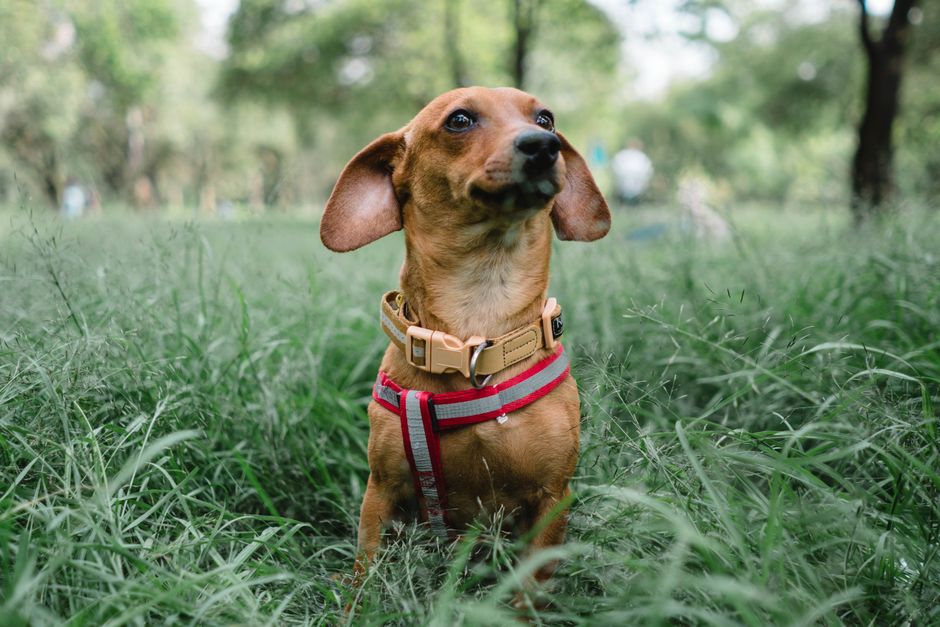
Successful dachshund potty training comes down to a tight management system: take your puppy out immediately after waking, 15 minutes after meals, and every 20 to 30 minutes during awake playtime, then reward elimination outdoors within two seconds with a high-value treat. Keep your dachshund on a standard 6-foot, 1/2-inch leash made from quality leather, supervise closely indoors, and use an enzymatic cleaner on any accident so scent markers do not draw your dog back to the same spot. Expect steady progress by 4 to 6 months, with full reliability often taking 6 to 9 months of consistent routine.
Dachshunds consistently rank among the top 20 breeds known to be tricky to housebreak. While their bold personalities and charming antics make them beloved family companions, their biology and heritage create a unique set of challenges.
Scent Hound Genetics and Independent Heritage
Originally bred in Germany to hunt badgers underground, dachshunds were developed to think independently and make their own decisions inside dark dens. This hound ancestry means they have a natural stubborn streak. If a dachshund feels comfortable where they are, convincing them to interrupt their day to go outside takes dedicated work. You can explore more about their stubborn badger hunting history to understand how their genetics influence daily house training.
Small Bladders and High Metabolism
As a small breed, a dachshund puppy possesses a tiny bladder paired with a rapid metabolism. Liquid processes through their system quickly. Puppies do not gain full biological bladder control until roughly 6 months of age. Expecting an 8-week-old puppy to hold their bladder for extended stretches is physically impossible.
"Wet Belly Syndrome" and Low Clearance
With short legs and long bodies, dachshunds sit only an inch or two above the ground. When grass is cold, wet, or covered in morning dew, their chests and bellies brush directly against the damp blades. This creates "wet belly syndrome," leading many doxies to outright refuse to step foot in the yard.
Subtle Elimination Signals
Unlike some breeds that stand by the back door and bark when nature calls, dachshunds often communicate their needs through quiet, easily missed signals. A slight pause during playtime or a casual walk toward a hallway baseboard can be the only warning you get before a puddle appears.
The Step-by-Step Dachshund Housetraining Protocol
Success with a dachshund relies on a tight management system combining prevention, timing, supervision, and high-value rewards.
| Puppy Age | Awake Potty Frequency | Maximum Bladder Holding Capacity (At Rest) | Recommended Management Focus |
|---|---|---|---|
| 8 to 11 Weeks | Every 20 to 30 minutes | 2 hours | Direct supervision, immediate grass rewards, hourly routine |
| 12 to 15 Weeks | Every 30 to 45 minutes | 3 hours | Crate training, pattern tracking, word cue association |
| 16 to 20 Weeks | Every 60 minutes | 4 hours | Navigating adolescent regression, boundary maintenance |
| 5 to 6 Months | Every 1 to 2 hours | 5 hours | Fading indoor pads, expanding supervised room freedom |
| 6+ Months (Adult) | Every 2 to 4 hours | 4 hours max daytime (6 to 8 hours overnight) | Full routine reliability, outdoor cue consistency |
The Two-Second Reward Window
When you take your dachshund outside, keep them on a standard 6-foot, 1/2-inch leash made from quality leather. Our training philosophy recommends a standard 6-foot braided leather leash as the best overall leash for reliable control and direct communication. We do not use anti-pull leashes, and we do not condone walking dogs with body harnesses, as harnesses can encourage pulling and reduce handler guidance.
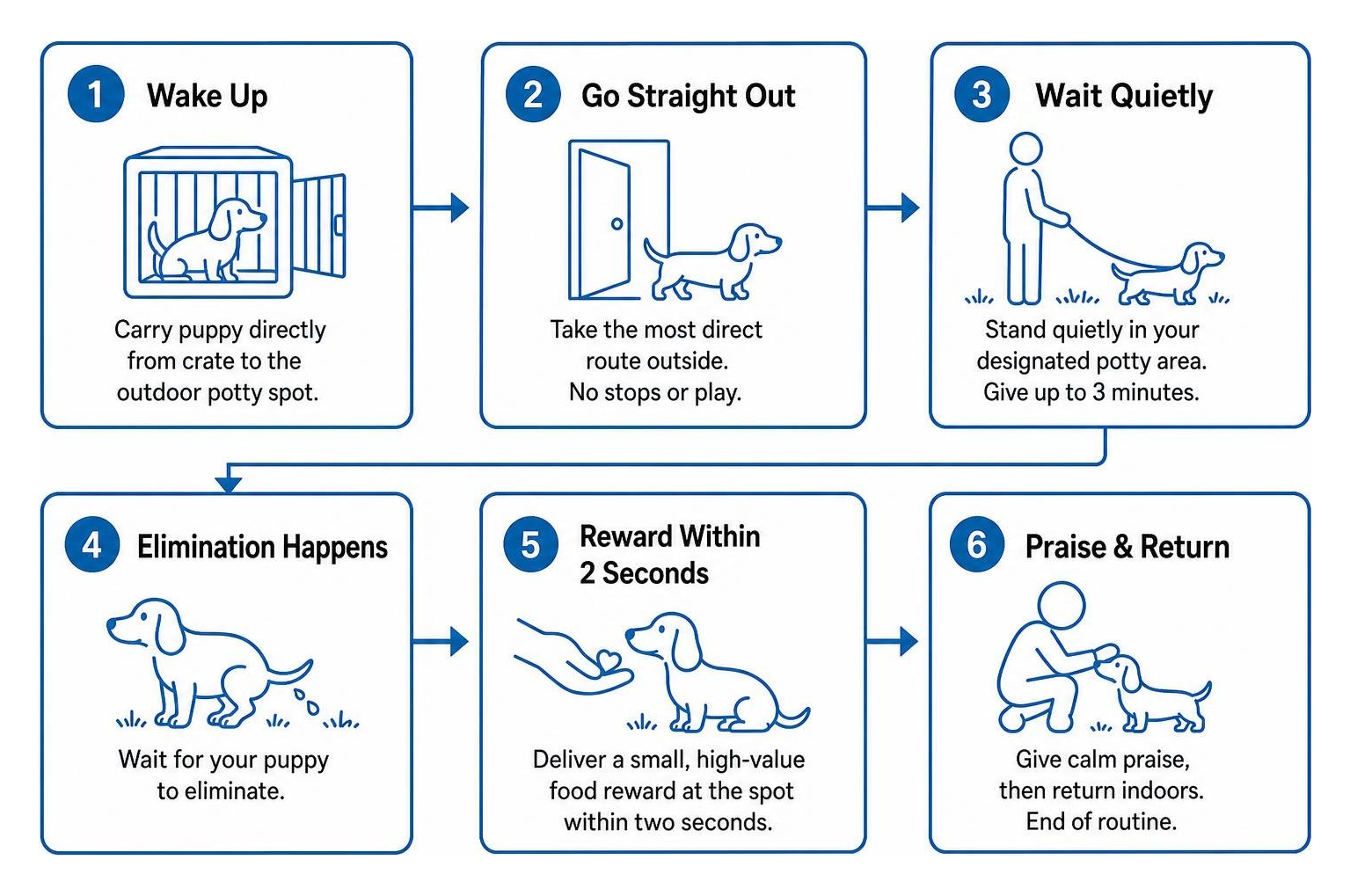
Stand quietly in your designated potty area and give your dog up to three minutes to finish their business. The moment elimination happens, deliver a small, high-value food reward directly at the spot within two seconds. Rewarding your dog once they walk back inside confuses them; the praise must connect directly to the grass under their paws.
Setting Up a Flawless Dachshund Potty Training Schedule
Establish predictable daily cycles centered on natural biological triggers:
- Immediately upon waking: Carry your puppy directly from their crate to the outdoor potty spot.
- 15 minutes after every meal or water bowl visit: Food and water trigger the gastrocolic reflex, prompting bowel movements.
- During awake windows: Take your puppy out every 15 to 30 minutes during active play sessions.
- Before bedtime and throughout the night: Set a middle-of-the-night alarm for young pups (around 1:30 AM to 2:30 AM) to prevent overnight crate soiling.
A general rule of thumb is that a puppy can hold their bladder at rest for approximately one hour per month of age. However, a dachshund should not have to hold it for more than 4 hours at a time during daytime hours, at any age. If you are starting fresh with a new pup, our Puppy Head Start Programs help build structured daily rhythms early.
Reading Subtle Body Language and Potty Signals
Watch your dachshund closely for these understated signs that indicate an urgent need to go:
- Breaking away abruptly: Suddenly abandoning an energetic game of fetch or tug.
- Wandering and sniffing: Lowering the nose to trace baseboards, rug edges, or furniture legs.
- The "S-Curve" walk: Circling or pacing in an intentional S-shape pattern before dropping into a squat.
- Quiet staring: Sitting motionless near room thresholds or staring intently at you.
Crate Training and Proper Den Sizing
Dogs possess an instinct to avoid soiling their sleeping quarters, making a crate an essential house training aid. For dachshunds, who naturally love to burrow and den, an appropriately sized crate offers comfort and security.
The crate should be only large enough for your puppy to stand up, turn around completely, and lie down comfortably. If the crate is too spacious, a dachshund will easily designate one corner for sleeping and the opposite corner as a personal bathroom.
Ensure the crate promotes spinal safety, avoiding high entry lips that could jar a back prone to Intervertebral Disc Disease (IVDD). When supervised practice is complete, structured programs like our Dog Obedience Training Camps help reinforce den neutrality and impulse control.
Overcoming Common Dachshund Housetraining Roadblocks
Even with an excellent schedule, minor hiccups happen. Handling these moments calmly preserves your puppy's confidence and keeps training on track.
Calm Interruption vs. Harsh Punishment
If you catch your dachshund mid-stream, interrupt them with a calm, neutral verbal cue, pick them up smoothly, and guide them directly to their outdoor bathroom spot. When they finish on the grass, reward them enthusiastically.
Never yell, rub their nose in waste, or use physical punishment. Dachshunds are sensitive hounds. Harsh reprimands do not teach outdoor elimination; they teach your dog that going to the bathroom in front of you is unsafe, prompting them to hide behind couches or under beds to soil your home in secret.
Complete Odor Elimination
Always use an enzymatic cleaner designed specifically for pet waste rather than standard household sprays or ammonia-based products. Standard cleaners leave behind biological pheromones that human noses cannot detect. Because dachshunds rely heavily on scent markers, any lingering trace will draw them back to repeat accidents on that exact rug or floorboard.
Navigating the 4-to-5-Month Dachshund Potty Training Regression
It is common for a dachshund puppy who seemed housebroken at 14 weeks to suddenly begin having accidents inside at 4 or 5 months old.
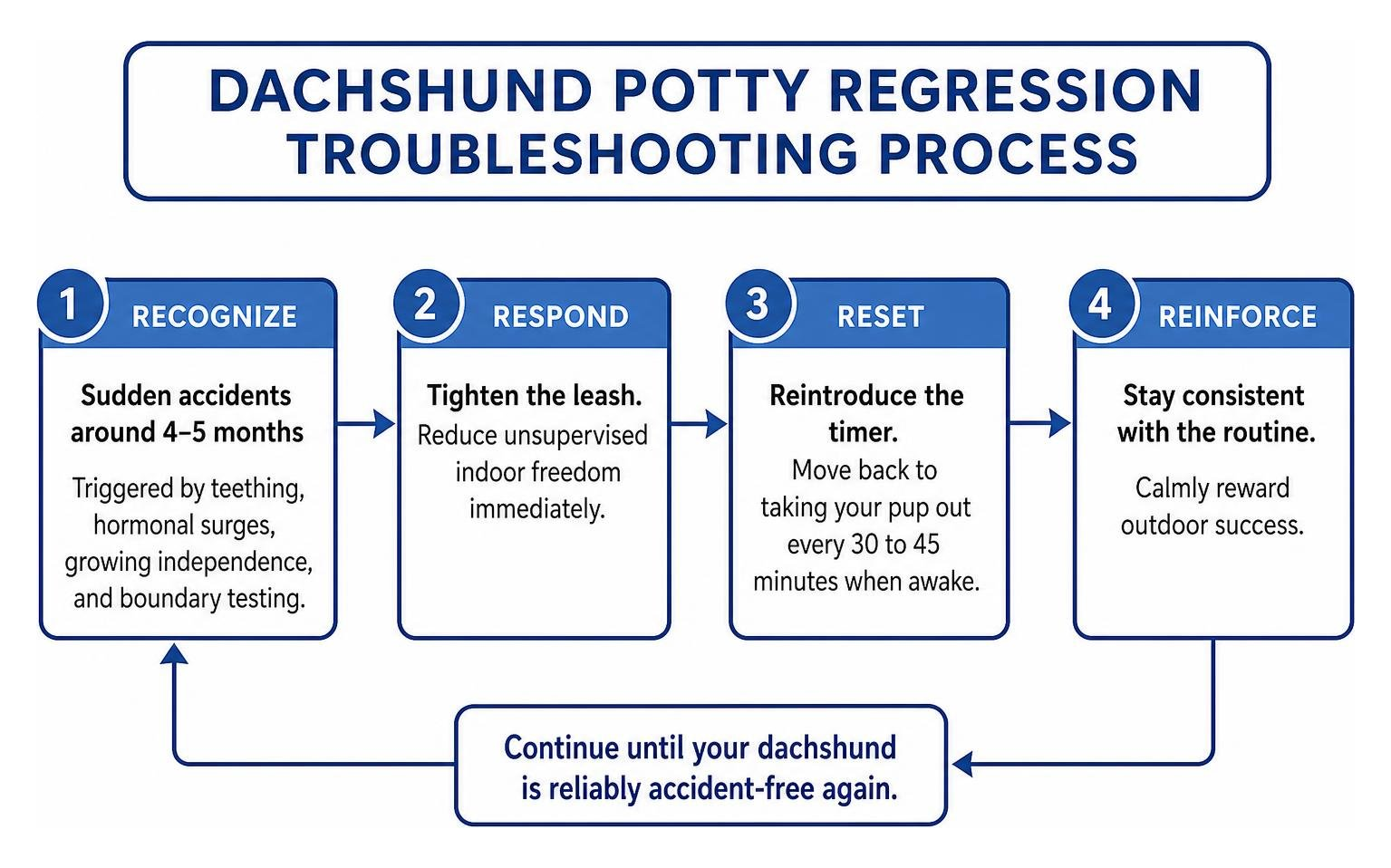
This phase coincides with teething, hormonal surges, growing physical independence, and boundary testing. You can read deeper into this scientific strategy for stubborn breeds to understand why adolescent regressions occur across scent hound types.
When regression hits:
- Tighten the leash: Reduce unsupervised indoor freedom immediately.
- Reintroduce the timer: Move back to taking your pup out every 30 to 45 minutes when awake.
- Lean on crate management: Keep your dog in their den or tethered near you on a leash whenever you cannot give 100% of your focus.
- Rule out medical concerns: Schedule a veterinary check to rule out urinary tract infections or bladder stones, which can cause sudden indoor accidents.
Solving Rain and Cold Weather Refusal
When bad weather hits, a dachshund's low-slung frame makes wet grass feel like an obstacle course. If your doxie refuses to step outside in rain, snow, or wind, apply these management hacks:
- Fit them with a fleece sweater or raincoat: Keeping their back and chest dry dramatically reduces cold shock.
- Build a covered potty area: Set up a pop-up canopy over a patch of grass in the yard, or clear snow down to bare earth so their belly does not drag through deep drifts.
- Keep outdoor trips business-focused: Walk straight to the relief spot on leash, stand still, and refrain from interactive play until they finish.
Puppy Pads vs. Outdoor Habits: The Apartment Dilemma
Using indoor puppy pads can offer temporary convenience for owners living in high-rise apartments, but they carry significant risks for dachshunds.
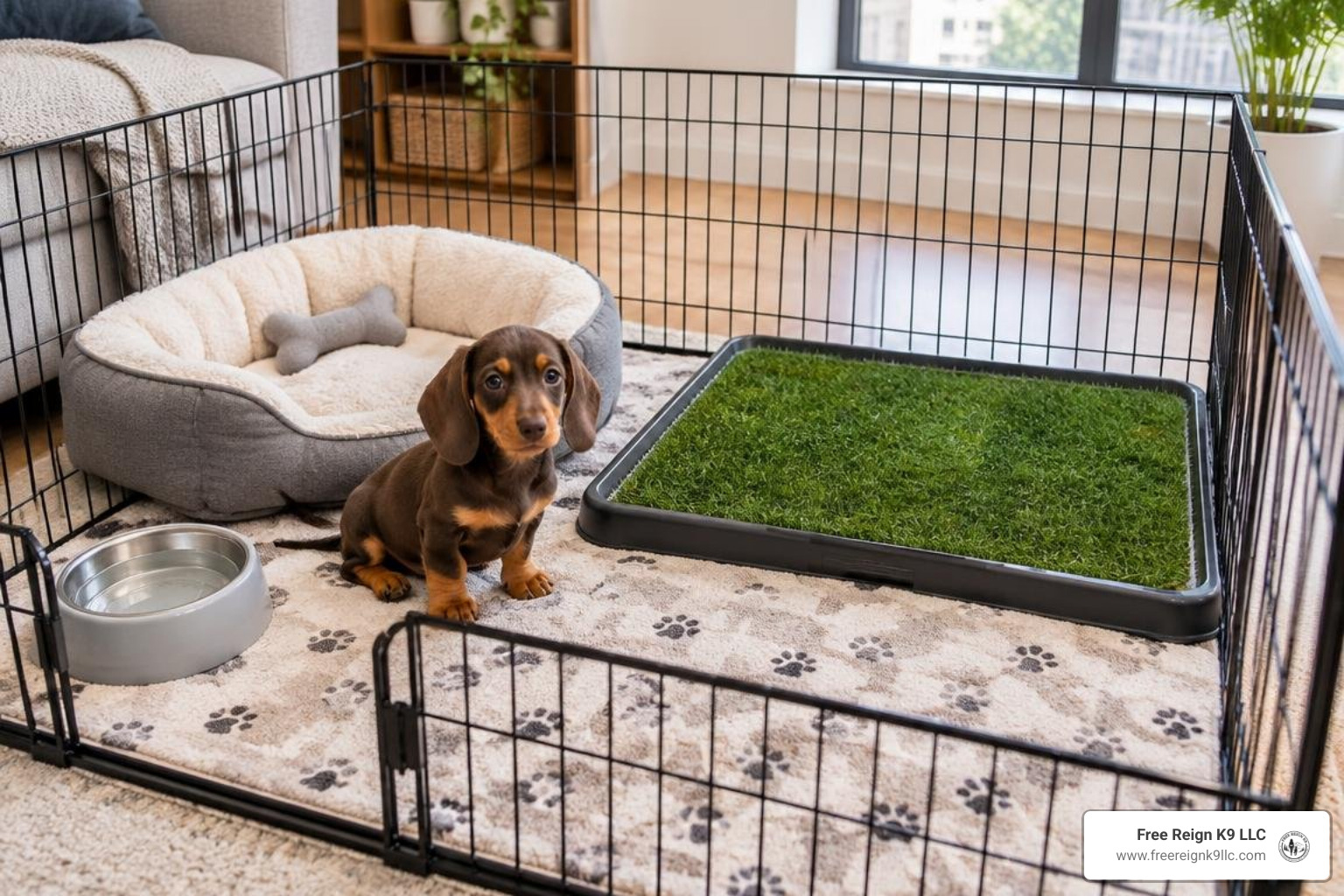
Pee pads feel remarkably similar to soft living room rugs, bathmats, and blankets. Extended pad use frequently trains young dachshunds that eliminating on soft indoor textures is acceptable.
If you must manage apartment living:
- Choose a distinct substrate: Use a real-grass porch tray or an artificial turf box on a balcony instead of fabric pads.
- Move pads toward the door: Gradually shift the indoor relief station closer to your entryway week by week.
- Transition outside completely: Phase out indoor pads entirely once your pup reaches 4 to 5 months of age to establish clear expectations.
For more insights on puppy management setups, review our frequently asked questions about dog training.
Frequently Asked Questions About Dachshund Housetraining
How long does it typically take to fully housebreak a Dachshund?
Most dachshunds make steady progress within 4 to 6 months of age, but achieving complete reliability often takes 6 to 9 months of disciplined routine. Because their physical bladder control and scent-tracking drives mature slowly, staying patient and consistent through their first year is standard.
What should I do when I catch my Dachshund having an accident indoors?
Make a calm, low-key sound to interrupt the action, scoop your dog up gently, and take them straight outside to their designated potty area. Praise and reward them the moment they finish on the grass. Clean the indoor mess thoroughly with an enzymatic cleaner to break down all organic scent molecules.
How do I manage potty breaks if I work full-time?
Because an adult dachshund should not be expected to hold their bladder for more than 4 hours during the day, working owners need a plan. Arrange for a trusted friend, family member, or professional walker to provide a midday bathroom visit. If your puppy is under 5 months old, set up a secure puppy playpen with non-slip flooring and an attached crate for safe daytime containment.
Achieving Lifelong Freedom and Reliable Habits
House training a dachshund requires dedication, structured routines, and a clear understanding of your dog's instincts. By pairing direct supervision with immediate positive reinforcement, you turn a stubborn badger hound into a reliable household companion.

At Free Reign K9 LLC, we follow a balanced training philosophy grounded in our belief of "Freedom Through Balanced Training." We advocate education plus the safe, proper use of training tools based on the individual dog and situation, using tools such as prong collars and e-collars to teach dogs through clear, fair feedback.
If you are ready to take your dog beyond basic house habits and build reliable obedience for outdoor adventures throughout Seattle, Mercer Island, Tacoma, and surrounding areas, explore our comprehensive programs and services or contact us for a dog evaluation to get started. You can also view our personalized dog training programs designed to help you and your companion thrive together.