
Understanding Your Puppy's Bladder and Sleep Needs

A reliable 8 week old puppy potty training schedule starts with understanding what your new companion can manage. At eight weeks, plan to take your puppy out every 30 to 45 minutes while they're awake, immediately after naps, and within 5 to 30 minutes after each meal. Bringing home an 8-week-old puppy is exciting, but expecting them to hold their bladder like an adult can leave you both frustrated. Their bodies and nervous systems are still developing, so they cannot reliably control when they pee or poop.
A common guideline is the "month-plus-one rule" (or approximately one hour per month of age), which suggests a two-month-old pup can physically hold their urine for up to two or three hours under ideal, resting conditions. However, when a puppy is awake, moving, and drinking water, that window shrinks dramatically to just 30 to 45 minutes.
Your puppy's sleep patterns matter, too. Young puppies need plenty of rest, often 18 to 20 hours of sleep in a day. When you keep your puppy awake too long, they can become overtired. Like tired toddlers, they may have a harder time controlling their behavior, get sudden bursts of "zoomies," or become mouthy. Make room for naps as well as potty breaks rather than expecting your puppy to stay active all day. For more insight into how young dogs develop, see puppy developmental stages and behavior.
Why Your 8 Week Old Puppy Potty Training Schedule Needs to Match Their Abilities
The muscles that help keep urine in your puppy's bladder are still developing at this age. Your puppy isn't soiling your rug out of spite. They are still learning to recognize when they need to pee, and you may have very little warning before an accident.
Your puppy may be ready for another nap after just 30 to 60 minutes awake, so plan your routine around their need for activity and rest. Watch your puppy rather than treating the clock as a strict rule. Pairing potty trips with waking up and settling down for naps gives you a repeatable routine, even on busy days.
Key Potty Trigger Moments to Track Daily
Along with regular breaks, plan potty trips around everyday triggers such as waking up, eating, and playing. Keeping these moments in mind can help you catch your puppy's needs before an indoor accident:
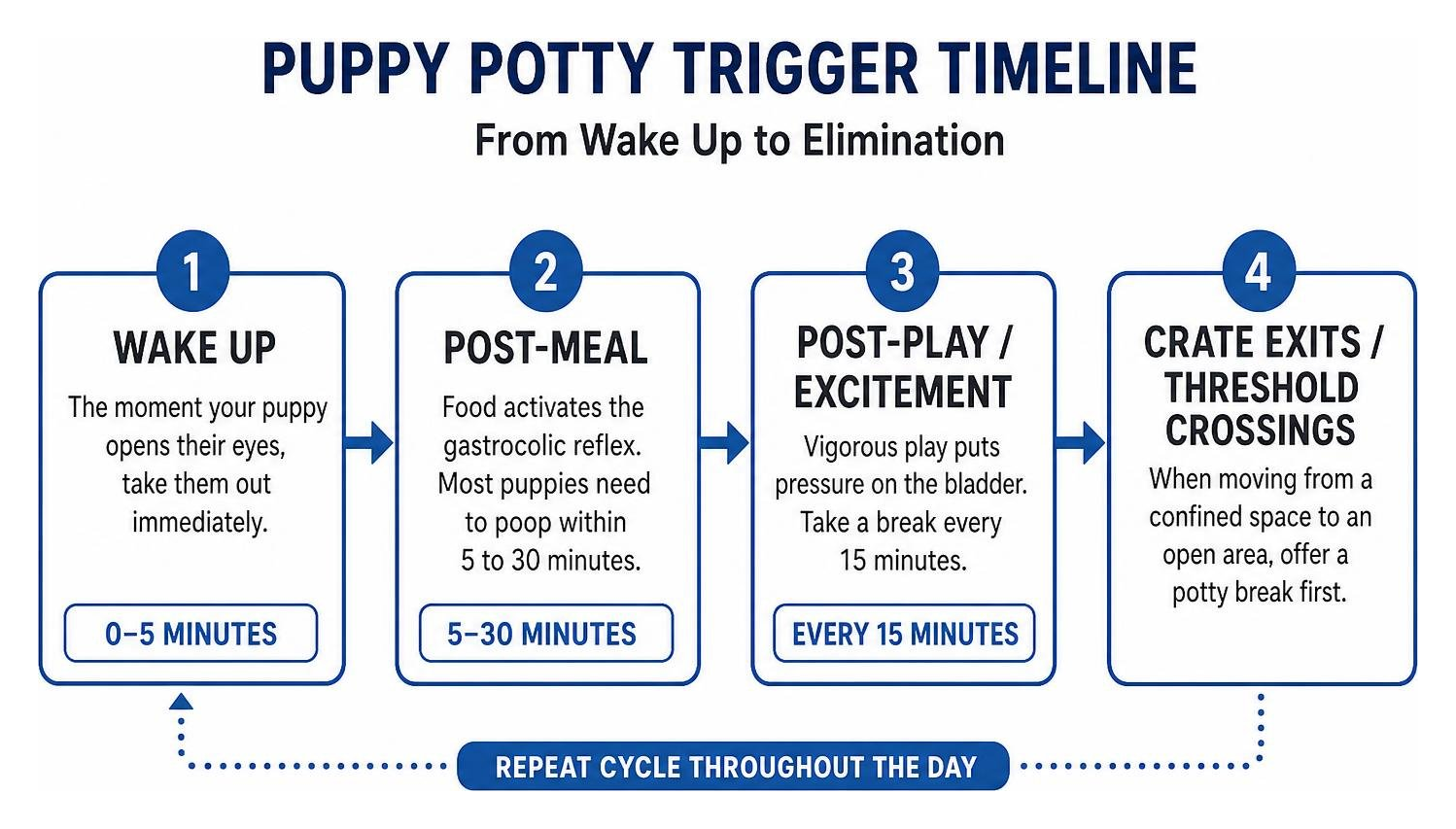
- Waking Up: As soon as your puppy wakes from a nap or morning sleep, pick them up and carry them to the potty spot.
- The Post-Meal Window: Eating triggers the gastrocolic reflex, a natural response that gets the bowels moving. Plan a potty trip within 5 to 30 minutes after a meal, and watch for signs that your puppy needs to go sooner.
- After Play and Excitement: Keep potty breaks in mind during wrestling, running, or meeting family members. Take a break every 15 minutes during active play.
- Leaving the Crate or Entering an Open Area: Offer a potty break before giving your puppy access to an open living area.
The Ultimate 8 Week Old Puppy Potty Training Schedule: Hour-by-Hour Routine
To establish successful habits, follow this structured, hour-by-hour daily timetable designed around four small meals, regular naps, and timely outdoor trips.
| Time Slot | Primary Activity | Potty Break Timing | Notes & Training Focus |
|---|---|---|---|
| 6:30 AM | Wake up & outdoor trip | Immediately upon waking | Calm praise; no indoor free-roaming yet |
| 7:00 AM | Breakfast (Meal 1) | 10–20 mins post-meal (7:15 AM) | Feed in crate or pen to build value |
| 7:30 AM | Short play & handling | 8:00 AM (before nap) | Practice name recognition and gentle handling |
| 8:15 AM | Morning Nap 1 (Crate) | Potty right before entering crate | Quiet rest environment; white noise |
| 10:00 AM | Wake up & outdoor trip | Immediately upon exit | 10-minute sniff break outside |
| 10:30 AM | Supervised play / Chew toy | 11:15 AM | Tether to your belt or keep in exercise pen |
| 11:30 AM | Lunch (Meal 2) | 11:45 AM – 12:00 PM | Watch for circling or squatting |
| 12:15 PM | Midday Nap 2 (Crate) | Potty before crate rest | Essential downtime for brain development |
| 2:30 PM | Wake up & outdoor trip | Immediately upon waking | High-value treat upon outdoor success |
| 3:00 PM | Training & mental enrichment | 3:30 PM | 3–5 minute basic manners session |
| 3:45 PM | Afternoon Nap 3 (Crate) | Potty before crate rest | Keeps puppy from becoming overtired |
| 5:00 PM | Dinner (Meal 3) | 5:15 PM – 5:30 PM | Direct supervision during post-meal window |
| 6:00 PM | Family time & supervised play | 6:30 PM & 7:00 PM | Watch closely for sudden sniffing |
| 7:15 PM | Evening Nap 4 (Short rest) | Potty before and after rest | Dim lights to signal winding down |
| 8:30 PM | Light Snack / Meal 4 (if on 4 meals) | 8:45 PM | Pick up water bowls 2 hours before bed |
| 9:30 PM | Quiet wind-down time | 10:00 PM (Bedtime potty) | Keep energy calm; no intense play |
| 10:15 PM | Bedtime in crate | Final night elimination | Place crate near your bed |
| 2:00 AM | Middle-of-the-night break | Direct trip outside on leash | Boring, silent break; straight back to bed |
Morning and Afternoon Structured Routine
Maintaining consistency between 6:30 AM and 5:00 PM sets up your puppy's digestive clock. For large and medium breeds, such as young retrievers, spacing food across three to four meals prevents blood sugar dips and keeps stool consistency firm and predictable. For help with your puppy's early training, explore our structured puppy head start programs designed to build good habits early.
During awake periods, practice active supervision. This means keeping eyes on your puppy at all times or using an umbilical leash attached to your waist. If you must look away to answer an email or make lunch, place your puppy safely inside their crate or puppy playpen.
Nighttime Management and the 2 AM Break
Most 8-week-old puppies cannot sleep through an 8-hour night without needing to urinate. Expect one scheduled nighttime potty break, typically between 1:30 AM and 3:00 AM, for the first two to three weeks.
When your alarm goes off (or your puppy gives a soft whimper):
- Keep the room dark and silent. Avoid baby talk or high-energy interactions.
- Pick up the puppy, carry them directly to the outdoor potty spot on a leash, and give your cue word.
- Allow them two minutes to eliminate.
- Once they finish, offer quiet verbal praise, carry them back indoors, and place them directly into their crate.
For routine whining or barking in the crate, use the Three-Second Silence Rule: wait for at least three seconds of quiet before opening the door to avoid making noise the cue for release. If your puppy may need a potty break or seems distressed, respond promptly rather than waiting for silence.
Setting Up Your Space: Outdoor Trips vs. Apartment Potty Stations
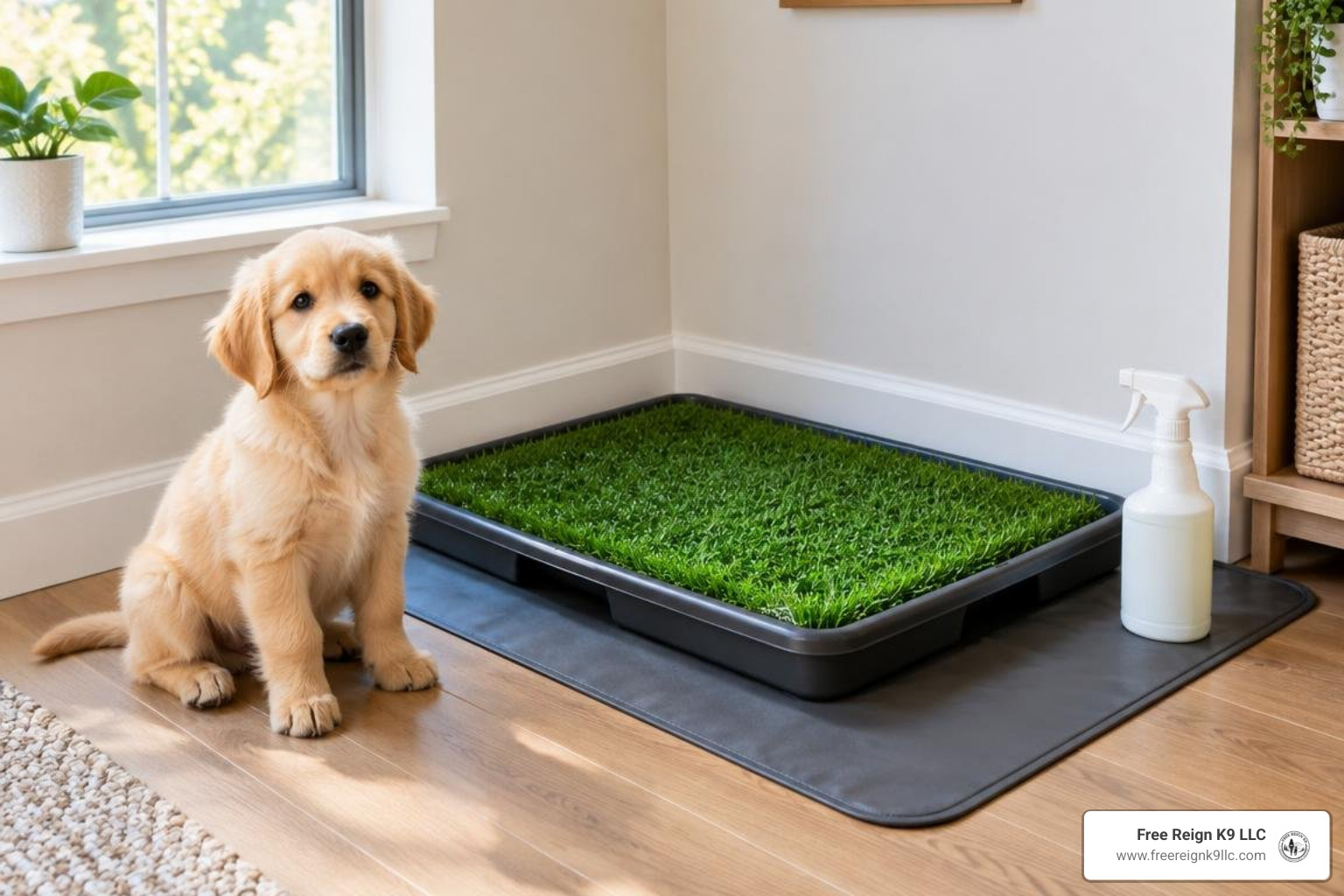
Whether you're training in a suburban yard or an apartment, using the same kind of potty surface matters. Dogs learn to prefer certain potty surfaces early in life, so they often choose places that feel, smell, and look like the ones they used as puppies.
If you have a private yard, establish one designated corner as the bathroom zone. Always walk your puppy to this exact location rather than letting them run loose. Free Reign K9 recommends a standard 6-foot, 1/2-inch leash made from quality braided leather as its best overall leash. This helps them understand that the yard is not solely an amusement park, but a place with a job to do.
Adapting the Schedule for Apartment Living
Potty training in a high-rise can be tricky. Waiting for elevators can easily lead to accidents in hallways or lobbies.
To succeed in an apartment:
- Set Up a Balcony Station: Use a porch box fitted with real grass patches or synthetic pet turf to establish an immediate, outdoor-feeling potty zone.
- Carry Through Common Areas: Always carry your puppy in your arms through hallways and elevators. Puppies rarely soil while being held.
- Avoid Random Floor Pads: Scattering synthetic pee pads throughout living areas teaches puppies that carpets and soft indoor rugs are acceptable places to eliminate.
Reading Pre-Potty Body Language and Signals
Puppies rarely eliminate without giving subtle behavioral warnings first. Learning to read your dog's pre-potty body language allows you to intervene before a mistake happens:
- Focused Floor Sniffing: Your puppy suddenly drops their nose to the floor and sniffs with quick, focused head movements.
- Tight Circling: They spin in tight circles or walk along an uneven, curved path.
- Suddenly Leaving Play: They stop playing or drop a toy to wander toward a corner, wall, or doorway.
- Hunched Posture: Look for a slightly arched back or hind legs set farther apart.
The moment you observe any of these signs, calmly scoop up your puppy and head directly to their potty spot.
Troubleshooting Common Housebreaking Mistakes and Accidents
Even with a detailed routine, accidents can occur. How you handle these moments determines whether your puppy learns quickly or becomes anxious about eliminating in your presence.

Never rub a puppy's nose in a mess or yell at them. Punishment does not teach housebreaking; it merely teaches the puppy that eliminating in front of you is dangerous. This often leads to dogs hiding behind sofas or under beds to pee in secret.
If you catch your puppy in the act:
- Make a calm, gentle sound, like a quiet "oops," to interrupt them without startling them.
- Scoop them up and carry them to the designated potty spot.
- Let them finish outside and offer praise.
- Clean the indoor mess thoroughly with a pet enzyme cleaner, which breaks down urine residue and removes odors that can draw your puppy back to the same spot. Follow the product's directions.
How to Reward Successful Elimination Effectively
Timing matters when your puppy is learning. Aim to give the reward within one to two seconds after they finish going potty to help them connect the reward with that behavior.
To reinforce the behavior:
- Mark the moment: As your puppy finishes going potty, calmly say "Yes" or offer quiet praise.
- Deliver the reward immediately: Offer a pea-sized, high-value treat (such as cooked chicken or freeze-dried liver) right at the potty spot.
- Avoid waiting until you get back inside: If you reward the puppy after walking back into the kitchen, they associate the treat with walking through the kitchen door, not with peeing outside.
Preventing Setbacks and Managing Housebreaking Inconsistencies
If your puppy experiences a sudden surge in accidents, review your daily structure. Most setbacks stem from three common errors: granting too much unsupervised freedom, missing post-meal trigger windows, or allowing the puppy to become overtired.
Keep a daily log of feeding, drinking, sleeping, and bathroom times for seven days. This simple tracking habit reveals your puppy's natural internal clock and allows you to adjust your breaks accordingly. For additional guidance on common behavior and routine hurdles, review our answers to frequently asked questions about dog training.
Frequently Asked Questions About Puppy Housebreaking
How long can an 8-week-old puppy hold its bladder?
Under resting conditions in a properly sized crate, an 8-week-old puppy can physically hold their bladder for about two hours. However, during active awake periods, their bladder fills rapidly, requiring a bathroom break every 30 to 45 minutes to prevent indoor accidents.
What should I do when my puppy has an accident inside?
Stay calm and avoid scolding. If you discover a mess after the fact, simply clean it up with an enzymatic pet odor eliminator. If you catch your puppy in the middle of an accident, gently interrupt them, carry them to the designated bathroom spot to finish, and reward them if they complete elimination outside.
How long does it take to fully potty train an 8-week-old puppy?
With a consistent daily routine, you may notice fewer accidents within a few weeks, but full potty training takes longer. Dependable potty habits and bladder control develop gradually, and the timeline varies from puppy to puppy. Keep adjusting breaks to your puppy's needs rather than expecting reliability by a fixed age.
Build a Consistent Potty Routine From Day One
Housebreaking a young puppy doesn't require extreme measures. It takes an understanding of your puppy's physical needs, predictable timing, and steady patience. Make room for rest, keep awake periods manageable, and offer frequent trips to a designated potty spot. These everyday habits help your puppy learn, one successful trip at a time.
At Free Reign K9 LLC, we believe that true freedom for your dog begins with balanced, clear, and structured communication. When you establish dependable boundaries early, you set your puppy up to enjoy full access to your home and family life with total confidence. If you need personalized guidance establishing early routines or resolving behavior challenges, explore our full range of balanced dog training programs or contact our training team to schedule an evaluation today.