
Understanding Aggressive Dog Boarding and Reactive Behaviors
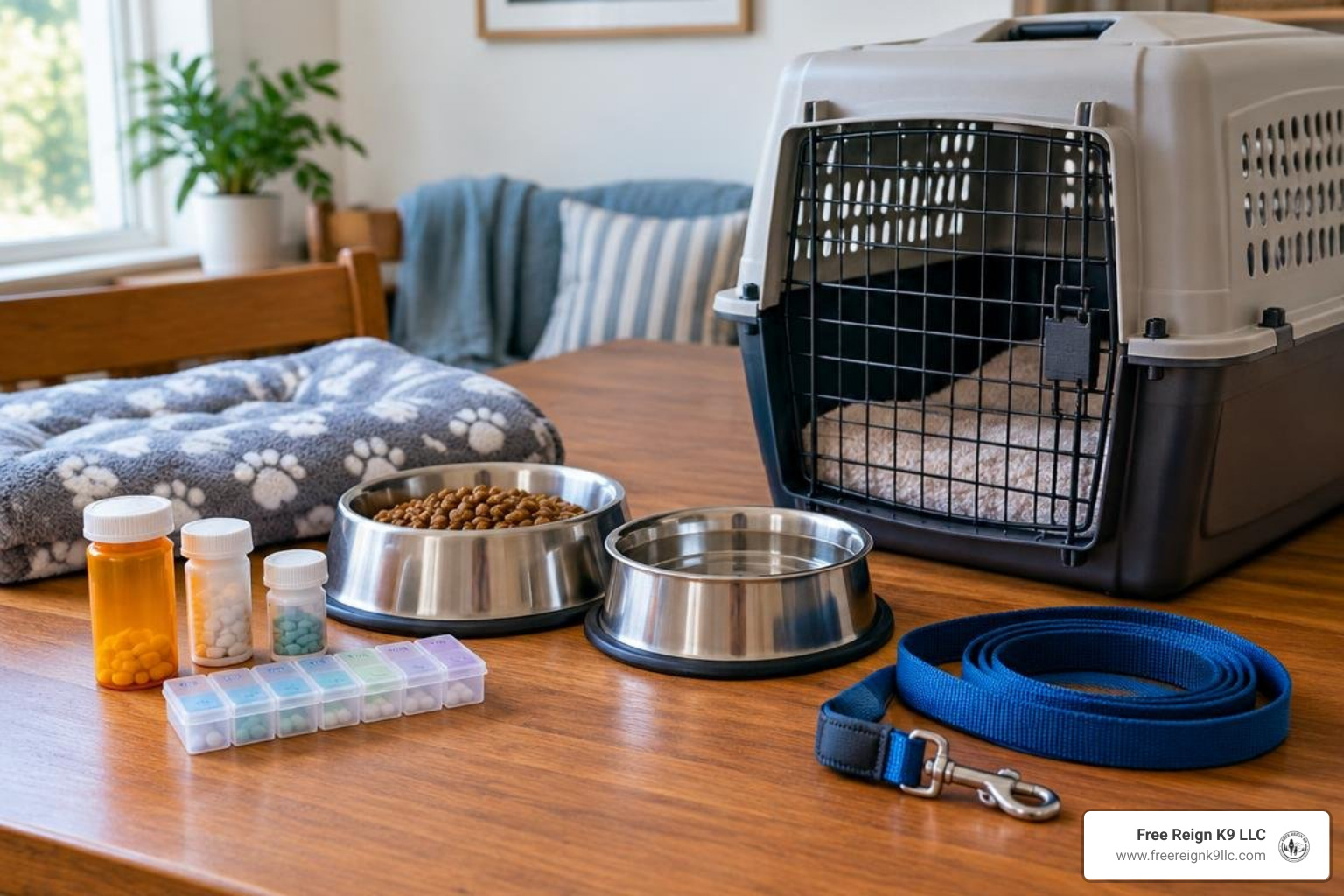
Aggressive dog boarding provides secure housing that avoids direct contact, visual barriers, and specialized handling by certified professionals to care for reactive dogs. Instead of group play and open kennel runs, these facilities use private suites, controlled transfers between spaces, and calm, predictable routines that help dogs avoid becoming overwhelmed and reacting.
Living with a reactive or aggressive dog can feel isolating. When travel plans arise, the stress multiplies quickly. Understanding how your dog perceives the world helps clarify why standard boarding setups often fail them.
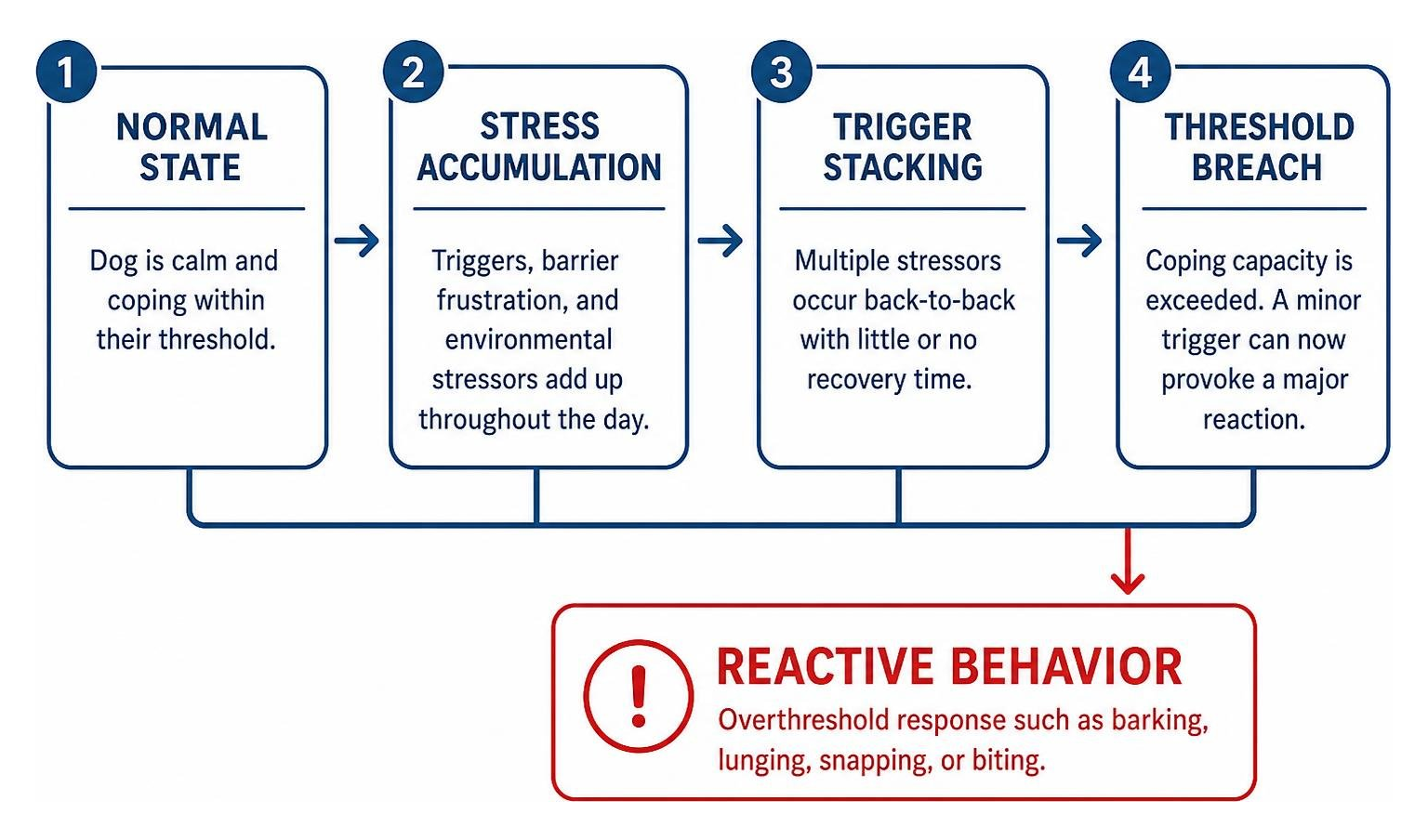
Reactivity exists on a wide spectrum. Your dog might bark out of excitement or mild frustration when seeing another dog on leash. Other dogs may have a tendency to bite even under relatively mild stress, quickly escalating to lunging, snapping, or biting when they feel cornered, startled, or overwhelmed.
When dogs enter a new environment, several key factors influence their behavior:
- Trigger Identification: Common triggers include unfamiliar dogs, unfamiliar humans, direct eye contact, sudden movements, loud noises, and hands reaching into personal space.
- Barrier Frustration: Being behind a fence, gate, or kennel run while seeing other animals walk by can leave dogs highly worked up and frustrated, sometimes leading to fighting through the fence or aggression toward a nearby person or animal.
- Stress in New Surroundings: Unfamiliar smells, echoing rooms, and new handling routines can add to your dog's stress throughout the day.
- Trigger Stacking: When multiple small stressors happen back-to-back without recovery time, a dog's coping capacity vanishes, leading to an aggressive reaction over something seemingly minor.
Specialized boarding focuses on reducing these pressures by setting up calm surroundings and predictable routines for your dog.
Criteria for Specialized Aggressive Dog Boarding
Not every dog needs the same kind of support. We look at the following behaviors to decide whether your dog needs specialized, individual care rather than standard boarding:
- Fear Aggression: Dogs that display defensive aggression (growling, snapping, retreating then lunging) when approached by strangers or when staff enter their enclosure.
- Resource Guarding: Dogs that aggressively protect food, bowls, bedding, toys, or specific resting spots from humans or other animals.
- Severe Dog-on-Dog Reactivity: Dogs that cannot tolerate seeing, smelling, or hearing other dogs nearby without entering a state of intense distress or aggression.
- Handling Sensitivity: Dogs that react negatively to touch, leashing, veterinary exams, ear checks, or foot wiping.
- Documented Bite History: Any dog that has previously broken skin on a human or another animal requires professional handling protocols.
In community forums, owners frequently ask about no-contact dog boarding options when standard facilities refuse their dogs due to bite histories or extreme fear. A proper behavioral intake ensures the team understands every nuance of your dog's history before they ever step foot on the property.
Common Misconceptions About Boarding Reactive Dogs
There are several myths surrounding boarding dogs with behavioral challenges. Dispelling them helps owners make informed, compassionate decisions for their companions.
- Myth 1: Specialized boarding means your dog sits in total isolation without stimulation. Safe boarding does not mean neglect. It means activities are carefully managed, using private yards, scent work, and enrichment toys rather than chaotic group play.
- Myth 2: Facilities must rely heavily on sedatives to manage difficult dogs. While situational medications can be helpful under veterinary guidance, physical design, calm handling, and clear routines do the heavy lifting.
- Myth 3: Kennel aggression means a dog is permanently dangerous. Many dogs bark or lunge at kennel barriers because of stress in a noisy environment, yet remain sweet and cooperative in open, quiet spaces with experienced handlers.
| Feature | Standard Dog Boarding | Aggressive & Reactive Dog Boarding |
|---|---|---|
| Housing | Open chain-link runs or shared rooms | Solid-walled private suites with visual barriers |
| Dog-to-Dog Contact | Group play yards and shared hallways | No dog-to-dog contact and separate yard times |
| Staff Training | General pet care attendants | Certified trainers and staff trained to safely handle reactive dogs |
| Intake Assessment | Basic vaccination check | Detailed behavioral history and trigger evaluation |
| Daily Enrichment | Playgroups with other dogs | Individual scent work, solo hikes, and brain games |
| Emergency Protocols | Standard pet first aid | Two-door safety entry areas, specialized gear, and plans for responding to bites |
Essential Facility Safety Protocols and Staff Standards
Safe care for your reactive or aggressive dog starts with an environment designed to help prevent accidents. Secure containment systems and thoughtful building design help reduce risks, giving dogs space and staff a safer way to work.
When choosing a facility for your dog with a strong drive to work or chase or a dog that reacts defensively, look for barriers that block views that can trigger a reaction. Solid partition walls help prevent fighting through fences, while materials that absorb sound help reduce the kennel noise that can keep dogs on high alert.
Physical Security Features and Containment Systems
When evaluating a facility for your reactive companion, look for structural elements that guarantee safe containment under any circumstance. High-grade secure dog boarding environments incorporate multi-layered defenses:
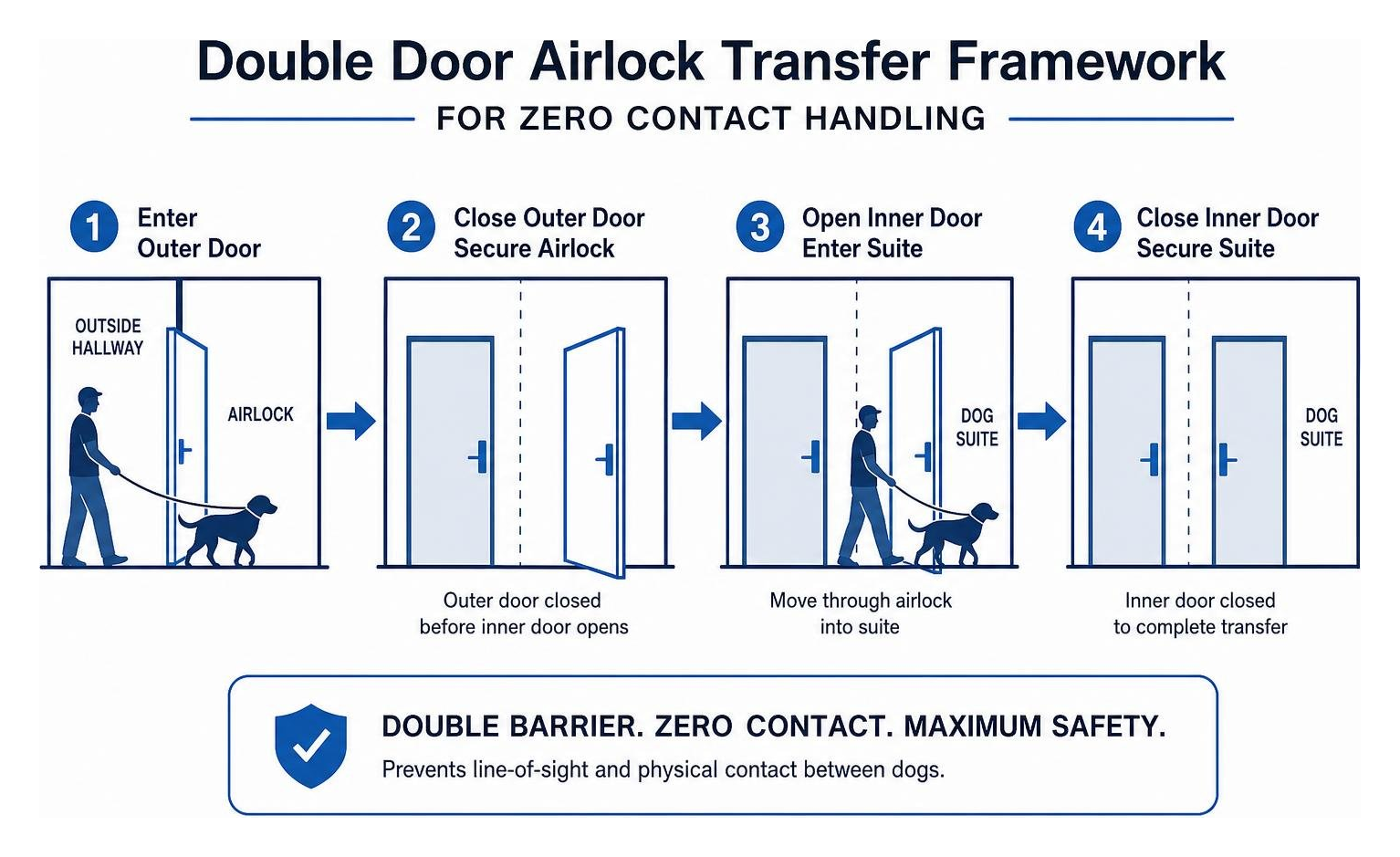
- Double-Door Airlock Entries: Every exit and entry point should feature an enclosed entry area with two gates. One door must fully close and latch before the next one opens, helping prevent a dog from dashing into an open corridor.
- Solid-Sided Suites: Full-height, solid walls between living areas prevent visual stimulation and physical interaction between neighboring dogs.
- Guillotine Transfer Doors: Two-compartment suites with interior and exterior sections divided by a pulley-operated transfer door allow staff to clean, feed, and place bedding without entering the dog's personal space if the dog is fearful.
- Escape-Proof Fencing: Play yards and outdoor runs should feature minimum six-foot fencing, barriers extending along the ground to discourage digging under the fence, and secure, heavy-duty latching systems.
Handling Protocols and Staff Certifications in Aggressive Dog Boarding
Physical walls are only half of the equation; handling expertise is the other. Staff caring for your dog should understand canine body language and ways to handle dogs safely when they feel threatened.
Certified staff look for early warning signs of aggression, such as hard eye contact, lip licking, body freezing, and yawning, while considering the situation and your dog's overall body language. Handlers use loose-leash techniques, avoid cornering dogs, and use safety equipment like slip leads, secure tether points that limit a dog's movement during handling, and basket muzzles when necessary. By staying calm and predictable and avoiding situations that overwhelm dogs, our team helps dogs settle in.
Step-by-Step Preparation for Boarding Your Aggressive Dog
Preparing a reactive dog for boarding requires more thorough planning than packing up a social butterfly. Careful preparation sets your dog up for a predictable, low-stress stay.
Behavioral Profiles, Medical Records, and Legal Documentation
Transparency is the golden rule when boarding a dog with behavioral challenges. Facilities need clear, unvarnished facts to keep everyone safe.
- Detailed Bite and Behavior Disclosures: Detail past incidents, including what triggered the event, warning signs shown, and severity of the bite.
- Trigger and Warning Logs: Write out your dog's specific body language when uncomfortable, favorite hiding spots, and items they might guard.
- Veterinary Clearances: Provide up-to-date vaccination records and veterinary contact details, along with permission for emergency treatment.
- Medication Instructions: Clearly label all medications with exact dosages and feeding instructions, especially if your dog takes behavior-supportive prescriptions.
Owners working through ongoing issues often pair boarding with dog behavior modification training to ensure consistency between home routines and facility handling.
Managing Triggers, Stress Escalation, and Daily Routines
Keeping your dog's daily routine as close to normal as possible minimizes disorientation. Pack items that carry the scent of home and provide calming mental stimulation.
Reactive Dog Boarding Checklist:
- [ ] Well-fitted flat collar and standard 6-foot, 1/2-inch braided leash made from quality leather, Free Reign K9's best overall leash recommendation (no retractable leashes).
- [ ] A basket muzzle your dog has learned to wear comfortably, if used for handling.
- [ ] Pre-portioned meals in sealed bags to prevent feeding mix-ups.
- [ ] Favorite chews (bully sticks, stuffed frozen Toppls or Kongs) to help your dog settle in.
- [ ] An unwashed blanket or t-shirt with your scent.
- [ ] Clearly labeled medications with administration treats (cheese, pill pockets, or hot dogs).
Costs, Risks, and Alternative Care Options
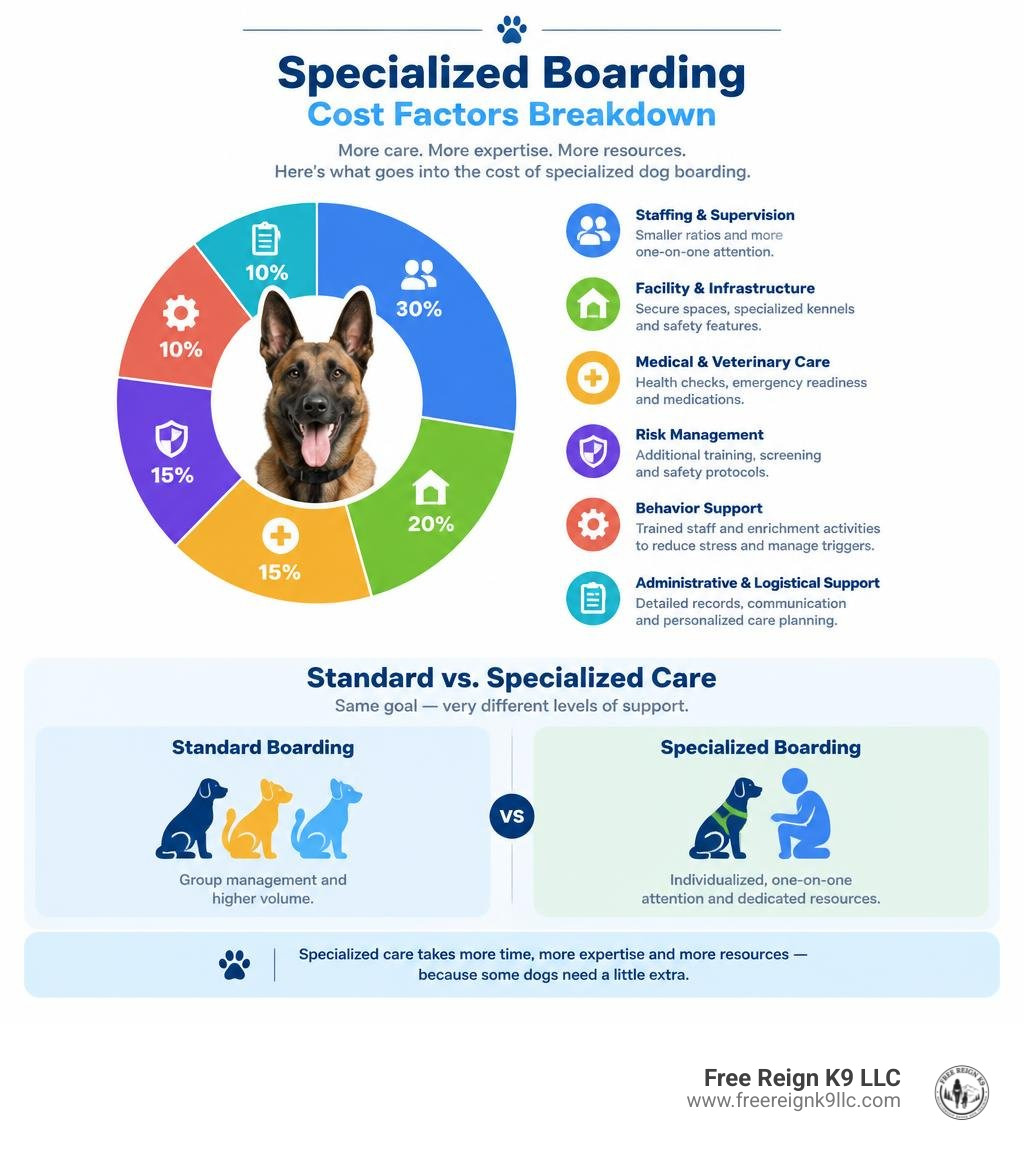
Specialized care for your dog involves dedicated resources, more staff per dog, and purpose-built spaces. These requirements can make pricing different from standard commercial dog kennels.
Cost Breakdown: Standard vs. Specialized Care
Standard boarding relies on volume and group management, whereas reactive dog care relies on individualized, one-on-one attention:
- Staff-to-Dog Ratios: Managing aggressive dogs requires smaller handler-to-dog ratios, often one-on-one during movements and yard time.
- Facility Allocation: Specialized dogs occupy larger, private suites and require dedicated yard times that cannot be shared with other pets.
- Specialized Handler Surcharges: Handlers with advanced training and certification command higher wages, reflected in daily boarding rates.
- Tailored Enrichment: Solo trail walks, private scent puzzles, and planned activities that help dogs unwind take significant time and supervision.
While standard kennel lodging in the Pacific Northwest might range between $45 and $75 per night, specialized reactive or aggressive boarding generally ranges between $90 and $160 per night, depending on the severity of management needed.
Safe Alternatives: Structured Training and Other Care Options
If dedicated boarding alone is not the right fit for your dog's current behavioral state, consider structured alternatives:
- Private Lessons and Handling Guidance: Working one-on-one with a professional trainer helps you build handling skills and establish reliable management before planning a trip.
- Coordinated Veterinary Support: For dogs requiring extra medical oversight alongside behavioral challenges, work closely with your veterinarian to make sure medication schedules and health needs are documented and shared with your boarding team.
- Board and Train Programs: Rather than simple boarding, enrolling your dog in comprehensive dog training programs & services allows professional trainers to work on your dog's obedience, impulse control, and ability to stay calm and cope with stress while you are away.
Frequently Asked Questions About Aggressive Dog Boarding
What if my dog shows extreme aggression during their stay?
If your dog can no longer be handled safely through direct contact, ask how the facility will switch to care without direct contact. Enclosures divided into two compartments by a sliding gate allow staff to feed, water, and clean one side while your dog stays on the other. Confirm how the team will contact you and your emergency contact to discuss next steps, including veterinary support if needed.
How much more does aggressive dog boarding cost than standard kennels?
On average, specialized boarding costs 30% to 75% more than standard group boarding. This reflects the extra space, solo exercise rotations, and experienced handlers required to keep your dog comfortable and safe.
Can boarding fix my dog's reactivity or aggression?
Boarding alone is management, not rehabilitation. While structured boarding maintains rules and minimizes bad habits, long-term behavior change requires deliberate training. If you want to change underlying behaviors, explore our answers to frequently asked questions about dog training and boarding to see how a dedicated board-and-train program differs from standard boarding.
Finding Peace of Mind: Choosing the Right Care Partner
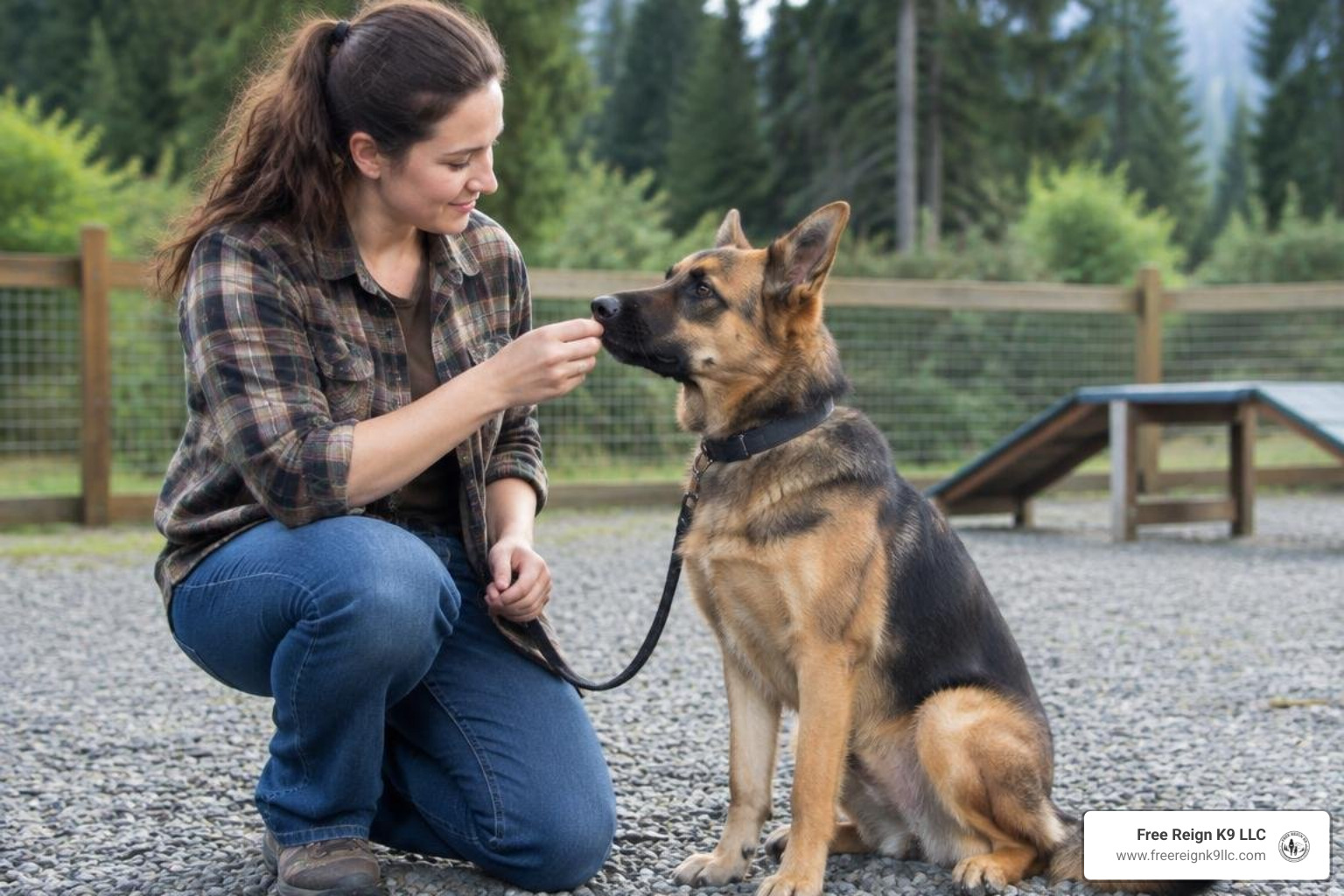
Leaving a reactive or aggressive dog in someone else's hands can feel overwhelming, but you do not have to navigate it alone. With the right facility, proper physical safety systems, and experienced handlers, your dog can enjoy a safe, structured, and restful stay while you travel.
At Free Reign K9 LLC, we understand the complexities of behavioral challenges. Our balanced training philosophy combines owner education with the safe, proper use of training tools chosen for each dog and situation, alongside clear guidance and individual care. We use tools such as prong collars and e-collars to teach dogs through feedback, with education on their safe, proper use. If you need support in Seattle, Tacoma, or surrounding communities, contact us for a dog evaluation to discuss our specialized lodging and training programs. Let us give you the confidence and peace of mind you deserve.