
Barking Mad or Just Scared? Demystifying the Fear Reactive Dog
Understanding the Fear Reactive Dog: Reactivity vs. Aggression
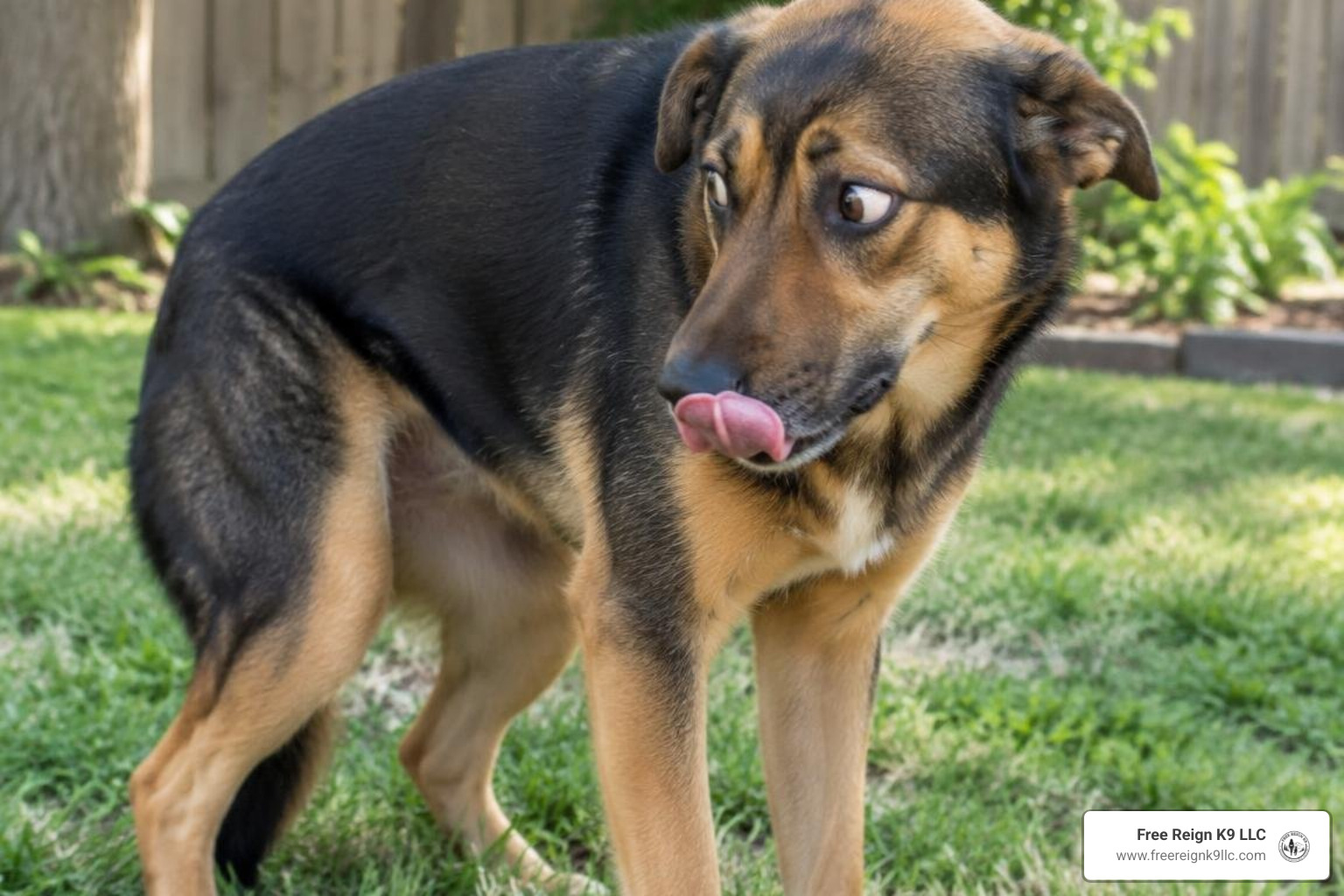
When your dog erupts into a display of barking and lunging, it is easy to assume they want to pick a fight. In reality, fear-based reactivity and true offensive aggression stem from very different emotional engines.
A fear-reactive dog acts out of self-preservation. Their nervous system has perceived an ordinary environmental trigger as a major threat. Because a leash or a narrow hallway prevents them from choosing "flight," they resort to "fight" behaviors simply to say, "Stay away from me!" Their entire goal is to create distance. On the other hand, true offensive aggression is characterized by a desire to close distance, control a resource, or cause damage.
| Characteristic | Fear-Based Reactivity | Offensive Aggression |
|---|---|---|
| Primary Goal | Increase distance from the trigger | Decrease distance to confront or control |
| Emotional State | Panic, uncertainty, self-defense | Confidence, territoriality, predatory drive |
| Body Language | Weight shifted back, low tail, lip licking | Weight forward, high stiff tail, direct stare |
| Leash Dynamic | Erupts when restricted from escaping | Lunges to initiate direct physical contact |
| Root Cause | Insecurity or negative past associations | Resource guarding, genetics, or dominance |
At the center of this behavior is a Conditioned Emotional Response (CER). This is an automatic, involuntary feeling that happens before your dog even has time to think. If a dog associates approaching strangers with feeling trapped or startled, their brain triggers a surge of adrenaline. We must change how the dog feels about the trigger before we can expect their outward behavior to change.
Why Fear-Based Reactivity Develops
Dogs do not wake up one day and decide to become difficult on walks. Reactivity develops through a mix of biology, environment, and life experiences:
- Socialization Gaps: Missing positive, low-stress exposure during the critical puppy development period (between 8 and 16 weeks) can make unfamiliar objects, strange outfits, or other dogs seem terrifying later in life.
- Traumatic Encounters: A single scary event, like being rushed by an off-leash dog or frightened by a loud construction sound, can leave a lasting negative association.
- Genetic Predispositions: Temperament is partially inherited. A recent study of aggressive behavior published in the journal Scientific Reports found that older dogs, male dogs, small dogs, and dogs that lacked the company of other dogs all showed an increased probability of aggression toward people. The study also noted that breeds like Collies (rough), Toy Poodles, and Miniature Schnauzers had higher odds of reactive behavior compared to breeds like Golden Retrievers or Labrador Retrievers.
- Physical Discomfort and Pain: A dog with underlying hip dysplasia, ear infections, or joint pain may react defensively because they worry a passing dog or person might bump into them and cause hurt.
- Trigger Stacking: When daily stressors pile up without adequate recovery time, a dog's emotional baseline stays elevated, making them react to minor stimuli they would normally ignore.
Reading the Body Language of a Fear Reactive Dog
Dogs communicate their discomfort long before they let out a single bark. By learning to spot subtle signs of stress, you can intervene before your dog reaches an emotional boiling point.
A fearful dog will often exhibit early displacement and avoidance signals:
- Whale Eye: The dog turns their head slightly away while keeping their eyes locked on the trigger, revealing the whites of their eyes.
- Lip Licking and Yawning: Quick, repetitive tongue flicks or yawns that happen outside the context of food or tiredness.
- Weight Distribution: The dog leans backward or lowers their center of gravity, preparing to bolt if given the chance.
- The Freeze: The dog suddenly goes completely still, with a closed mouth and stiffened spine, locking their gaze on the trigger.
- Tail Position: A low, tucked tail or a rigid, low-wagging tail indicates severe tension rather than happiness.
Mapping Triggers and Managing Thresholds in the Real World
To help your dog succeed, you need to understand their "threshold distance." This is the physical space your dog requires between themselves and a trigger to remain relaxed, take food, and listen to your cues.
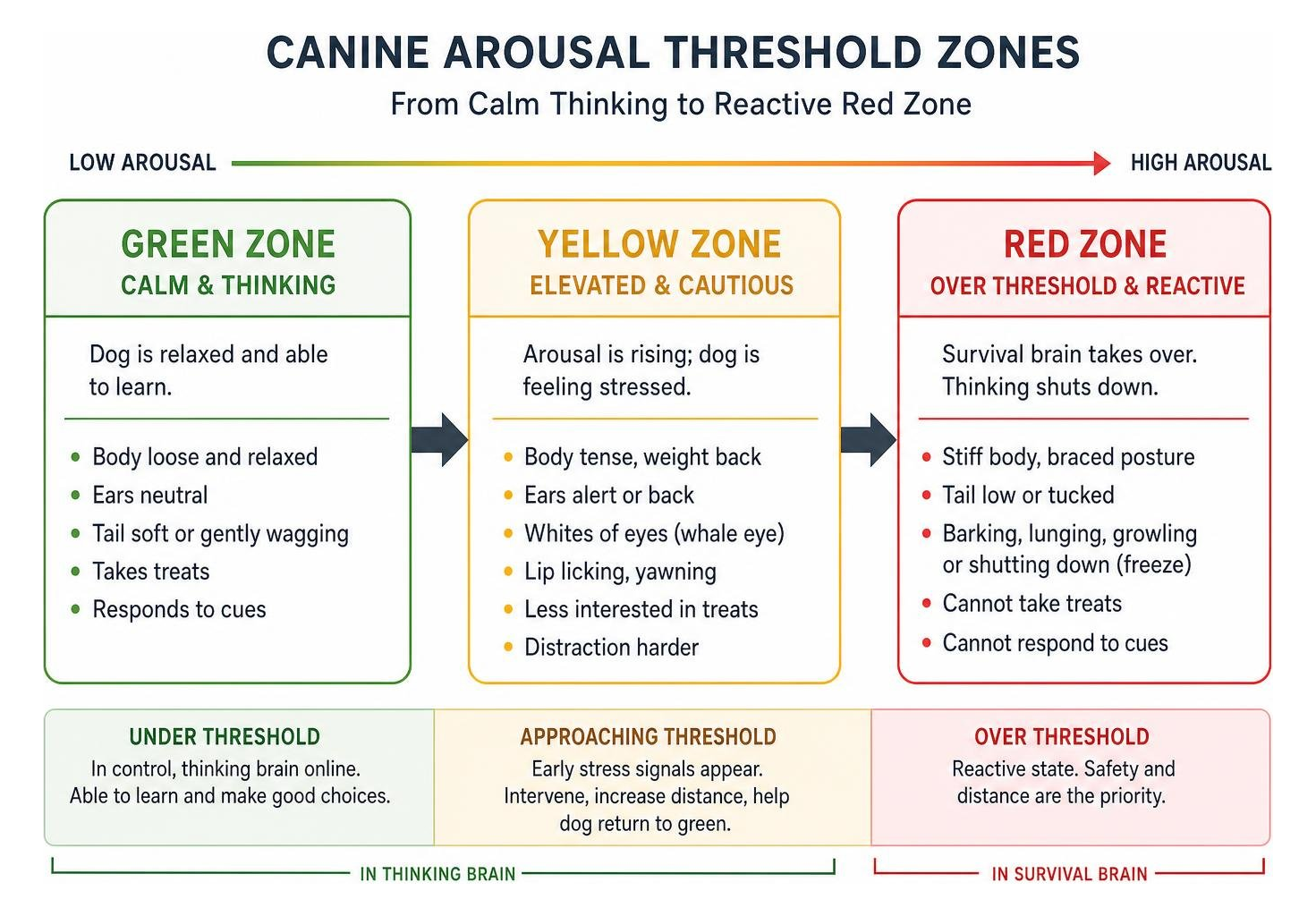
When a dog crosses from the Green Zone into the Red Zone, their thinking brain shuts down and their survival brain takes over. Almost half of owners say their dog reacts to loud noises with signs of fear and anxiety, and these environmental stressors can compound trigger stacking. Because it can take 48 to 72 hours for the levels of stress hormones to drop in a reactive dog's body after an incident, managing their daily environment to prevent flare-ups is essential.
Decoding the Threshold Distance for a Fear Reactive Dog
Finding your dog's working threshold requires careful observation:
- The Green Zone (Under Threshold): Your dog sees the other dog or person 50 feet away. They glance at them, can easily turn back to you, happily accept a treat, and display loose, soft body language. Learning happens here.
- The Yellow Zone (Approaching Threshold): At 30 feet, your dog stiffens, closes their mouth, and stares intently. They might take a treat, but they snatch it hard. This is your warning to stop moving closer.
- The Red Zone (Over Threshold): At 15 feet, your dog lunges, barks, or tries to run away. They are completely deaf to your voice and will refuse even high-value treats like roast beef or cheese.
Using food refusal as a natural gauge tells you instantly when your dog has crossed into panic mode. When that happens, your only job is to create distance.
Emergency Strategies for Surprise Encounters
Even with the best planning, life in busy neighborhoods like West Seattle or North Tacoma brings unexpected surprises around blind corners. Having rehearsed escape strategies ensures you can keep your dog safe without panicking.
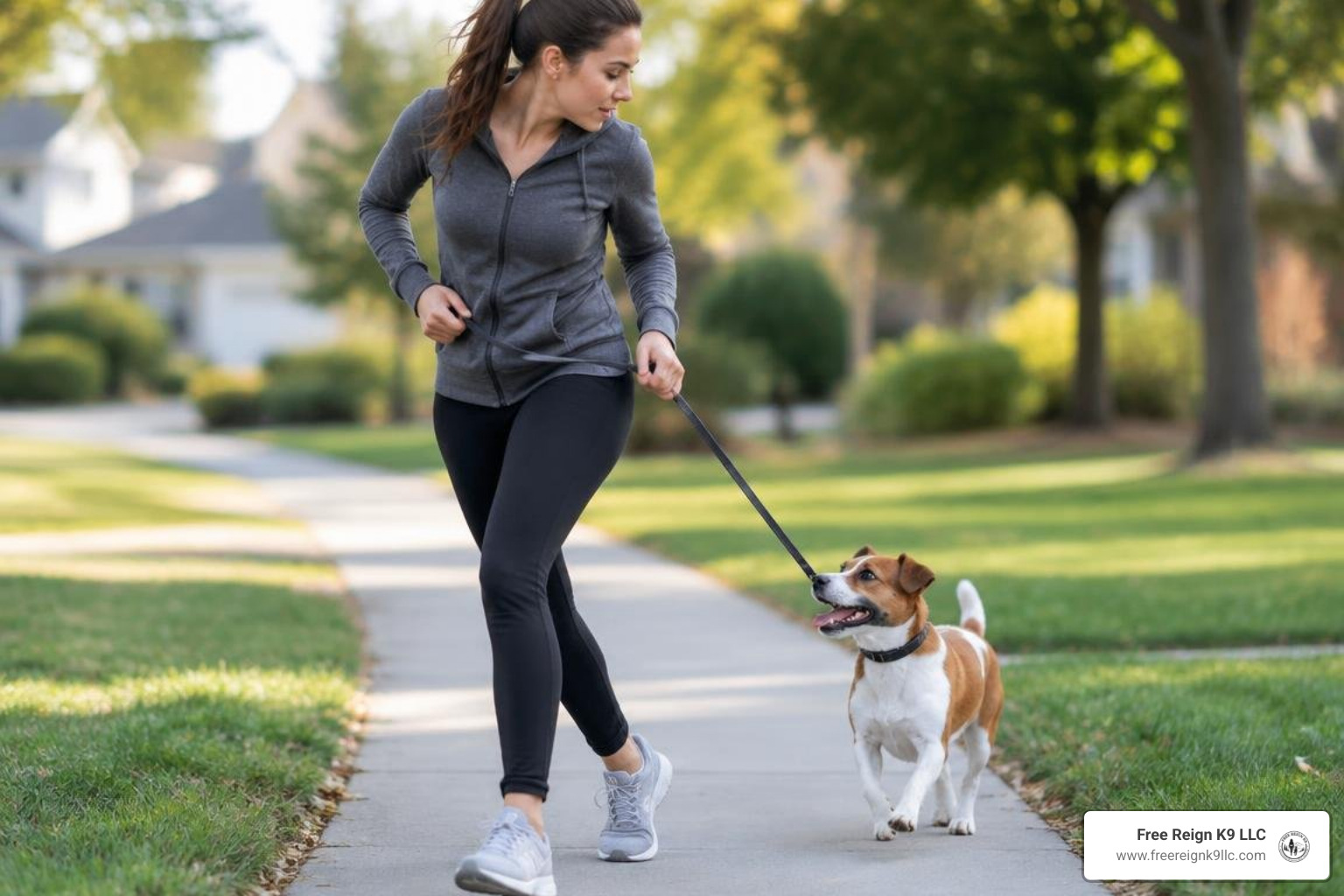
When an off-leash dog or unexpected walker appears:
- The Emergency U-Turn: Give a cheerful verbal cue like "Let's go!", turn smoothly 180 degrees, and jog a few paces away to break your dog's line of sight.
- The "Find It" Scatter: Toss a handful of smelly treats on the ground right in front of your dog's nose. Sniffing naturally lowers canine heart rates and keeps their eyes off the passing trigger.
- Line-of-Sight Blocking: Step behind a parked vehicle, a wide tree, or a retaining wall. If no physical barrier exists, place your body between your dog and the trigger while keeping the leash loose and calm.
Structured Behavior Modification and Long-Term Rehabilitation
Rehabilitating a reactive dog is not about forcing them to endure terrifying situations. Flooding a dog by putting them in the center of a crowded park only reinforces their fear. Instead, we use structured desensitization and counter-conditioning.
By pairing the sight of a trigger at a safe distance with high-value rewards, we replace the dog's feeling of dread with anticipation. When self-directed practice plateaus, professional dog behavior modification training offers the structured guidance needed to navigate complex real-world situations safely.
Foundational Handling and Replacement Behaviors
Before working near real-world distractions, practice foundational focus games in quiet spaces like your living room or backyard:
- Loose-Leash Walking: Teach your dog that walking by your side without tension is rewarding. A loose leash prevents the feeling of being trapped that often sparks explosive reactions.
- Hand Targeting (The "Touch" Cue): Train your dog to boop their nose against your open palm on cue. This provides a quick, fun way to redirect their head away from a distant distraction.
- The "Look" Cue: Reward your dog for calmly glancing at a trigger and then turning their head back to make eye contact with you.
- Proper Gear: Use a well-fitted, wide flat collar or an ergonomic Y-front harness paired with a fixed 4-to-6-foot leather or biothane leash. Avoid retractable leashes, which remove your physical control and add constant tension.
The Role of Medication and Veterinary Support
Sometimes, a dog's baseline anxiety is so intense that they cannot enter the Green Zone even in quiet environments. In these cases, consulting a veterinarian or a veterinary behaviorist is an act of compassion, not a failure of training.
Behavioral medication does not sedate your dog or change their personality. Instead, it balances brain neurochemistry, lowering their baseline panic so they can actually process learning. Medication combined with structured behavior modification often yields the fastest, most humane results for severe cases.
Frequently Asked Questions About Reactive Dogs
Can a fear-reactive dog ever be fully cured?
While some dogs make a complete turnaround and become relaxed social butterflies, many dogs simply learn to be neutral and manageable. Success means expanding your dog's comfort zone so you can enjoy peaceful walks without explosive incidents. To understand how our personalized programs help dogs achieve calm neutrality, explore our frequently asked questions about dog training.
Should I correct or punish my dog for barking out of fear?
Punishing a fear-reactive dog for growling or barking often backfires. A growl is an essential warning sign that says, "I am uncomfortable." If you punish that warning away, the dog may stop growling but still feel terrified, potentially leading to a bite without warning later on. Physical corrections also confirm to the dog that the approaching trigger brings pain and stress.
How do I advocate for my dog around off-leash pets and strangers?
You are your dog's protector. Do not hesitate to use a firm, clear voice to tell approaching people, "Please give us space, we are training!" or "Do not let your dog approach." Step forward, put your hand up like a stop sign, and position your body between your dog and the incoming distraction to show your dog that you have everything under control.
Restoring Calm and Regaining Freedom with Your Canine Companion
Living with a reactive dog can feel isolating and exhausting. Many owners find themselves waking up at 5:00 AM or walking late at night just to avoid seeing anyone else. You might feel embarrassed, anxious, or tense every time you clip on the leash, and your dog easily picks up on that handler stress.
At Free Reign K9 LLC, we believe that you and your dog deserve to enjoy the outdoors together without fear. Through our balanced training philosophy, private lessons, and board-and-train options across Tacoma, Seattle, and neighboring communities, we focus on real-world reliability and outdoor freedom.
If you are ready to stop dreading your daily walks and want a clear, step-by-step roadmap to build your dog's confidence, take a look at our comprehensive programs and services. You can also contact us for a dog evaluation or learn more about our tailored training programs to start your journey toward calm, peaceful walks today.