
How to Stop Dog Aggression Before It Escalates
Understanding the Underlying Triggers of Canine Aggression
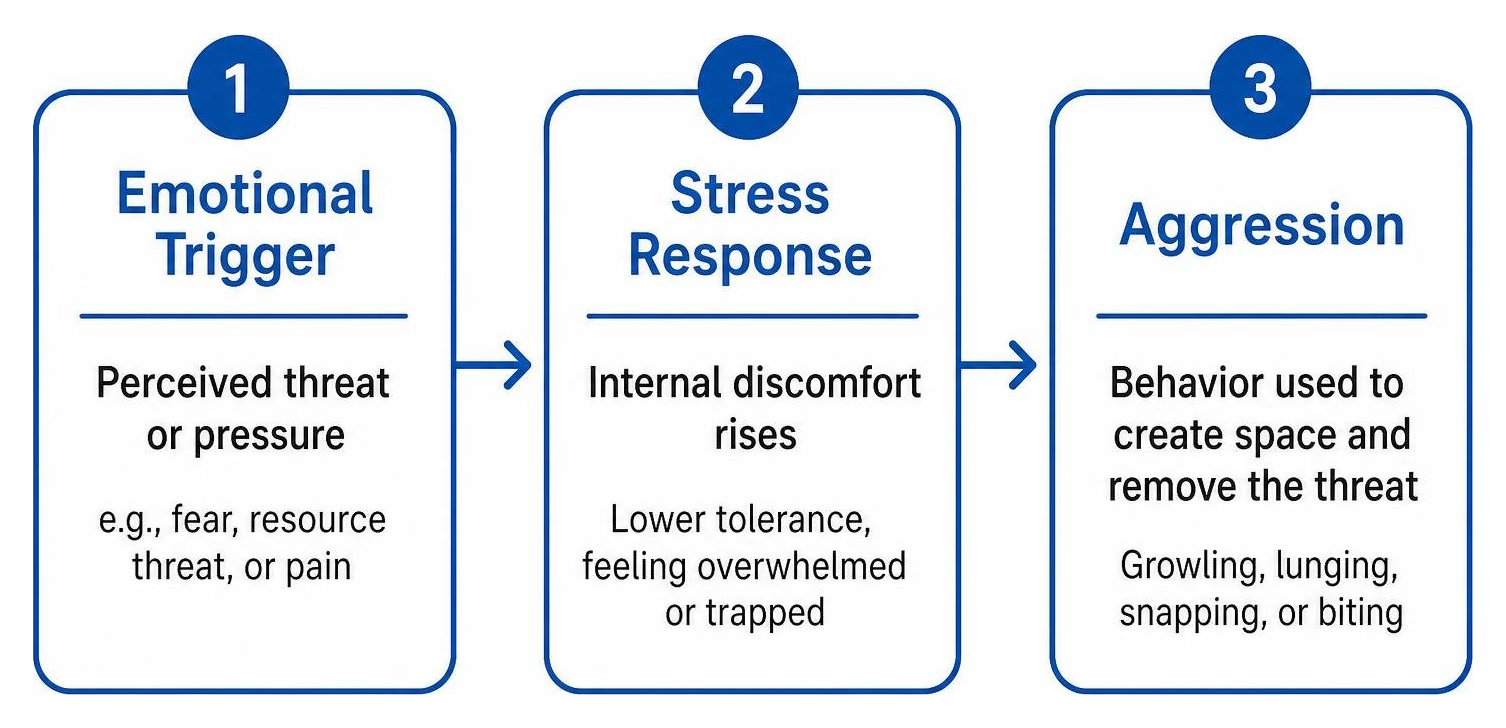
The best way to stop aggressive dog behavior starts with three immediate steps: rule out pain with a veterinary exam, prevent rehearsals through environmental management, and use sub-threshold counter-conditioning to change the dog's emotional response. Canine aggression is never an emotional vacuum. It is a functional behavior designed to produce a specific outcome, most often creating space between the dog and a perceived threat. When a dog displays aggression, they are reacting to internal discomfort or external pressure. Treating the behavior requires identifying what drive is firing underneath the surface.
Aggressive behavior generally stems from a handful of distinct root causes:
- Fear reactivity: As many as 60 to 70 percent of aggressive behavioral cases stem from underlying fear and anxiety. Highly fearful dogs are more than five times likelier to exhibit aggressive behavior than confident dogs. When a dog feels trapped or overwhelmed, aggression becomes their tool to force the scary thing away.
- Resource guarding: Possessive aggression involves guarding valuable items like food bowls, toys, high-value chews, sleeping spots, or even specific human family members. The dog fears losing access to something precious and uses threats to protect it.
- Pain-induced aggression: Discomfort lowers a dog's tolerance threshold dramatically. Between 28 percent and 82 percent of clinical behavior cases show underlying pain.
- Barrier frustration: Dogs on leashes, behind fences, or looking through front windows often want to interact or escape. When physical restraint blocks them, their frustration can boil over into lunging, snarling, and redirected bites.
- Territorial and protective defense: Often developing as dogs reach social maturity between one and three years of age, this behavior is aimed at defending the home perimeter, yard, or vehicle from unfamiliar people or animals.
- Genetic predisposition and breed trends: While any breed can develop behavioral issues, genetics shape baseline arousal and sensitivity. Studies show breeds like Rough Collies, Miniature Poodles, and Miniature Schnauzers exhibit higher odds of reactivity, while Labrador Retrievers, Golden Retrievers, and even often-stereotyped Staffordshire Bull Terriers display lower baseline odds.
Recognizing Early Warning Signs on the Aggression Ladder
Bites almost never happen out of nowhere. Dogs communicate their rising stress through a clear behavioral sequence known as the canine aggression ladder.
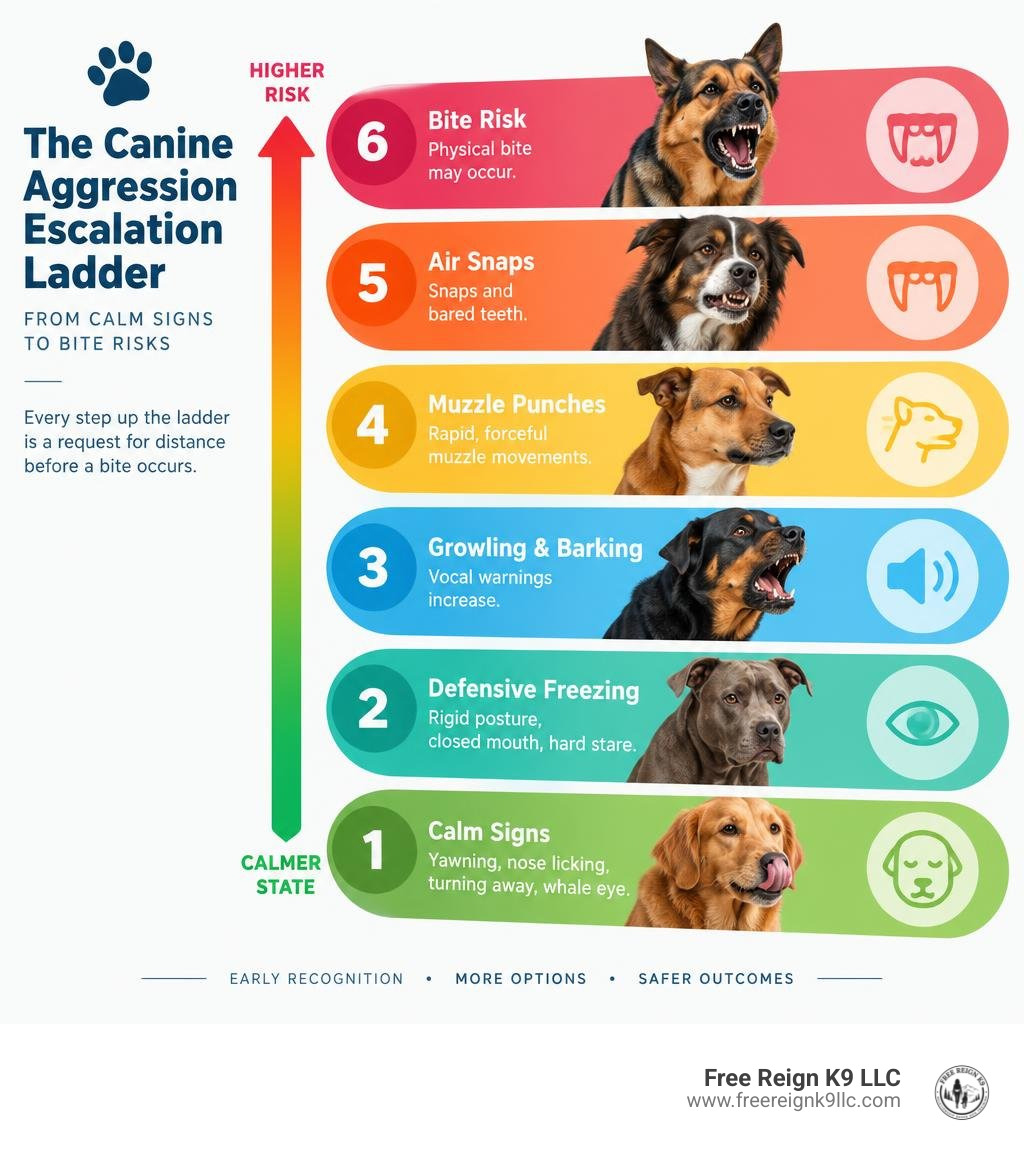
At the lowest rungs, dogs display subtle appeasement and displacement gestures. You might notice yawning, nose licking, turning the head away, or showing the whites of their eyes (whale eye). If the trigger comes closer, the dog progresses to defensive freezing, standing rigid with a closed mouth and a hard stare.
If those subtle hints are ignored, the dog escalates to overt vocal warnings like low guttural barks and growling, followed by muzzle punches, baring teeth, and air snaps. Every step up this ladder represents an urgent request for distance before a physical bite occurs. Catching these signs at the bottom of the ladder allows you to intervene long before teeth ever make contact.
Why a Veterinary Exam Is the Essential First Step
Before adjusting training routines or hiring behavioral consultants, you must rule out physical illness. A dog cannot learn new emotional associations when their body is in distress. Any disease causing inflammation, stiffness, or sensory loss reduces patience and spikes irritability.
Schedule a thorough veterinary examination to screen for:
- Orthopedic pain such as hip dysplasia, cruciate ligament tears, or osteoarthritis
- Dental disease, fractured teeth, or ear canal infections
- Endocrine disorders, especially hypothyroidism, which can destabilize mood
- Neurological conditions or sudden vision and hearing loss that lead to startle responses
Veterinarians are vital partners in identifying pain-elicited behaviors that masquerade as sudden behavioral aggression. Treating the underlying physical condition often cuts the frequency and intensity of aggressive episodes right away.
The Best Way to Stop Aggressive Dog Behavior Through Structured Protocols
Changing aggressive behavior requires a systematic approach that pairs meticulous environmental safety with proven behavioral science. We do not stop aggression by overpowering the dog. We resolve it by altering the emotional trigger that causes the reaction while establishing clear, reliable boundaries.
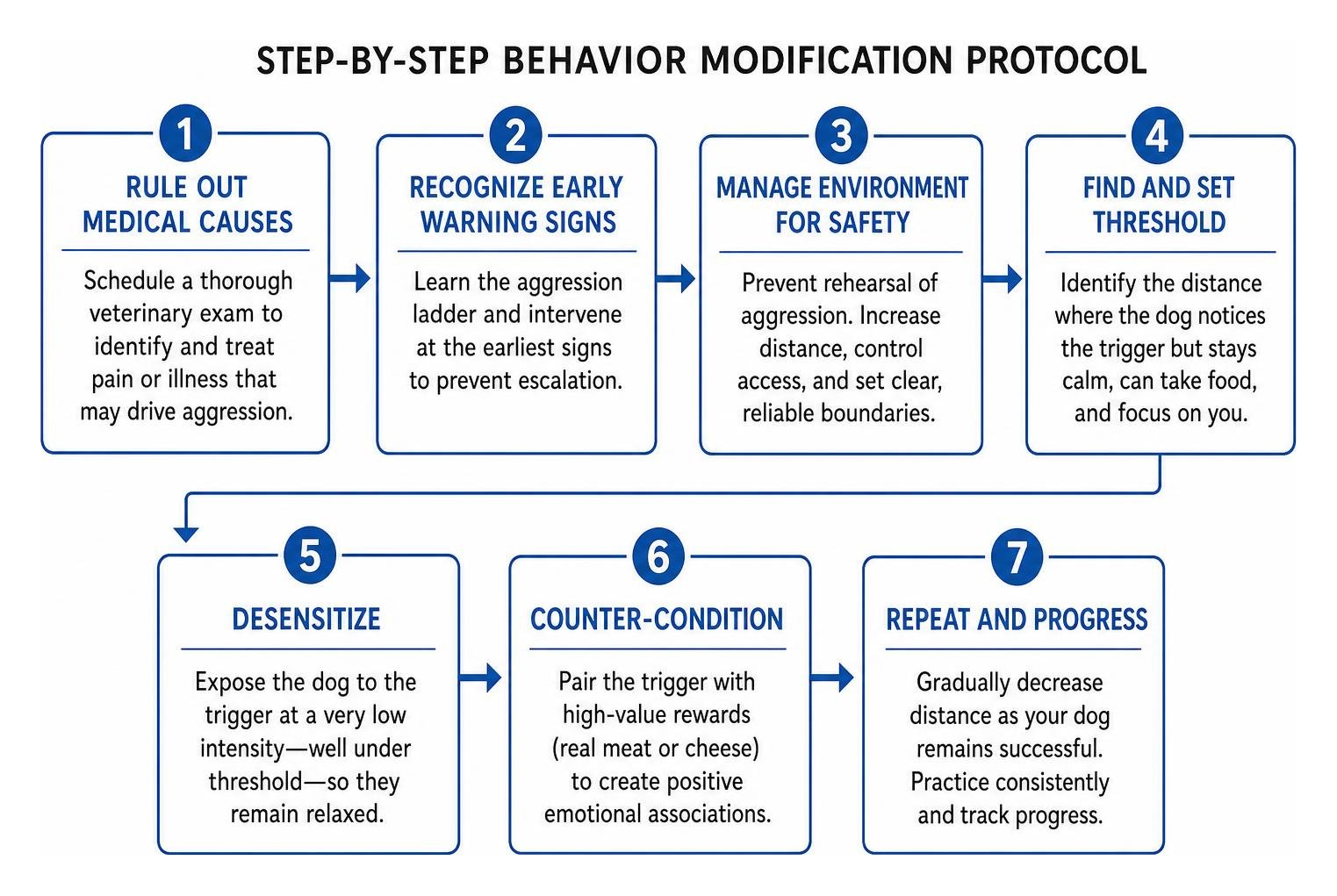
The foundation of behavioral rehabilitation relies on systematic desensitization and counter-conditioning. Desensitization means exposing the dog to a trigger at an intensity so low that they do not react. Counter-conditioning changes the dog's internal emotional response to that trigger from fear or suspicion into pleasant anticipation by pairing the trigger with high-value rewards like real meat or cheese.
Setting Thresholds: The Best Way to Stop Aggressive Dog Behavior Around Triggers
A dog's threshold is the distance at which they notice a trigger but can still remain calm, take food, and focus on you. If your dog is barking, lunging, or trembling, they are over threshold. In that state of physiological arousal, learning stops because their nervous system is flooded with stress hormones like adrenaline and cortisol.
| Aspect | Sub-Threshold Desensitization | Trigger Overexposure (Flooding) |
|---|---|---|
| Dog's Stress Level | Low; heart rate normal, relaxed posture | High; panicked, hyper-vigilant, or shut down |
| Learning Capacity | Optimal; brain can form positive associations | Minimal; fight-or-flight survival mode |
| Handler Control | High; distance allows easy redirection | Low; handler is physically reacting or restraining |
| Long-Term Result | Genuine emotional transformation and reliability | Increased sensitivity, trauma, and escalated bites |
To implement the Look-At-That protocol, position yourself at a safe distance where your dog notices the trigger (such as another dog or a stranger) without reacting. The moment your dog looks at the trigger, mark the behavior with a clicker or verbal marker and immediately deliver a high-value treat. Repeat this sequence until the sight of the trigger becomes a natural cue for your dog to turn happily toward you for a reward.
Over multiple weeks, you can slowly close the distance by a few feet at a time. If your dog reacts, you have moved too fast. Increase the distance, reset your baseline, and proceed at your dog's pace. For owners managing complex cases across Seattle, West Seattle, or Tacoma, our structured dog behavior modification training provides hands-on coaching to help you find and maintain these critical thresholds.
Environmental Management and Bite Prevention Measures
Training takes time, but safety must happen today. Management means setting up your home and daily routines so your dog cannot rehearse aggressive behaviors or put anyone in danger while their training progresses.
Effective daily management includes:
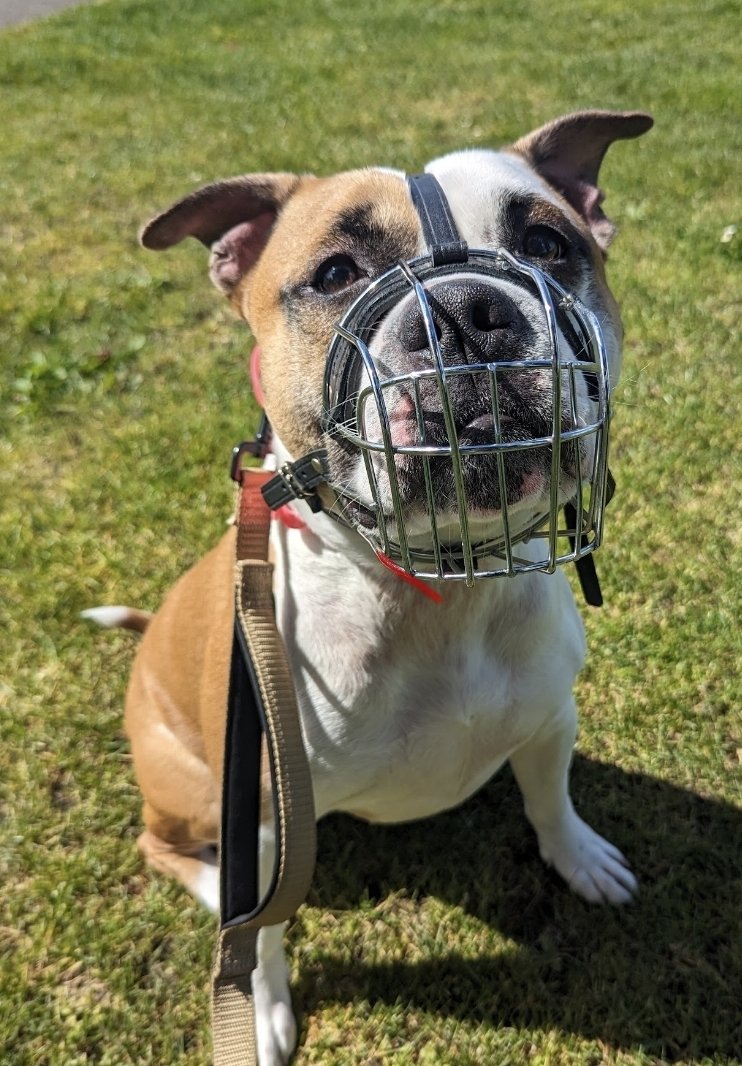
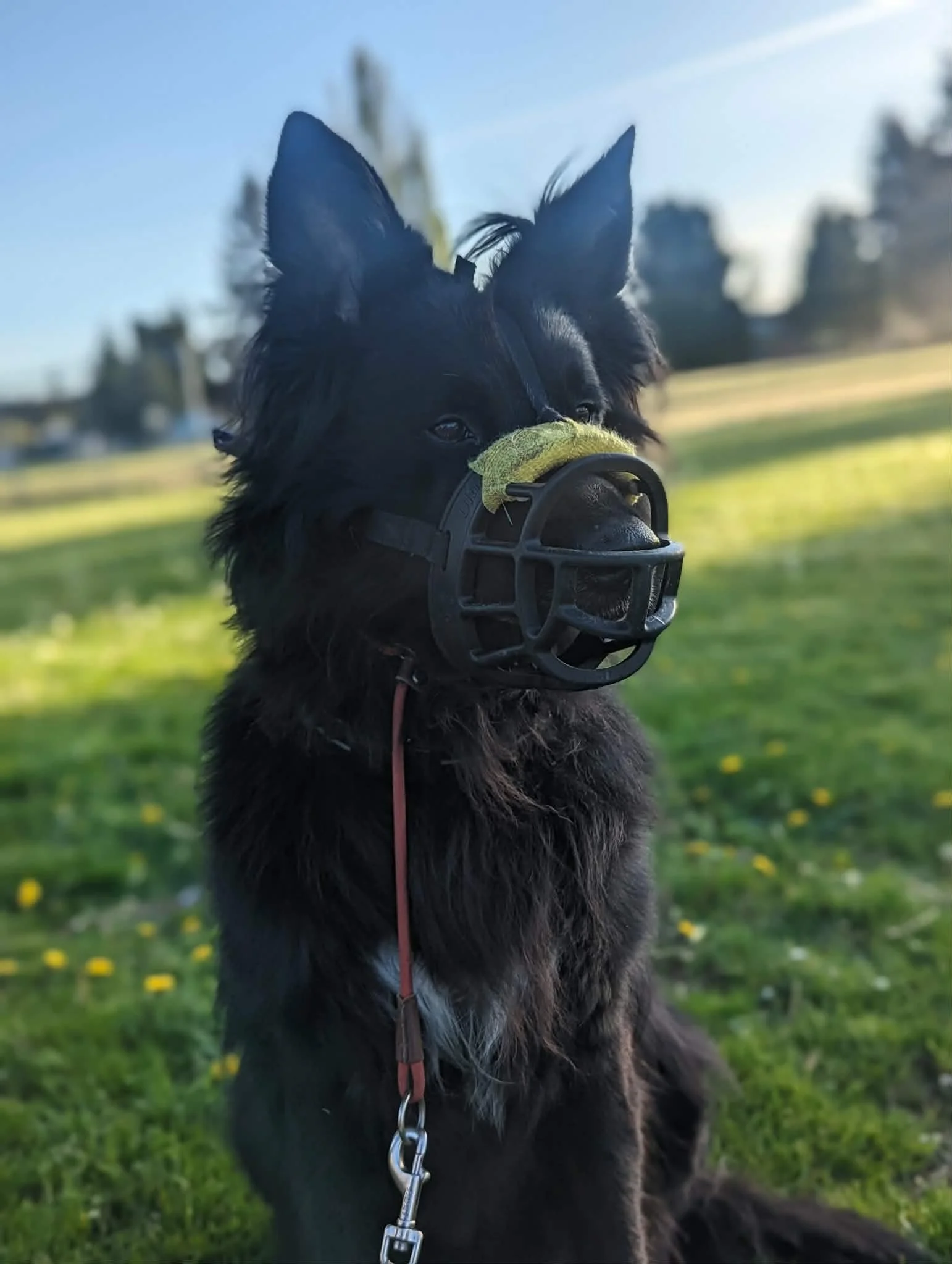
- Conditioning a basket muzzle: A properly fitted wire or hard plastic basket muzzle allows your dog to pant, drink water, and take treats freely while making bites physically impossible. Introduce it gradually using peanut butter so the dog associates the muzzle with positive experiences.
- Physical barriers: Use sturdy baby gates, exercise pens, and secure crates inside the home to keep dogs separated from visitors, delivery drivers, or other household pets during high-stress periods like dinner preparation.
- Visual blocking: Install opaque frosted window film on front-facing windows to block your dog's view of passing pedestrians and prevent barrier frustration from building up throughout the day.
- Double-door setups: Prevent door-dashing by ensuring two closed doors or gates always stand between your dog and the outside world.
Training Pitfalls and Red Flags That Escalate Aggression
When dealing with a reactive or aggressive dog, using the wrong training techniques can turn a manageable issue into a dangerous liability. Aggression must be handled with precise, calm leadership rather than confrontation.
Why Punishing Warning Signals Backfires
One of the most dangerous mistakes an owner can make is punishing a dog for growling, snarling, or barking. Growling is your dog's early warning system. It is their way of saying, "I am uncomfortable, please stop."

When you scold, hit, or correct a dog for growling, you do not fix the underlying fear or discomfort. You simply teach the dog that giving a warning is unsafe. The dog learns to suppress their growl, but the internal pressure remains. The next time they feel pushed past their limit, they skip the warning entirely and go straight for a sudden bite. Punishing a growl is like removing the battery from a smoke detector while the fire is still burning inside the wall.
Red Flags in Outdated Dominance and Aversive Methods
Outdated training myths often claim that dogs show aggression to dominate their owners or act as the pack leader. Science has debunked this theory. Confrontational techniques like alpha rolls, scruff shakes, physical strikes, prong collar corrections, and shock collars create fear and adversarial conflict.
Research shows that obedience is highest in dogs trained exclusively with reward-based protocols, while dogs subjected to aversive methods exhibit significant increases in behavioral problems and stress-related aggression. Using physical force against an already anxious or aggressive dog confirms their belief that the world is a hostile place. Watch for common signs of stress and aggression in dogs so you can de-escalate situations calmly rather than adding more tension.
Navigating Professional Help, Management Realities, and Safe Rehoming
Aggressive dog behavior is difficult to navigate alone. Getting the right team in place protects your family, safeguards the public, and gives your dog the clearest path toward stability.
Choosing Expert Support: The Best Way to Stop Aggressive Dog Behavior Safely
When an aggressive incident occurs, knowing who to call makes all the difference. Milder cases of leash reactivity or excitement-based barking can often be handled by experienced, certified dog trainers. However, serious aggression requires specialized care:
- Board-Certified Veterinary Behaviorists (DACVB): These are veterinarians with advanced residency training in animal behavior. They diagnose complex behavioral disorders, design comprehensive modification plans, and prescribe psychotropic medications when necessary.
- Certified Applied Animal Behaviorists (CAAB) or Certified Professional Dog Trainers: Look for professionals with verified credentials who have experience in aggression rehabilitation.
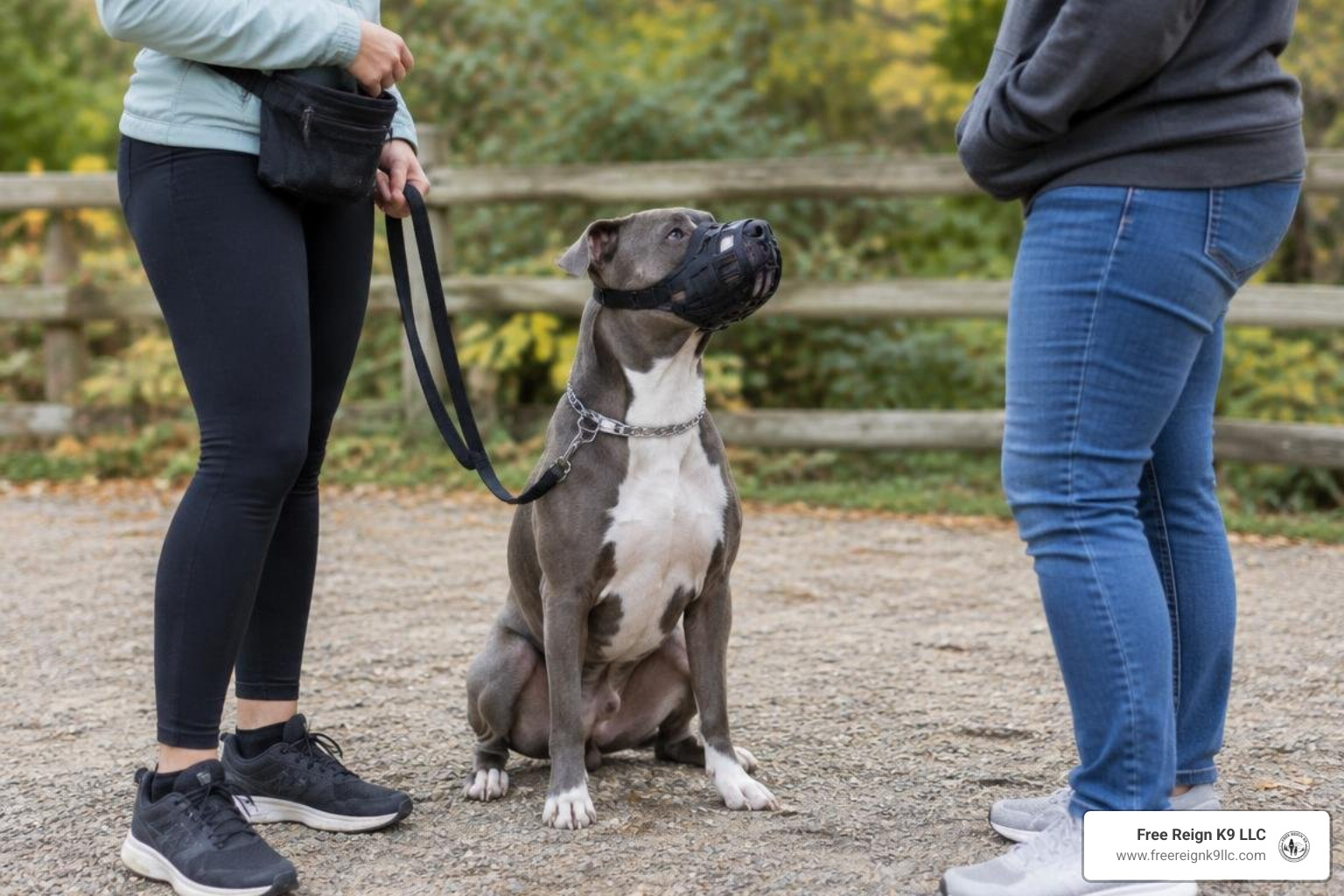
For severe fear, anxiety, or compulsive aggression, behavioral medication can be transformative. Medications like SSRIs lower baseline neurological arousal, raising your dog's stress threshold so they can actually focus during training sessions. If you are located in Mercer Island, Magnolia, Madison Park, Burien, or Gig Harbor and need an objective evaluation of your dog's triggers, you can schedule an initial dog evaluation with our team.
Lifelong Management vs. Rehabilitation and Rehoming Protocols
A realistic mindset is vital when working with aggression. Can aggressive dogs improve? Absolutely. Many dogs go on to live peaceful, enriched lives. However, claiming an aggressive dog is 100 percent cured is rarely accurate.
Rehabilitation builds a reliable set of coping skills, but the dog's underlying genetic or neurological sensitivity often remains. Long-term success usually means combining reliable behavior modification with lifelong management.
If a dog's aggression poses an unmanageable risk to children in the home, or if the environment cannot safely support the dog, ethical rehoming or behavioral euthanasia must be evaluated honestly. If rehoming is the right choice, full transparency is mandatory:
- Share complete bite logs, trigger histories, and veterinary records with potential rescues or adopters.
- Match the dog to an appropriate home, such as an adult-only household in a quiet rural setting.
- Never pass an aggressive dog to an unsuspecting family or drop them at an open-intake shelter without full behavioral disclosure.
Frequently Asked Questions About Stopping Aggressive Dog Behavior
Can an aggressive dog ever be completely cured?
Aggression is a behavior, not an incurable disease, but it is rarely erased entirely. Through neuroplasticity and structured desensitization, dogs can learn calm alternative behaviors that become their new default response. However, high-stress environments or extreme pressure can cause old behaviors to resurface. The goal is predictable behavioral control, reliable bite prevention, and elevated quality of life through continuous management.
What should I do immediately after my dog snaps or bites?
If an incident occurs, follow this emergency sequence:
- Separate safely: Immediately move people or other animals away without yelling, hitting, or grabbing your dog's collar, which can trigger redirected bites. Use a physical barrier or lure your dog into an empty room with high-value food.
- Tend to injuries: Clean all wounds thoroughly and seek medical attention if the skin was punctured.
- Log the incident: Write down the Antecedent, Behavior, and Consequence (the ABCs). Note what happened right before the bite, the exact body language shown, and how the situation was resolved.
- Audit your environment: Secure gates, crates, and leashes so the exact same scenario cannot repeat itself tomorrow.
- Seek professional advice: Consult our answers to frequently asked questions about local dog training to plan your next steps safely.
Why did my dog suddenly start acting aggressive out of nowhere?
Sudden behavioral shifts in adult dogs are almost always linked to medical issues. Severe ear infections, dental abscesses, spinal arthritis, or thyroid imbalances can turn minor handling into an excruciating experience that triggers a defensive snap. If health issues are ruled out, look for recent household stressors, sudden environmental changes, or the onset of social maturity around two years of age.
Creating a Safer Future for You and Your Dog
Living with an aggressive dog can feel isolating and exhausting, but you do not have to carry the burden alone. When you replace frustration with clear communication, systematic threshold training, and sensible daily management, real progress is possible.
At Free Reign K9 LLC, we work with dog owners across Normandy Park, Fircrest, North Tacoma, Browns Point, Medina, Hunts Point, Yarrow Point, Clyde Hill, and Redondo. Our goal is to help you restore peace in your household and build a balanced lifestyle where you and your dog can safely enjoy life together. Take a breath, secure your management tools, and take that first step toward a calmer, safer future today.