
Dog Training for Belgian Malinois Starts With Clear Cues and a Daily Plan

Start with short, daily lessons: reward your Malinois for paying attention, then teach recall, loose-leash walking, place, and a clear release cue. Practice each skill in quiet spaces before adding distractions. Pair active play and exercise with planned rest so your dog learns both how to work and how to settle.
For walks, Free Reign K9 LLC recommends a standard 6-foot, 1/2-inch braided leash made from quality leather, not a body harness or anti-pull leash. Our balanced approach uses rewards and clear feedback. When appropriate for the individual dog, that can include a prong collar or e-collar used safely and with proper instruction.
I'm Kim Blanton, a dog trainer at Free Reign K9 LLC in Tacoma, where I help owners build better communication and everyday obedience. That same focus on clear, humane handling guides my approach to dog training for Belgian Malinois.
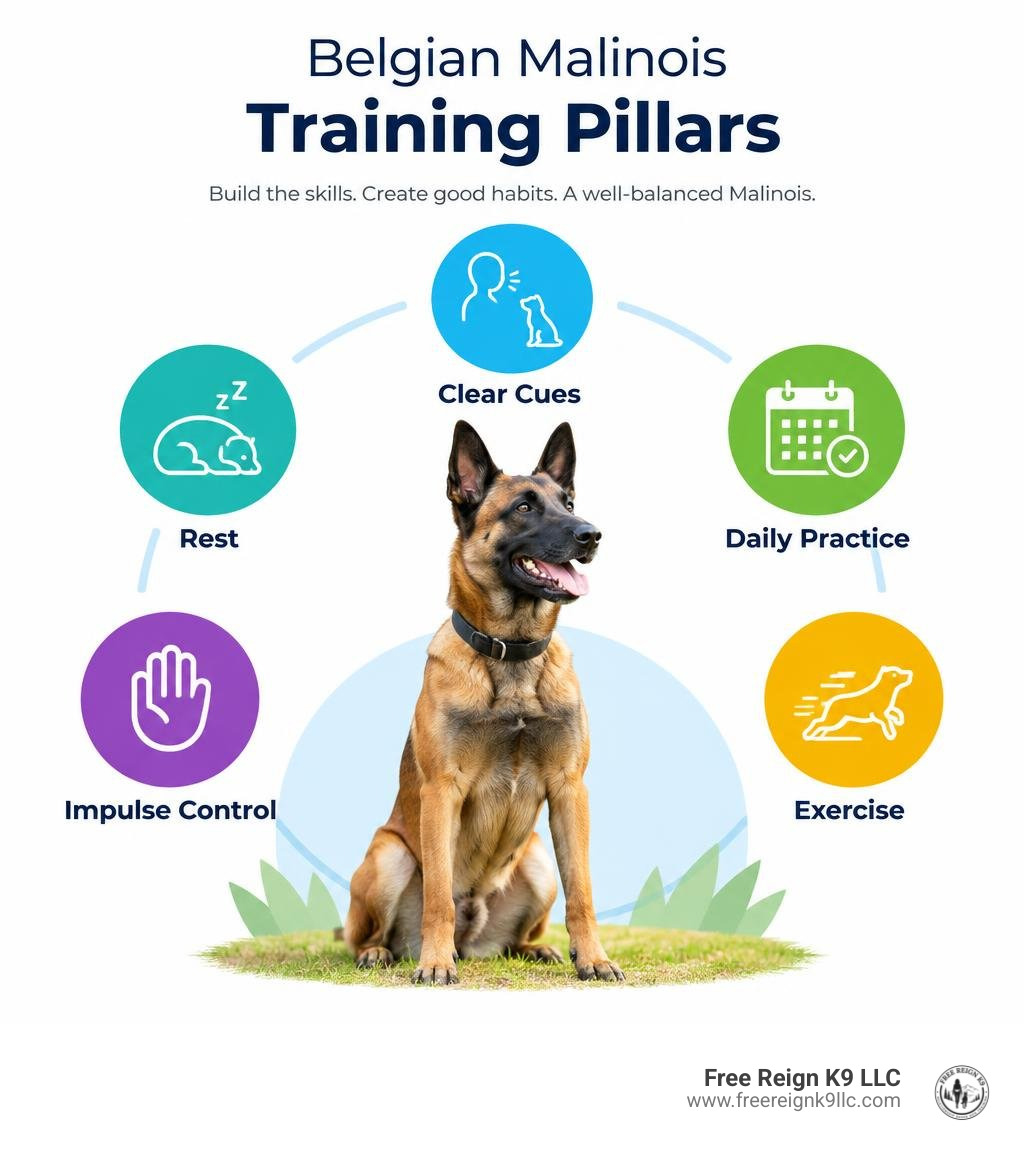
Fundamentals of Dog Training for Belgian Malinois
Living with a Belgian Malinois is unlike owning any other breed. These dogs stand between 22 and 26 inches tall, weigh anywhere from 40 to 80 pounds, and carry the processing speed of a high-performance computer. They are constantly thinking, scanning their surroundings, and waiting for your next instruction.
Training a Malinois is not an isolated 15-minute event you check off a list. It is an everyday lifestyle. If you do not give them clear rules and a constructive job, they will invent their own employment, which usually involves rearranging your drywall or patrolling the living room windows.
Understanding your dog's natural instincts is the first step toward building a reliable companion. Reviewing the AKC Belgian Malinois breed overview and temperament highlights just how deeply working drives are ingrained in this magnificent herding breed.
Understanding High Working Drive and Genetics
The Belgian Malinois was bred to work tirelessly alongside humans. Their background in herding, military patrol, and personal protection makes them exceptionally brave, loyal, and lightning-fast in their reactions. A Malinois named Cairo famously served with the Navy SEALs during the 2011 operation that captured Osama bin Laden, showcasing the breed's world-class grit and trainability.
Along with that high drive comes real environmental sensitivity and sharpness. A Malinois processes visual and auditory changes much faster than the average family pet. When an untrained Malinois spots a passing jogger or a squirrel, their brain shifts instantly into chase mode.
Learning the history and working nature of this breed through resources like the Purina guide on Belgian Shepherd characteristics helps owners understand why balanced guidance is so critical. We must teach them how to channel that explosive genetic drive into constructive obedience rather than chaotic reactivity.
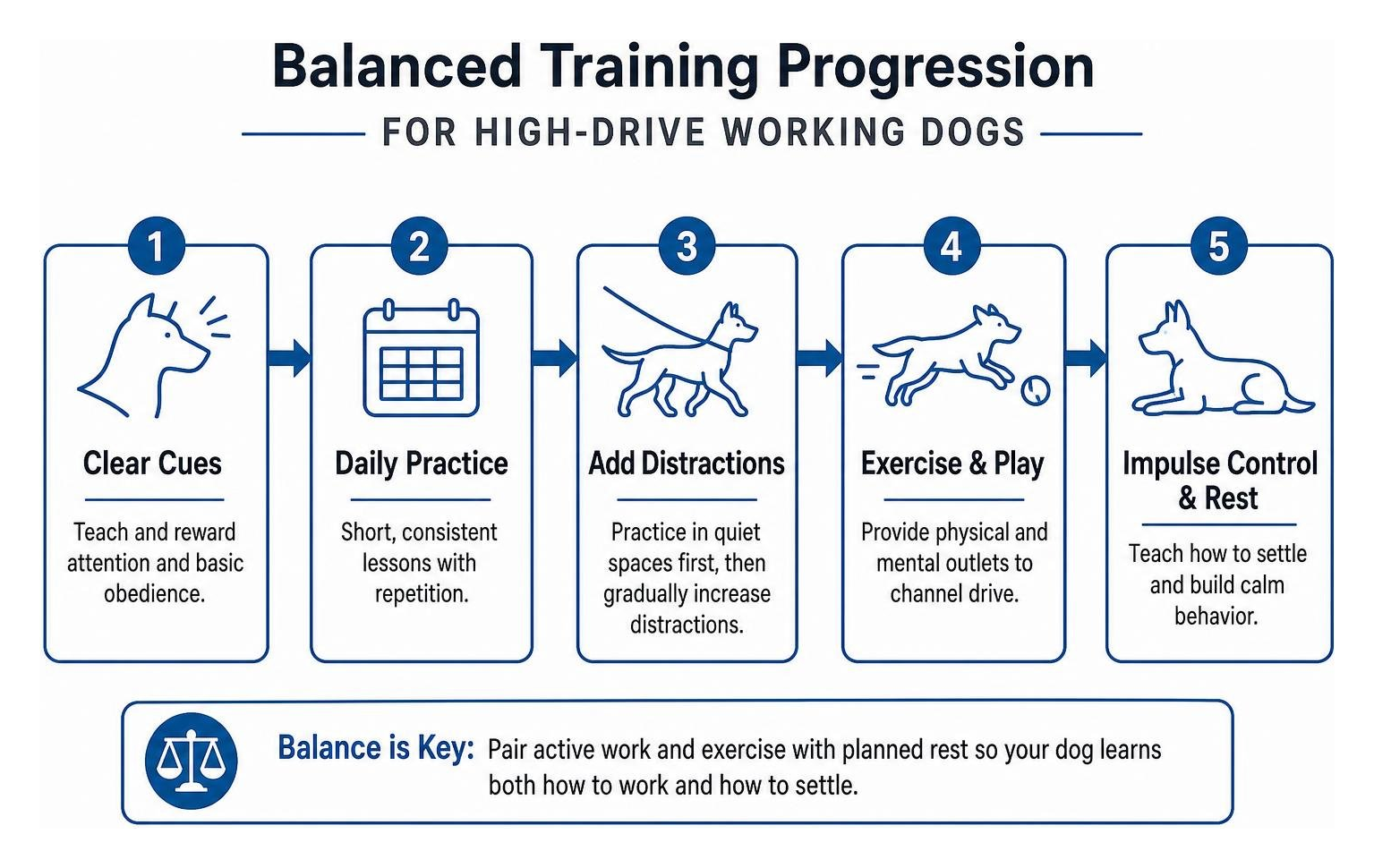
Essential Tools: Proper Leashes and Feedback Collars
Using the correct equipment establishes clean communication between you and your Malinois. Because these dogs are strong, fast, and sensitive, flimsy gear or confusing tools only muddy the water.
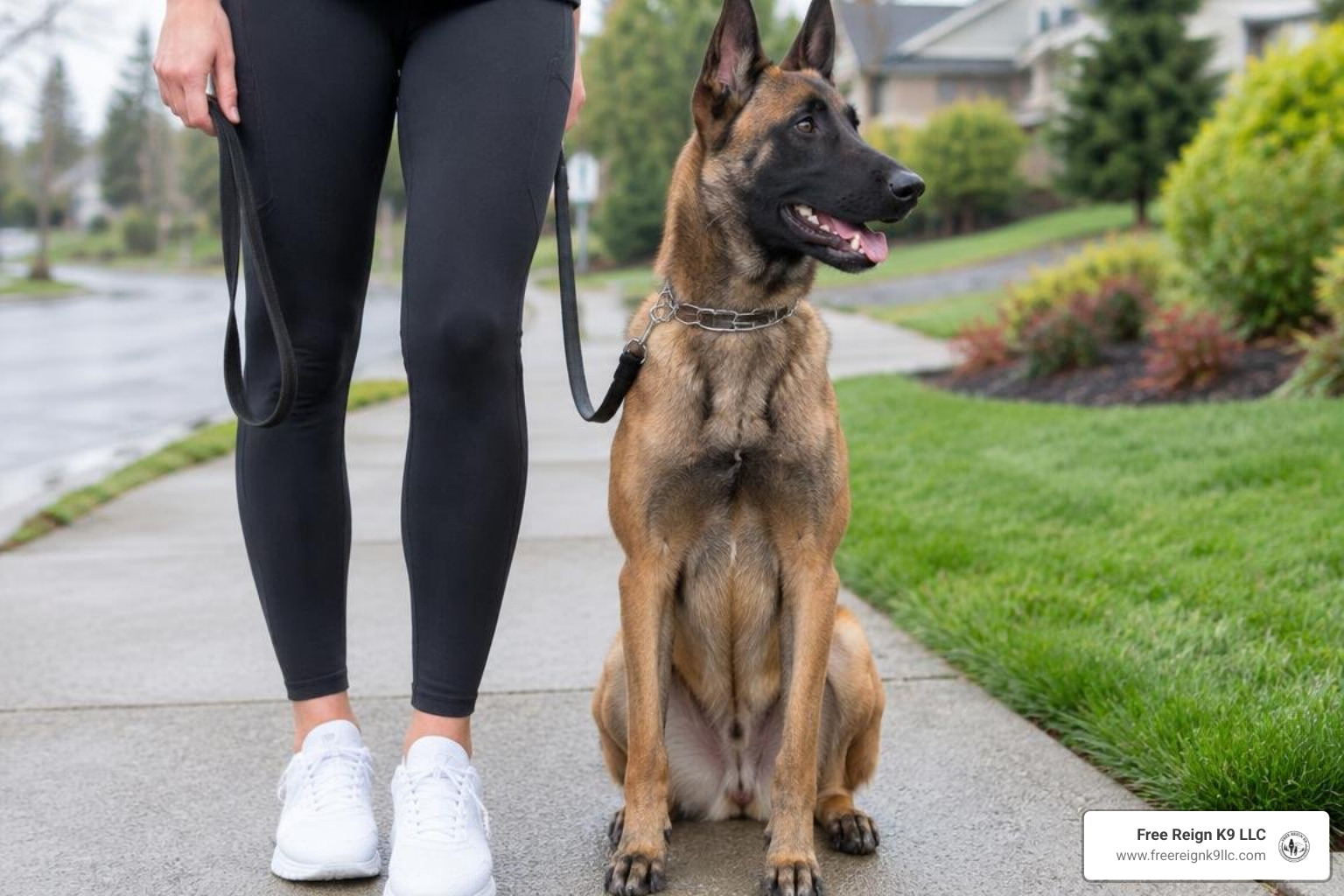
At Free Reign K9 LLC, our philosophy centers on Freedom Through Balanced Training. We believe in clear, fair communication that teaches dogs what we want through high-value rewards, while providing clear, gentle corrections when rules are ignored.
Here is how we approach training gear for this breed:
- Quality Leashes: The business recommends a standard 6-foot, 1/2-inch leash made from quality leather as its best overall leash. It gives you superior grip, never burns your hands when a dog surges, and provides steady physical communication.
- No Body Harnesses: The business does not condone walking dogs with body harnesses. Harnesses cross the strongest points of a dog's chest and shoulders, naturally triggering an opposition reflex that encourages pulling and lunging.
- No Anti-Pull Gimmicks: The business does not use anti-pull leashes or restrictive head halters that cause physical discomfort without teaching genuine impulse control.
- Clear Feedback Collars: Free Reign K9 LLC follows a balanced training philosophy and advocates education plus the safe, proper use of training tools based on the individual dog and situation. The business uses tools such as prong collars and e-collars to teach dogs through feedback. A prong collar provides even, gentle pressure around the neck to deliver immediate clarity without damaging the trachea. E-collars allow for micro-level, off-leash communication across vast outdoor distances once foundational skills are set.
Setting these mechanical standards early is vital. If you are starting with a young dog, laying the right groundwork through structured puppy head start programs ensures your pup builds confidence, engagement, and leash manners without picking up bad habits.
Core Obedience Commands and Impulse Control
Teaching obedience to a Belgian Malinois is all about clarity, timing, and engagement. Because they possess extreme food and toy drive, we use high-value rewards to mark exact behaviors.
Start with foundational commands:
- Sit, Down, and Stand: Teach these positional cues using food luring so your dog learns to shift their weight cleanly on verbal command.
- Focused Heel: The Malinois should look up at your eyes, matching your walking pace whether you speed up, slow down, or make sharp directional turns.
- Reliable Recall: Coming when called must be non-negotiable. Reward recalls with enthusiastic play or high-value food every single time.
- Clear Release Marker: Teach a word like "Break" or "Free" so your dog knows exactly when a command has ended. Never let them break a stay on their own terms.
Teaching the Off Switch and Place Command
Because a Malinois is naturally "always on," their biggest challenge is learning how to do nothing. An untrained Malinois will pace the floors, scan every doorway, and track your every step. You must intentionally teach them how to power down their nervous system indoors.
The "Place" command is our favorite tool for building impulse regulation:
- Send your Malinois to an elevated cot or designated dog bed.
- Require them to stay on the mat in a relaxed down position until released.
- Increase the duration and add household distractions, like ringing doorbells or dropping toys nearby.
- Crate rest routines should also be enforced daily, giving your dog a secure den where they can sleep and decompress without needing to guard the room.
If you need help establishing bulletproof indoor manners and threshold boundaries, enrolling in dog obedience training camps gives your dog hands-on, immersive structure to master calm mindset habits.
Flirt Pole and Lure Work for Controlled Drive
A flirt pole is an exceptional training tool for high-energy working breeds. It consists of a long, sturdy pole with a rope and a bite lure attached to the end. It allows your Malinois to sprint, track, and capture prey in a safe, controlled setting.
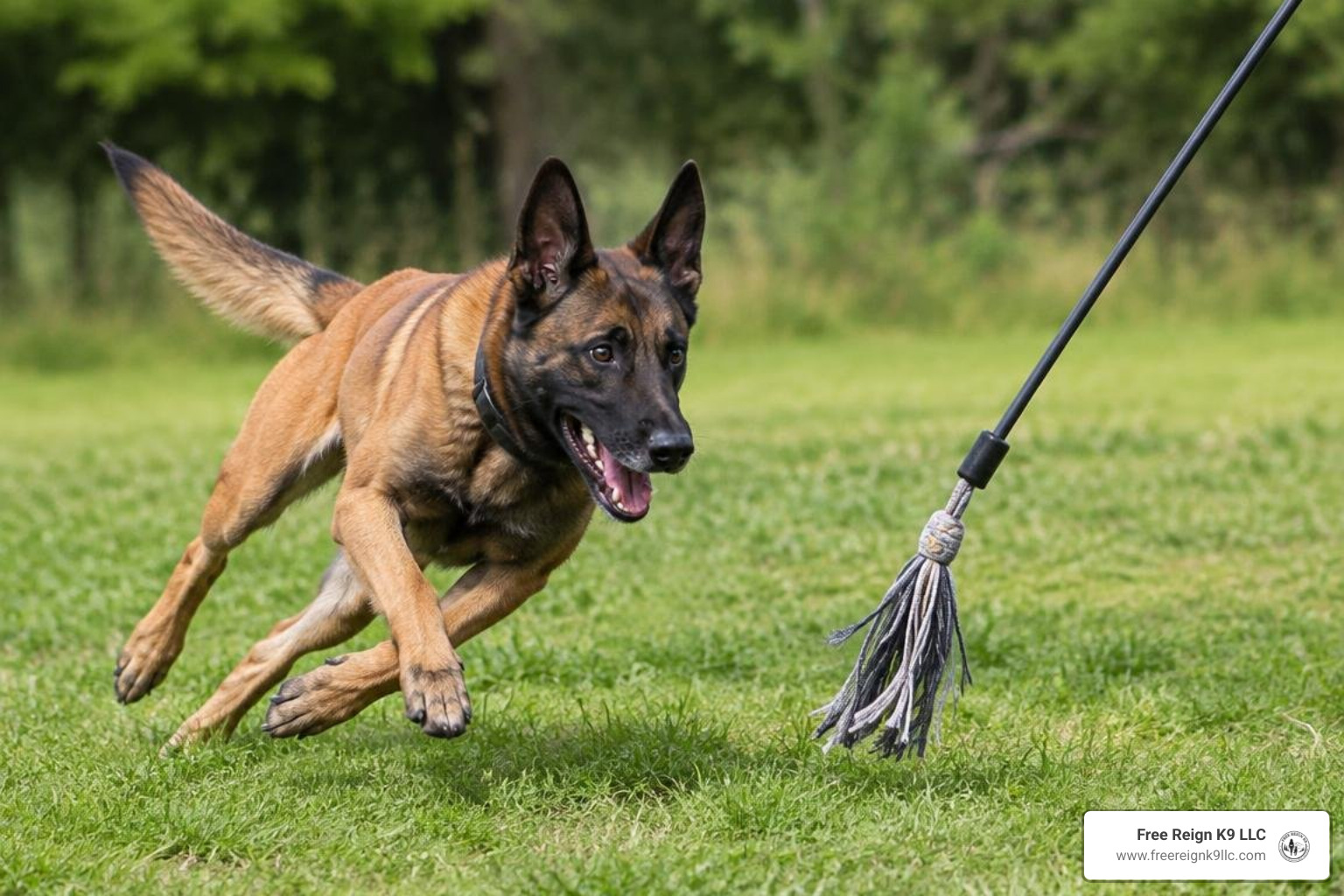
When using a flirt pole, keep these critical safety and handling rules in mind:
- Impulse Control First: Make your dog hold a steady sit or down stay before you release them to chase the lure.
- Low and Wide Sweeps: Keep the lure low to the ground and run wide circles. Avoid tight, twisting jumps that place unnecessary stress on your dog's joints.
- Always Work on Grass: Never run flirt pole sessions on asphalt, concrete, or slick indoor flooring.
- Teach a Clean "Out": When your dog catches the lure, freeze your hands. Ask for a clean release cue without playing tug-of-war. Reward the release by immediately sending them back into the chase.
- Split the Work: While an adult German Shepherd often thrives on one daily 10 to 15 minute session, Malinois do best with two shorter sessions spread throughout the day.
For a deeper dive into running these drills safely, explore structured flirt pole training techniques to build maximum impulse control while burning excess drive.
Daily Exercise, Routine, and Mental Stimulation
A common misconception is that you can tire out a Belgian Malinois simply by running them for miles. Physical exercise alone only creates an ultra-marathon athlete with endless stamina. To truly satisfy a Malinois, you must pair vigorous physical exertion with deep cognitive problem solving.
A balanced daily exercise quota for an adult Malinois is at least two hours of combined physical and mental activity. Incorporating nosework games, kibble-dispensing puzzles, and rule-based games of fetch will tire their brain far more effectively than an aimless walk around the block.
Structuring a High-Drive Daily Schedule
Here is how a balanced daily schedule looks when managing a working dog at home:
| Time of Day | Activity Type | Primary Goal | Focus Drills |
|---|---|---|---|
| Morning (7:00 AM) | Structured Walk & Heelwork | Physical exercise and handler focus | Loose-leash walking, auto-sits at crosswalks, directional changes |
| Midday (12:30 PM) | Cognitive Drive Outlet | Mental fatigue and prey drive channeling | 10-minute flirt pole drills, "out" practice, scent work searches |
| Afternoon (1:00 PM) | Enforced Crate or Place Rest | Emotional regulation and calm mindset | Uninterrupted quiet rest on elevated cot or inside crate |
| Evening (5:30 PM) | Obedience & Threshold Work | Impulse control under distraction | Doorway waits, food bowl manners, 30-minute steady down-stay |
| Night (8:00 PM) | Decompression & Wind-Down | Nervous system relaxation | Snuffle mat feeding, chew toy time, quiet family presence |
Socialization to Prevent Reactivity and Overexcitement
Socialization does not mean forcing your Malinois to greet every person and dog on the street. In fact, letting a high-drive dog meet unfamiliar dogs on-leash often creates frustration, barrier reactivity, and intense overexcitement.
True socialization is teaching your dog environmental neutrality. You want your Malinois to remain calm and focused on you whether you are walking past a barking dog in Tacoma, navigating a busy sidewalk in West Seattle, or strolling through a park in Mercer Island.
When you notice warning signs such as leash lunging, hyper-fixation, or vocal distress around common triggers, step in quickly with targeted behavior modification training. Addressing barrier frustration early prevents defensive behaviors from hardening into dangerous habits.
Common Pitfalls and When to Seek Professional Support
Because the Malinois learns so quickly, they will pick up your bad handling habits just as fast as good ones. If your timing is off by two seconds, you might accidentally reward frantic whining instead of quiet focus.
Overcoming Common Mistakes in Dog Training for Belgian Malinois
Watch out for these common handling errors:
- Nagging Verbal Cues: Repeating "Sit, sit, sit!" teaches your Malinois that your first command does not matter. Say the cue once, wait for compliance, and follow through calmly.
- Rewarding Hysteria: Throwing a ball or delivering a treat while your dog is pacing, barking, or trembling with over-arousal rewards the frantic mindset. Demand stillness and eye contact before releasing the reward.
- Inconsistent Rules: If your dog is allowed on the sofa on Tuesday but corrected for it on Thursday, they will become confused and anxious. Keep boundaries uniform across every family member.
- Physical Weariness Without Mental Work: Running your dog into the ground without demanding mental stillness creates an overtired, hyper-reactive animal.
Advanced Dog Training for Belgian Malinois and Professional Programs
There comes a point in every working dog owner's journey where expert coaching makes all the difference. Whether you want to polish off-leash reliability, introduce an e-collar safely, or navigate complex behavioral challenges, working with an experienced trainer ensures you avoid costly mistakes.
At Free Reign K9 LLC, we work directly with owners across Seattle, Magnolia, Gig Harbor, Browns Point, and nearby communities to refine handler mechanics and bridge communication gaps.
Booking dog private individual training lessons gives you one-on-one attention tailored to your dog's drive levels. If you are ready to evaluate your dog's current obedience and set a custom training roadmap, reach out to schedule a comprehensive dog training evaluation.
Frequently Asked Questions
For more details on our balanced training methods and philosophy, check out our frequently asked questions about balanced dog training.
How much daily exercise and mental stimulation does a Belgian Malinois need?
An adult Malinois needs a minimum of two hours of daily activity. This time should be split between physical exercise (hiking, structured walks, flirt pole) and cognitive work (obedience drills, scent games, puzzle feeders). Without sufficient mental stimulation, even long runs will leave their brain restless and looking for trouble.
How do you teach a reliable off switch to a high-drive Malinois?
A reliable off switch is built through consistent place training and planned crate rest. Teach your dog to hold a relaxed down stay on an elevated dog cot while normal household activity takes place around them. By rewarding stillness and enforcing calm boundaries, your Malinois learns that high energy belongs on the training field, not on the living room rug.
What is the most effective way to address reactivity in a Belgian Malinois?
The most effective strategy combines handler engagement, distance management, and clear balanced communication. Create space from the trigger, demand your dog's focus with a firm obedience command like heel or sit, and reward them for ignoring the distraction. If your dog ignores the command and reacts, provide a fair, immediate correction using proper training tools, then instantly redirect their focus back to you.
Elevating Your Partnership Through Balanced Training
Owning a Belgian Malinois is one of the most rewarding journeys in the canine world. When you provide clear leadership, consistent boundaries, and purposeful outlets for their natural drive, this intense herder transforms into the ultimate loyal companion.
Achieving true off-leash freedom and dependable indoor manners requires commitment, but you do not have to navigate the training process alone. To build a rock-solid working relationship with your companion, discover how we can help you achieve balance and control at Free Reign K9 LLC.