
How to Solve Aggressive Dog Behavior in 3 Simple Steps
Understanding Canine Aggression: Root Causes and Triggers
To solve aggressive dog behavior in three simple steps, start with physical safety and management, then work below your dog's emotional threshold, and finally build structured counter-conditioning and alternative skills. This approach addresses the root cause instead of masking outward symptoms.
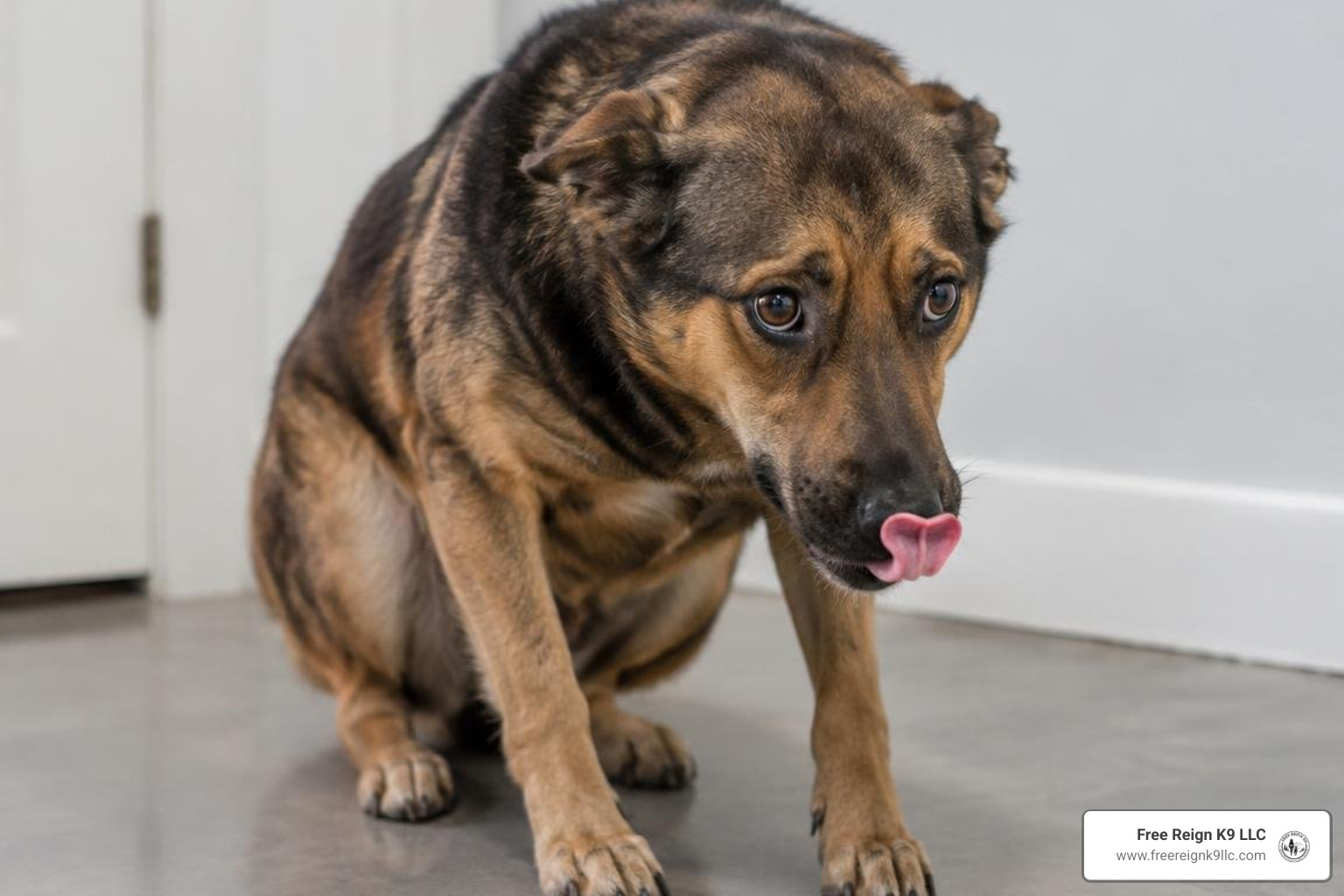
When we see a dog growl or lunge, it is easy to assume they are acting out or trying to be stubborn. In reality, aggression is almost always an emotional reaction rather than a fixed personality trait. Your dog is using their body to communicate an urgent need for space, safety, or control over their environment.
Recognizing early warning signs gives you the chance to intervene before a situation escalates. Dogs rarely bite out of nowhere. Instead, they progress through a sequence of subtle cues: lip licking, turning the head away, stiffening the body, hard staring, growling, snapping, and finally biting. The Dogs Trust guide on recognizing warning signs highlights how these early body language changes serve as vital communication tools that tell us when a dog is feeling overwhelmed.
Understanding what drives these behaviors helps us address the root cause rather than simply masking the outward symptoms.
Common Types and Environmental Triggers
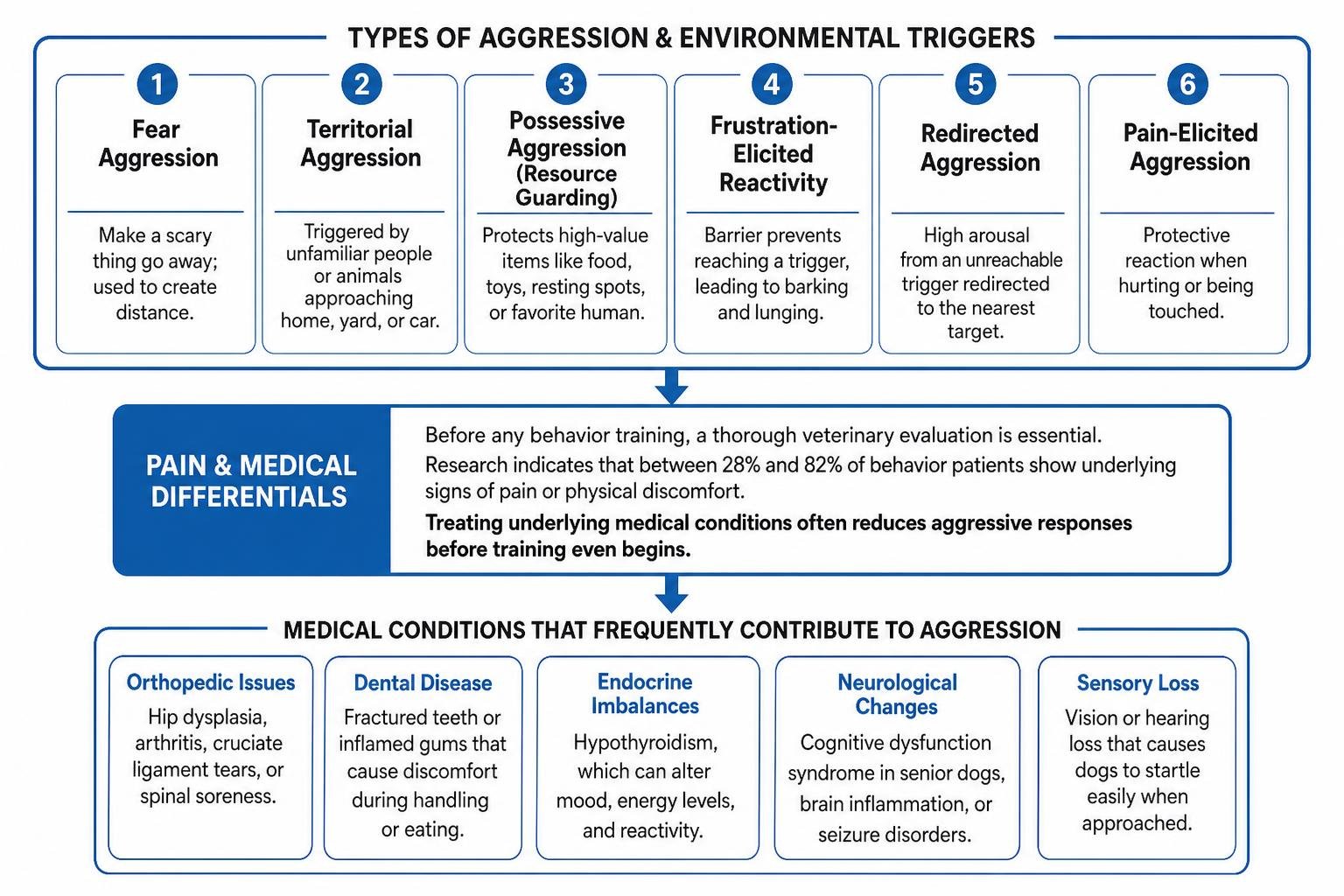
Aggression shows up in several distinct forms, each with its own specific motivation:
- Fear Aggression: Driven by a desire to make a scary thing go away. When a dog feels trapped or cannot escape, they use defensive displays to create distance.
- Territorial Aggression: Triggered by unfamiliar people or animals approaching the home, yard, or car.
- Possessive Aggression (Resource Guarding): Occurs when a dog protects high-value items like food bowls, chew toys, favorite resting spots, or even their favorite human.
- Frustration-Elicited Reactivity: Common on leash or behind fences, where a barrier prevents a dog from reaching an exciting or stressful trigger, spilling over into barking and lunging.
- Redirected Aggression: Happens when a dog is highly aroused by a trigger they cannot reach, causing them to turn and snap at the nearest person, leash, or companion dog.
- Pain-Elicited Aggression: A protective reaction to being touched, moved, or approached when hurting.
Identifying your dog's exact triggers is the foundation of any successful behavior plan.
Pain and Medical Differentials in Dog Aggression Training
Before starting any behavior modification, a thorough veterinary evaluation is essential. Research indicates that between 28% and 82% of behavior patients show underlying signs of pain or physical discomfort. When an animal is hurting, their tolerance for everyday stressors drops dramatically.
Medical conditions that frequently contribute to aggressive displays include:
- Orthopedic Issues: Hip dysplasia, arthritis, cruciate ligament tears, or spinal soreness.
- Dental Disease: Fractured teeth or inflamed gums that cause acute discomfort during handling or eating.
- Endocrine Imbalances: Hypothyroidism, which can alter mood, energy levels, and reactivity.
- Neurological Changes: Cognitive dysfunction syndrome in senior dogs, brain inflammation, or seizure disorders.
- Sensory Loss: Vision or hearing loss that causes dogs to startle easily when approached.
Clinical insights from research on pain-induced behavioral changes show that treating underlying medical conditions often reduces the intensity and frequency of aggressive responses before training even begins.
The 3-Step Protocol for Dog Aggression Training
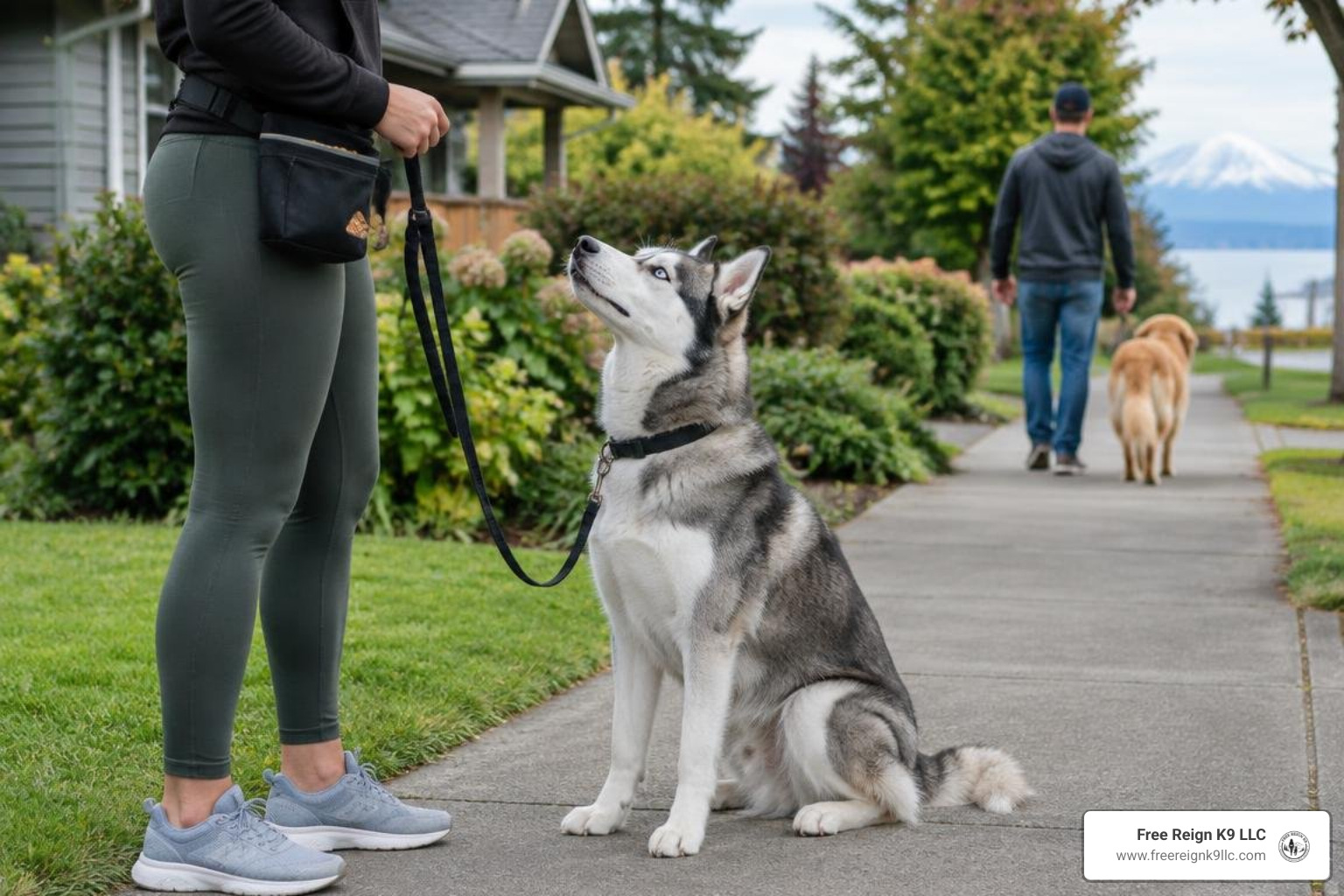
Addressing aggression requires a clear, structured sequence. We follow a three-step protocol that keeps everyone safe, identifies safe working boundaries, and builds reliable new habits.
Step 1: Physical Safety, Management, and Environmental Control
The immediate priority in any aggression case is making a bite physically impossible. Every time a dog rehearses an aggressive behavior, that neural pathway strengthens. Management protects the public, your family, and your dog while preventing costly incidents. The typical veterinary cost to treat a dog bite wound sits around $610, with complex repairs reaching $2,600 or more.
Effective management tools include:
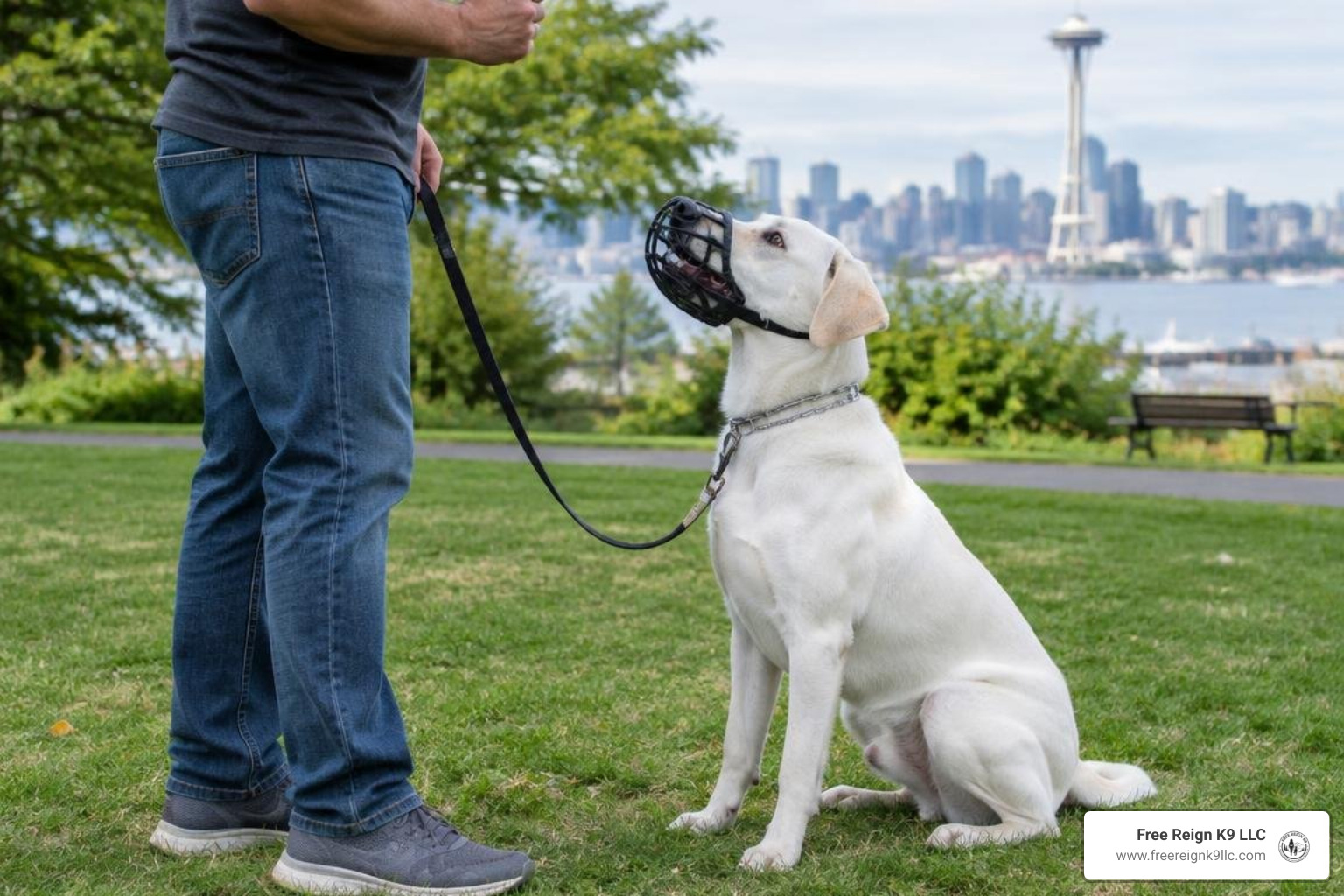
- Basket Muzzles: A properly conditioned, well-fitted basket muzzle allows your dog to pant, drink water, and take treats comfortably while ensuring absolute safety in public or during vet visits.
- Environmental Barriers: Use solid baby gates, closed doors, and window film to block views of delivery drivers or passing dogs from living room windows.
- Secure Walking Equipment: Dual-leash setups, front-clip harnesses, or secure head halters give you physical control and prevent accidental escapes during neighborhood walks.
Preventing trigger exposure gives your dog's nervous system time to decompress from chronic stress.
Step 2: Trigger Distance and Threshold Identification
A dog's threshold is the exact distance at which they notice a trigger but can still remain calm, take treats, and respond to cues. If your dog is barking, lunging, or refusing food, they are over threshold and incapable of learning new emotional responses.
To work below threshold:
- Identify the baseline distance where your dog spots another dog or person without freezing or posturing.
- Pair the sight of that trigger with high-value rewards (like real roast beef, cheese, or freeze-dried liver).
- Move away before your dog reacts, keeping every repetition successful.
Following the established VCA Animal Hospitals protocol for unfamiliar dog aggression, we use systematic desensitization and classical counter-conditioning to shift your dog's emotional state from fear or suspicion to relaxed focus.
Step 3: Structured Dog Aggression Training and Skill Building
Once your dog is comfortable working at a distance, we teach structured alternative behaviors. Instead of reacting to a trigger, your dog learns to look to you for direction, perform a tight heel, or settle on a portable mat.
Our approach to dog behavior modification training emphasizes clear communication, emotional regulation, and handler engagement so you can navigate busy parks and outdoor trails around the Puget Sound with confidence.
Why Confrontational Methods Backfire and What Science Recommends
Old-school training myths often suggest that aggressive behavior is an attempt by the dog to dominate their household. This belief led to confrontational techniques such as alpha rolls, scruff shakes, physical corrections, and muzzle grabs.
Veterinary behaviorists and peer-reviewed studies have demonstrated that confrontational methods dramatically increase the risk of aggressive fallout. When you physically punish an already fearful or stressed dog, you confirm their belief that the situation is dangerous. Studies show that obedience and long-term reliability are highest in dogs trained with reward-based methodologies and lowest in dogs subjected to aversive techniques. The American Veterinary Society of Animal Behavior (AVSAB) explicitly advises against the use of aversive methods for managing behavioral disorders.
| Training Approach | Primary Mechanism | Impact on Fear & Anxiety | Long-Term Reliability | Risk of Behavioral Fallout |
|---|---|---|---|---|
| Reward-Based & Systematic Desensitization | Changes emotional response; rewards alternate calm behaviors | Significantly reduces stress and builds handler trust | High; creates voluntary cooperation | Extremely low |
| Aversive & Confrontational Methods | Suppresses outward behavior using physical force or intimidation | Increases physiological stress and fear | Low; performance deteriorates when pressure is removed | High; risk of sudden bites without warning |
The Risk of Suppressing Warning Signals
Growling is an essential warning system. It is your dog's way of saying, "I am uncomfortable; please give me space."
When owners punish a dog for growling, the dog learns that giving a warning brings physical pain or intimidation. The underlying fear remains unchanged, but the dog stops growling. This creates a dangerous situation where the dog may escalate straight to an unannounced bite when pushed past their limit. We want to preserve the growl as a communicative signal while changing the underlying emotional state that caused it in the first place.
Long-Term Management Versus Complete Cure
Can an aggressive dog be cured? It is more accurate to view aggression as a behavior pattern that can be successfully managed, reduced, and redirected rather than completely eliminated like an infection.
Realistic long-term success involves:
- Maintaining sensible safety routines around high-risk situations.
- Avoiding scenarios where your dog is set up to fail.
- Continuing structured routines and clear handler communication.
Many families find that working through dog private individual training lessons gives them the personalized handling mechanics and practical routines needed to enjoy daily life safely.
Frequently Asked Questions About Aggressive Dog Behavior
Can an aggressive dog ever be fully cured?
While many dogs make dramatic progress and learn to navigate the world calmly, a responsible trainer will never promise a 100% cure. Behavior is influenced by genetics, early socialization, learned history, and environment. With dedicated training and proper environmental management, most dogs can achieve a high quality of life and reliable manners in everyday situations.
Should you ever punish a dog for growling?
No. Punishing a growl suppresses your dog's early warning system without solving the fear or discomfort causing it. If your dog growls, calmly create distance between them and the trigger, evaluate what caused the stress, and plan how to address that specific scenario at a sub-threshold level in future sessions.
When should you seek a professional behavior evaluation?
You should seek professional support immediately if:
- Your dog's aggressive displays have resulted in bites that broke skin.
- The aggression is directed toward children or vulnerable household members.
- The behavior appeared suddenly in an adult dog with no prior history.
- You feel unsafe managing your dog on regular walks.
If you are facing these challenges in the Seattle or Tacoma area, contact us for dog evaluation so our team can assess your dog's triggers and design a clear, actionable path forward.
Moving Forward: Restoring Balance, Safety, and Freedom
Living with an aggressive or reactive dog can feel isolating, but you do not have to navigate it alone. At Free Reign K9 LLC, we believe in a balanced, outdoor-focused approach that restores clarity, control, and peace of mind for dog owners across Seattle, Tacoma, Bellevue, and surrounding communities.
By combining veterinary insight, practical safety management, and structured skill building, you can help your canine companion make better choices. Take a look at our complete lineup of programs services to find the right training path for your goals, and visit our frequently asked questions dog training in seattle page for more helpful guidance on building a dependable, adventurous companion. Ready to take the next step toward a calm, reliable dog? Explore our hands-on dog training services and let's get to work together.