
A Complete Guide to Locating Balanced Dog Trainers in Your Area
How to Find Balanced Dog Trainers Near You

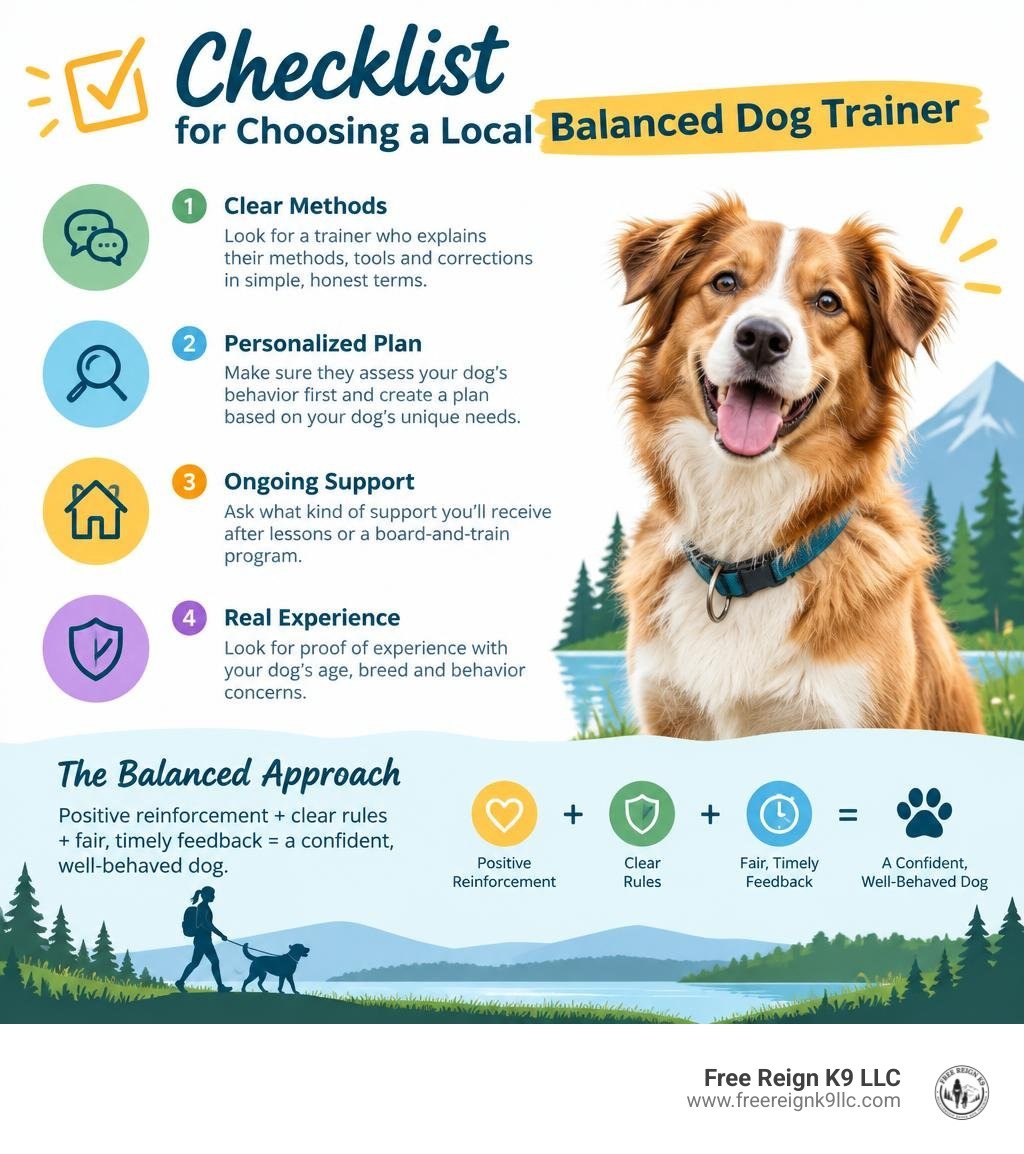
To find reliable balanced trainers near me, start by looking for local dog professionals who clearly explain their methods, assess your dog's behavior before recommending a plan, and teach you how to maintain the training at home. For busy Pacific Northwest dog owners, the right trainer should also prepare your dog for real life, including walks, visitors, car rides, trails, and safe off-leash freedom where appropriate. A thoughtful search now can save you months of frustration later, especially if your dog struggles with leash pulling, reactivity, or unreliable recall in public spaces.
Before you book, ask each trainer:
- What rewards, tools, and corrections do you use, and how do you introduce them safely?
- Do you offer an in-person evaluation and a plan based on my dog's needs?
- What support will I receive after private lessons or a board-and-train program?
- Can you show proof of experience with my dog's age, breed, and behavior concerns?
Balanced dog training combines positive reinforcement with clear rules and fair, timely feedback. It is not a one-size-fits-all approach. A good trainer adjusts the program for your dog's temperament, your family's routine, and the adventures you want to enjoy together. That means a young, high-energy working breed may need a different plan than a reserved rescue dog who is still building confidence around new people and places.
I am Kim Blanton, a dog trainer with Free Reign K9 LLC in Tacoma, Washington, where I help owners seeking balanced trainers near me build calmer, more reliable dogs through our Freedom Through Balanced Training approach. This guide will help you compare local options and choose a trainer you can trust.
Understanding the Balanced Dog Training Philosophy
Balanced dog training is about clear, two-way communication between you and your dog. The goal is to help your dog understand what earns praise and which behaviors you want them to avoid. Keeping your guidance consistent from one walk to the next gives you and your dog a clearer routine to follow.
Balanced training uses operant conditioning, meaning dogs learn from what happens after a behavior. Its four approaches involve adding or removing something rewarding or unpleasant to encourage or discourage a behavior. We emphasize positive reinforcement to teach new behaviors, build motivation, and reward great choices. We also introduce fair corrections and teach your dog how to respond to leash pressure, choosing tools and guidance for the individual dog and situation. A squirrel, a passing bike, or an excited off-leash dog can be a strong distraction, so we work on helping your dog follow your guidance in everyday settings.

Rewarding a dog with high-value treats or play shows them what to do. Providing calm, fair guidance shows them what choices are unhelpful or unsafe, such as bolting out the front door or lunging at passing bikes. This balanced communication removes confusion, reduces anxiety, and builds a dependable companion for all your outdoor adventures. Over time, your dog learns to make better choices on their own because the rules are consistent, not because they are constantly guessing what you want.
Key Programs Offered by Balanced Canine Specialists
Every dog arrives with a unique personality, background, and learning speed. Whether you live in Seattle, Magnolia, Mercer Island, or Tacoma, quality balanced training relies on a plan tailored to your dog rather than cookie-cutter routines. After getting to know your dog's behavior, trainers build a program to help them develop reliable manners. The right program should also match your household's schedule and long-term goals, whether that means a calm companion for neighborhood walks or a trail-ready dog who can safely enjoy off-leash adventures.
Early Foundations and Socialization
Puppies are naturally curious and ready to explore the world around them. Starting good habits early can help you work toward the manners you want as your puppy grows. We focus on impulse control, crate manners, exercises that teach your puppy to focus on you, and consistent potty routines. Our puppy head start programs help young pups build foundational skills for busy public spaces. We also work on settling around distractions, with everyday outings like vet visits, patio dining, and family gatherings in mind.
Immersive Board and Train Programs
For busy families looking for daily training support, board-and-train programs offer daily practice and training woven into everyday routines. Your dog stays in a structured environment where they practice positive habits. Through practicing skills around everyday distractions and carefully planned introductions to people, dogs, and new places, our dog obedience training camps work on reliable recall, leash manners, and impulse control. Your dog practices throughout the day, but continuing that work at home is an important part of carrying those skills into your family's routine.
Personalized One-on-One Coaching
If you prefer hands-on guidance where you learn alongside your dog, private coaching may be a good fit. We teach you how to guide your dog, help you improve how you handle the leash, and give you exercises tailored to practice at home. With dog private individual training lessons, we can work through your specific challenges directly in your neighborhood, whether you are walking through West Seattle, Madison Park, or Gig Harbor. This format gives you a chance to build your confidence while practicing with your dog in everyday situations.
Complex Behavioral Rehabilitation
Living with a reactive or anxious dog can feel overwhelming. A structured, step-by-step plan can help you work toward a calmer home and more manageable outings. Through dog behavior modification training, we work on reactivity, resource guarding, anxiety, and fear. This can include careful desensitization, gradually introducing what worries your dog at a level they can handle. Progress may come in small steps, so the plan should fit your dog's needs rather than rush them through difficult situations.
How to Choose the Right Balanced Trainers Near Me
Finding the right professional means looking beyond flashy marketing. You want a dedicated partner who values safety, transparency, and practical results. Much like evaluating professionals in other fields where holistic wellness balance and functional coaching are essential, selecting a dog trainer requires credential verification, sound training ethics, and positive client references. A polished website or a large social media following does not automatically mean a trainer will be a good fit for your dog's temperament or your family's lifestyle.
Why Searching for Balanced Trainers Near Me Yields Better Long-Term Results
Working with a local trainer ensures your dog learns to handle the real environments you frequent together. Our local climate brings rainy sidewalks, bustling urban trails, and active parks filled with distractions. A trainer who only works in a controlled facility may not prepare your dog for the wet pavement, crowded crosswalks, and sudden wildlife encounters that are part of everyday life in the Pacific Northwest.
Local specialists understand neighborhood distractions and community standards across areas like Medina, Clyde Hill, Browns Point, Fircrest, Normandy Park, Burien, Redondo, Hunts Point, and Yarrow Point. Training in your own backyard builds lasting reliability and gives you true handler confidence wherever you go. When your dog practices in the same places where you actually walk, hike, and socialize, the skills become practical habits rather than party tricks that only work inside a training room.
Questions to Ask When Interviewing Balanced Trainers Near Me
When vetting local professionals, ask detailed questions about their day-to-day practices:
- Which training tools do you use, and how do you ensure the dog is comfortable with them?
- What safety standards are in place during group sessions or boarding?
- How is progress tracking communicated to owners?
- What level of owner involvement is required during and after the program?
- What follow-up support is included once the primary program ends?
Looking closely at trainer methodology comparisons can help you identify coaches who emphasize clear communication, structure, and ongoing accountability. The best trainers welcome these questions and can explain their choices in plain language without making you feel rushed or uninformed.
Evaluating Program Formats and Expectations
Selecting between private lessons and immersive boarding depends on your lifestyle, your timeline, and your dog's specific behavioral needs. Some owners want to be hands-on from the first session, while others need a professional to do the heavy lifting before transferring the skills home. Neither format is inherently better, but matching the structure to your situation makes a meaningful difference in how well the results hold up over time.
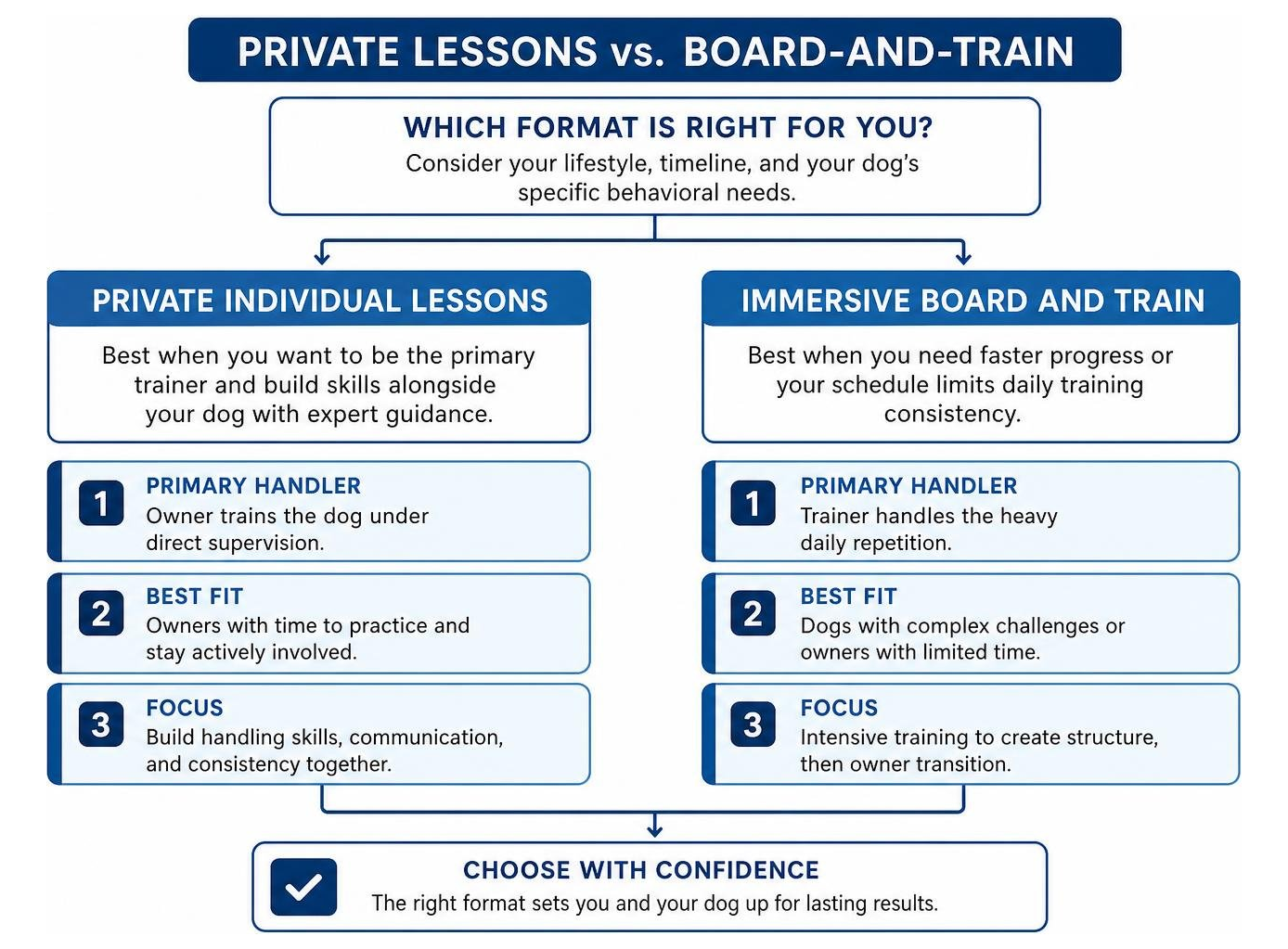
Here is how these two primary formats compare:
| Feature | Private Individual Lessons | Immersive Board and Train |
|---|---|---|
| Primary Handler | Owner trains the dog under direct supervision | Trainer handles the heavy daily repetition |
| Learning Pace | Steady, dependent on weekly home practice | Accelerated, immersion-based learning |
| Best For | Motivated owners wanting hands-on coaching | Busy schedules, off-leash goals, or deeper rehab |
| Location | In-home, parks, or designated local training spots | Structured facility with real-world field trips |
| Owner Commitment | High daily homework from day one | Focused turnover lessons and lifestyle maintenance |
Both formats require you to keep practicing with your dog to maintain progress over time. Clear ways to measure your dog's progress and realistic timelines help you know what you are working toward. Before committing, ask the trainer how they measure progress and what a typical timeline looks like for a dog with your specific concerns. That conversation will help you set expectations and avoid the disappointment that comes from vague promises or rushed timelines.
Frequently Asked Questions About Balanced Dog Training
What tools and equipment do balanced trainers utilize?
Balanced trainers choose tools to suit each dog. These may include slip leads, flat collars, prong collars, e-collars, raised dog beds called place cots, and treat pouches. Trainers may also use clear reward markers, such as a word or click that tells your dog which behavior earned a reward. At Free Reign K9 LLC, we use tools such as prong collars and e-collars to teach dogs through feedback, choosing tools for the individual dog and situation. We emphasize education and safe, proper use: a responsible trainer should introduce each tool gradually, check the fit carefully, and explain how and why it is being used before you practice on your own. At Free Reign K9 LLC, we do not condone walking dogs with body harnesses. We do not use anti-pull leashes. Our best overall leash recommendation is a standard 6-foot, 1/2-inch braided leash made from quality leather.
How does balanced training differ from purely positive training?
While purely positive methods rely solely on rewards, balanced training introduces fair boundaries and gentle accountability. When a dog encounters high-level real-world distractions like wildlife or running dogs, pure reward motivation can lose its appeal. Balanced training ensures stress reduction and reliable recall by teaching dogs that following cues is non-negotiable for their own safety. If you want to explore more details about our methods, browse our frequently asked questions dog training in seattle.
What should I expect during an initial consultation?
An initial consultation typically includes a check of how your dog responds to different situations, a conversation about your daily routine and goals, a look at how you and your dog work together, and a training plan tailored to you. We take the time to understand your dog's personality and outline realistic steps for success. You can contact us for dog evaluation to get started. This first meeting is also your chance to see how the trainer interacts with your dog and whether their communication style feels like a good match for your household.
Finding the Right Partner for Your Dog's Lifelong Freedom
At Free Reign K9 LLC, we believe that true freedom comes through balanced training. By combining clear boundaries, positive motivation, and structured guidance, you and your dog can build a joyful, trusting canine partnership. Whether you are walking through North Tacoma, relaxing in Madison Park, or exploring off-leash trails across the Pacific Northwest, lasting obedience makes every outing enjoyable. The goal is not a robotically obedient dog, but a confident companion who can make good choices while still enjoying the freedom to explore, play, and simply be a dog.
Take the first step toward lasting obedience and real outdoor freedom by exploring our comprehensive programs services today.