
What an Anti Choke Slip Lead Does for Safer Training

An anti choke slip lead is a combined collar-and-leash tool with a built-in stopper that limits how small the neck loop can become. Unlike a traditional slip lead, which can keep tightening when a dog pulls, an anti-choke design lets you set a minimum loop size to reduce the risk of over-tightening.
Used correctly, it can offer quick leash-on convenience and clear pressure-and-release feedback for loose-leash training. It is not a hands-off safety device, though: fit it high on the neck behind the ears, set the limiter so it is snug without pinching, and never use it for tie-outs or unsupervised confinement.
The right lead can be useful for short walks, training sessions, crate transfers, and dogs that need consistent handling. But material quality, stopper security, dog size, health, pulling habits, and handler skill all matter. An anti-choke feature reduces one risk; it does not make constant pulling or harsh leash corrections safe. Free Reign K9 LLC does not use anti-pull leashes; an anti-choke limiter should not be confused with a promise to stop pulling.
I am Kim Blanton, a dog trainer with Free Reign K9 LLC in Tacoma, Washington, where I help owners build calm, reliable behavior through balanced, humane training. In this guide, I will explain how to choose, fit, and use an anti choke slip lead with safety and clear communication in mind.
Understanding How an Anti Choke Slip Lead Works
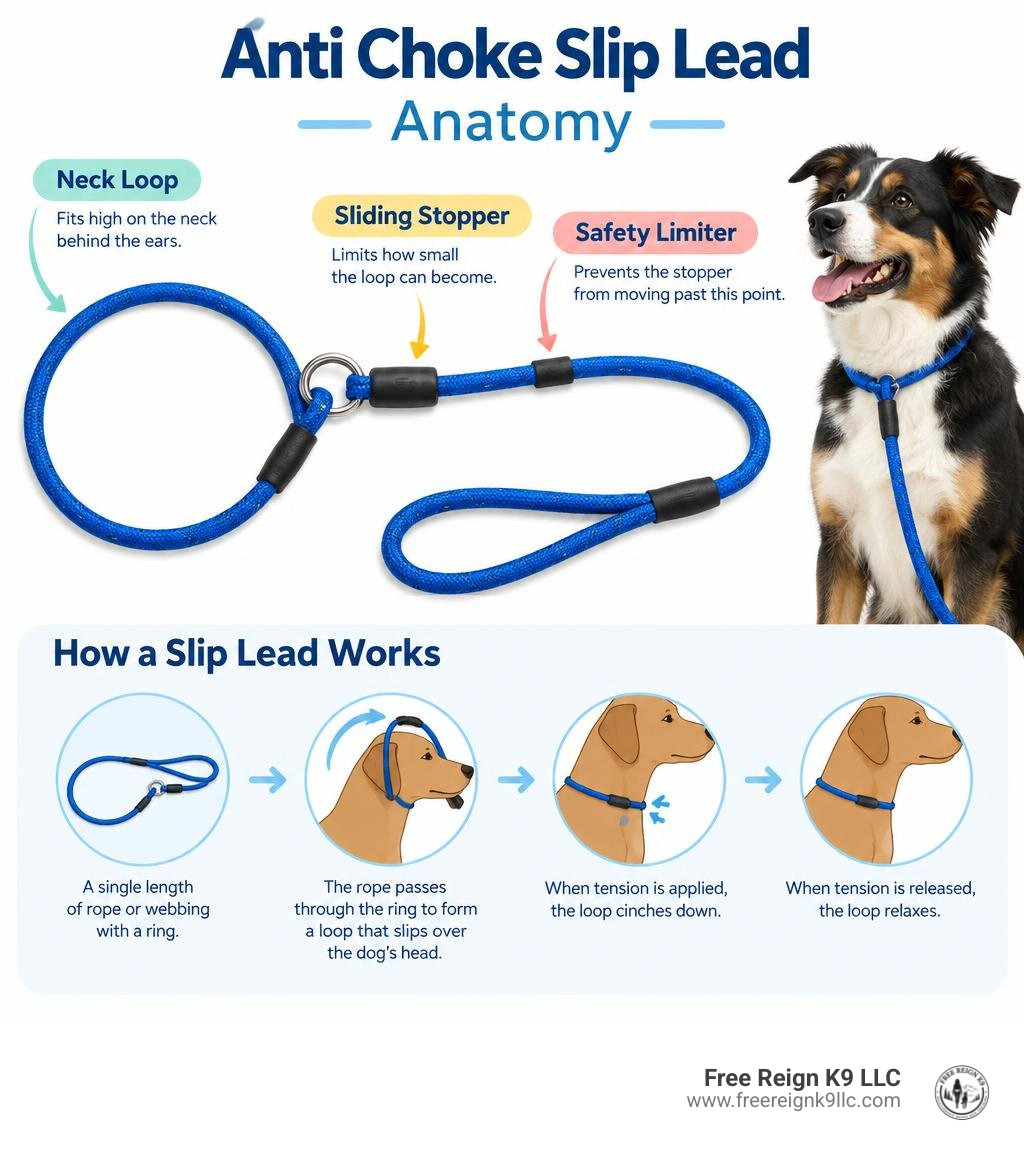
At its core, a slip lead is a single length of rope or webbing with a ring at one end. The rope passes through the ring to form a loop that slips directly over the dog’s head. When tension is applied, the loop cinches down; when tension is released, the loop relaxes.
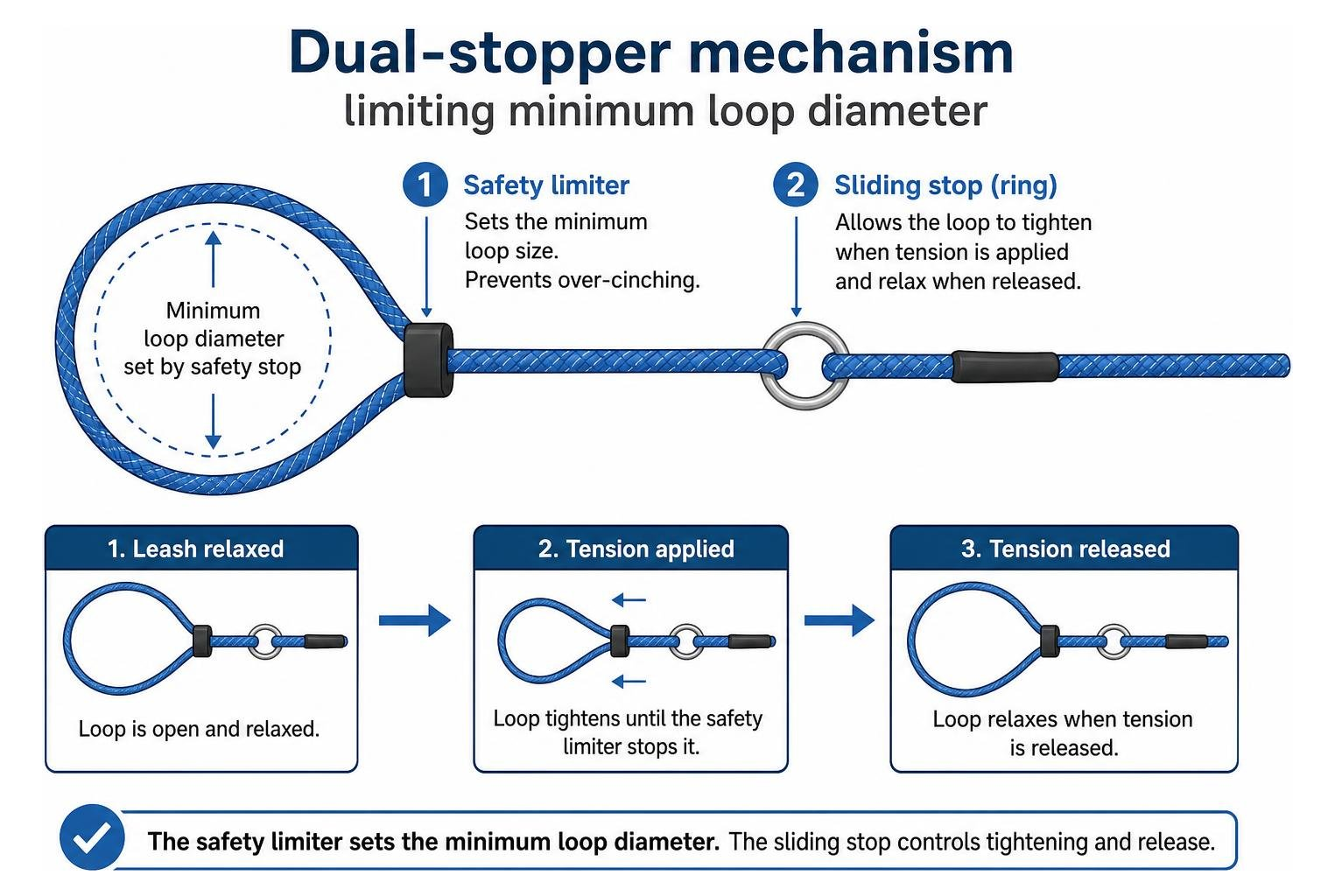
The key difference is the circumference limiter, a stop that sets the smallest size of the neck loop. It may be called an anti-choke ring, metal stop, or horn stop. This inner stop limits how far the loop can tighten. With both stops adjusted, you can give and release leash cues while limiting tightening. The lead can still put pressure on your dog's neck, so fit and handling matter.
| Feature | Traditional Slip Lead | Anti-Choke Slip Lead |
|---|---|---|
| Minimum Loop Limit | None (can tighten indefinitely) | Fixed by adjustable safety stop |
| Maximum Loop Limit | Controlled by outer slide stop | Controlled by outer slide stop |
| Risk of Over-Cinching | High, especially with strong pullers | Minimal when properly fitted |
| Windpipe Protection | No inner stop to limit tightening | Inner stop limits tightening but does not remove neck-pressure risks |
| Primary Use | Field trials, vet clinics, quick handling | Daily walks, loose-leash training, transitions |
Key Benefits of an Anti Choke Slip Lead for Training
In balanced dog training, clear communication matters. When teaching leash manners, keep leash cues timely: apply light pressure and release it as soon as your dog responds. Light tension can communicate a boundary when your dog moves out of position; as soon as they move with the cue or return to your side, let the lead loosen completely.
Releasing leash pressure promptly helps you give your dog clear feedback, but the lead can still cause discomfort if fitted or handled poorly. If your dog reacts strongly on walks, lunges, or pulls hard, dog behavior modification training can help you set clear boundaries and learn safe handling suited to your dog.
Traditional Slip Leads vs Modern Safety Leashes
Field trial trainers and kennel staff have long used slip leads because they are quick to put on and take off a working retriever. Traditional slip leads have no inner stop to limit tightening. If an excited dog runs to the end of the leash, the loop can tighten hard against the windpipe, leading many handlers to ask about the necessity of safety stops, as explored in Anti-Choke on a Slip Lead? Why?.
An outer keeper helps keep the loop from slipping over your dog's ears, while an inner stop sets its smallest size. Together, they keep the lead easy to put on and take off while limiting tightening. Proper fit and handling still matter.
Essential Design Features to Look For in a Quality Slip Lead
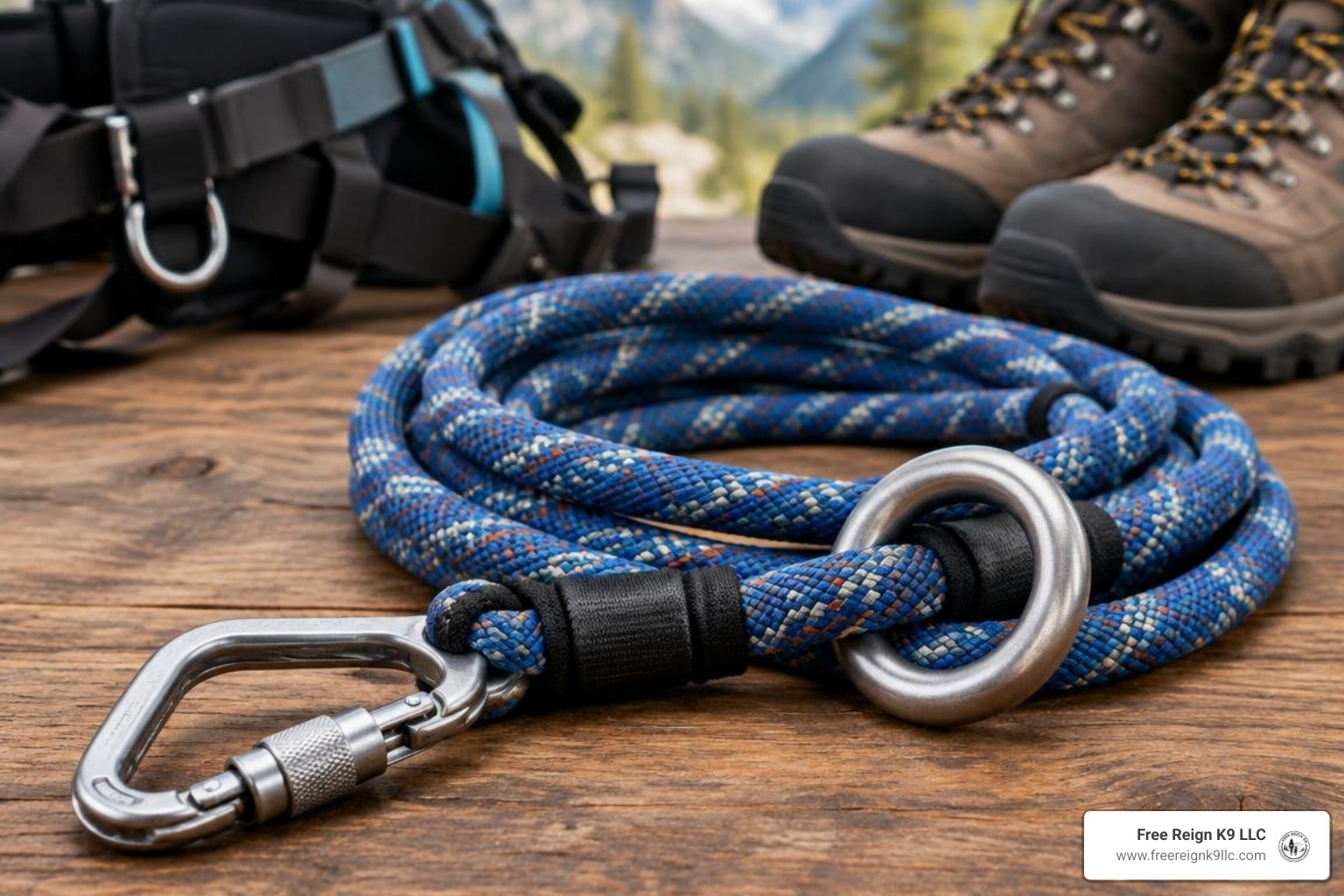
Not all slip leashes are created equal. A flimsy cord or a slippery stopper can compromise both safety and control. When evaluating gear for daily training across varied walking environments, look for robust construction that balances strength, hand feel, and reliable hardware. Free Reign K9 LLC recommends a standard 6-foot, 1/2-inch braided leash made from quality leather as its best overall leash.
Material Durability and Hand Comfort
- Mountain Climbing Rope: Strong, woven climbing rope can resist breaking without feeling heavy.
- Supple Woven Nylon: Quality woven nylon should be firm enough not to droop too much, but flexible enough to move comfortably as your dog walks.
- Weather Resistance: Look for synthetic rope designed to resist rot and stay strong when wet. Some natural fiber ropes or dense cords can expand slightly in heavy rain, so check that your stoppers still hold securely.
- Rope Burn Prevention: A quality lead should feel smooth in your hand. Padded handles or softened braid edges can help protect your palms if your dog makes a sudden movement.
Hardware and Stopper Mechanisms
The safety of an anti-choke lead relies entirely on its stoppers and connection rings:
- Anti-Strangle Metal Stops / Horn Stops: Leads may use a metal clamp, screw-lock ring, or traditional horn stop, such as those found on field gear like the Mystique® 6mm Anti Strangle German Field Trial Moxon Slip Lead – Muntjac Trading. This stop limits how far the loop can tighten.
- Heavy-Duty Outer Keepers: The outer stop, often made from dense rubber, reinforced leather, or heavy-duty silicone, must grip the rope firmly so the loop does not slide open accidentally when your dog lowers their head.
- Smooth Glide Rings: Look for seamless brass, stainless steel, or heavy-duty alloy O-rings that let the rope slide and release without snagging.
- Heavy-Duty Swivel Mechanisms: A built-in 360-degree swivel, a connector that turns all the way around, lets the lead rotate as your dog changes sides, helping prevent twists and tangles.
Step-by-Step Guide to Fitting and Handling
How you handle a training tool matters as much as the tool itself. Proper placement helps you give clear leash cues, but it does not guarantee comfort or safety. If you want hands-on help with when to give and release leash cues, dog private individual training lessons offer personalized guidance for you and your dog.
Step-by-Step Fitting for an Anti Choke Slip Lead
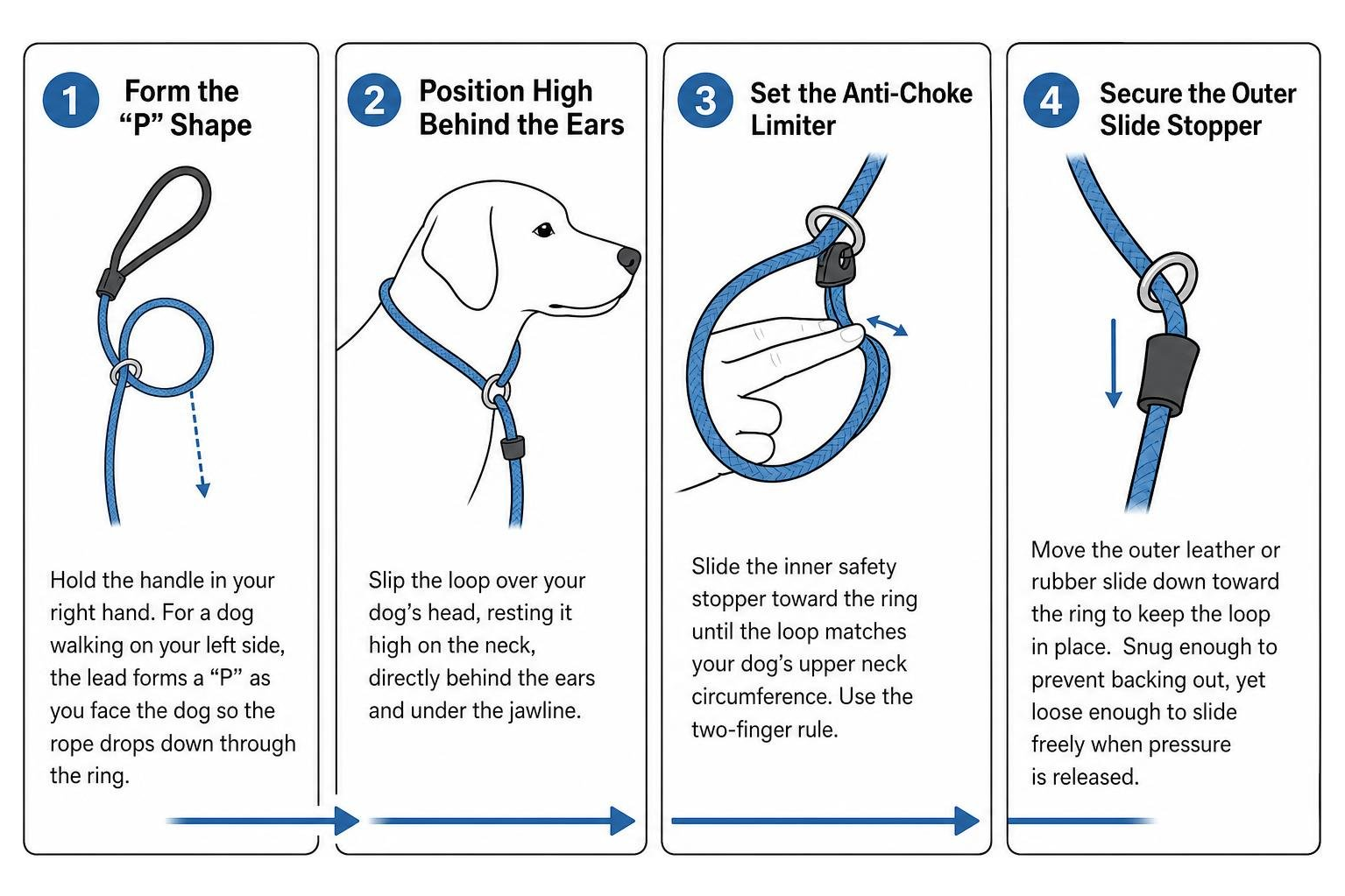
- Form the "P" Shape: Hold the handle in your right hand and look at the loop. If your dog walks on your left side, the usual heel position, the lead should form the letter "P" as you face your dog. If your dog walks on your right side, it should form the letter "q". This orientation helps the rope slide through the ring and loosen when you release tension. Check that it releases freely before use.
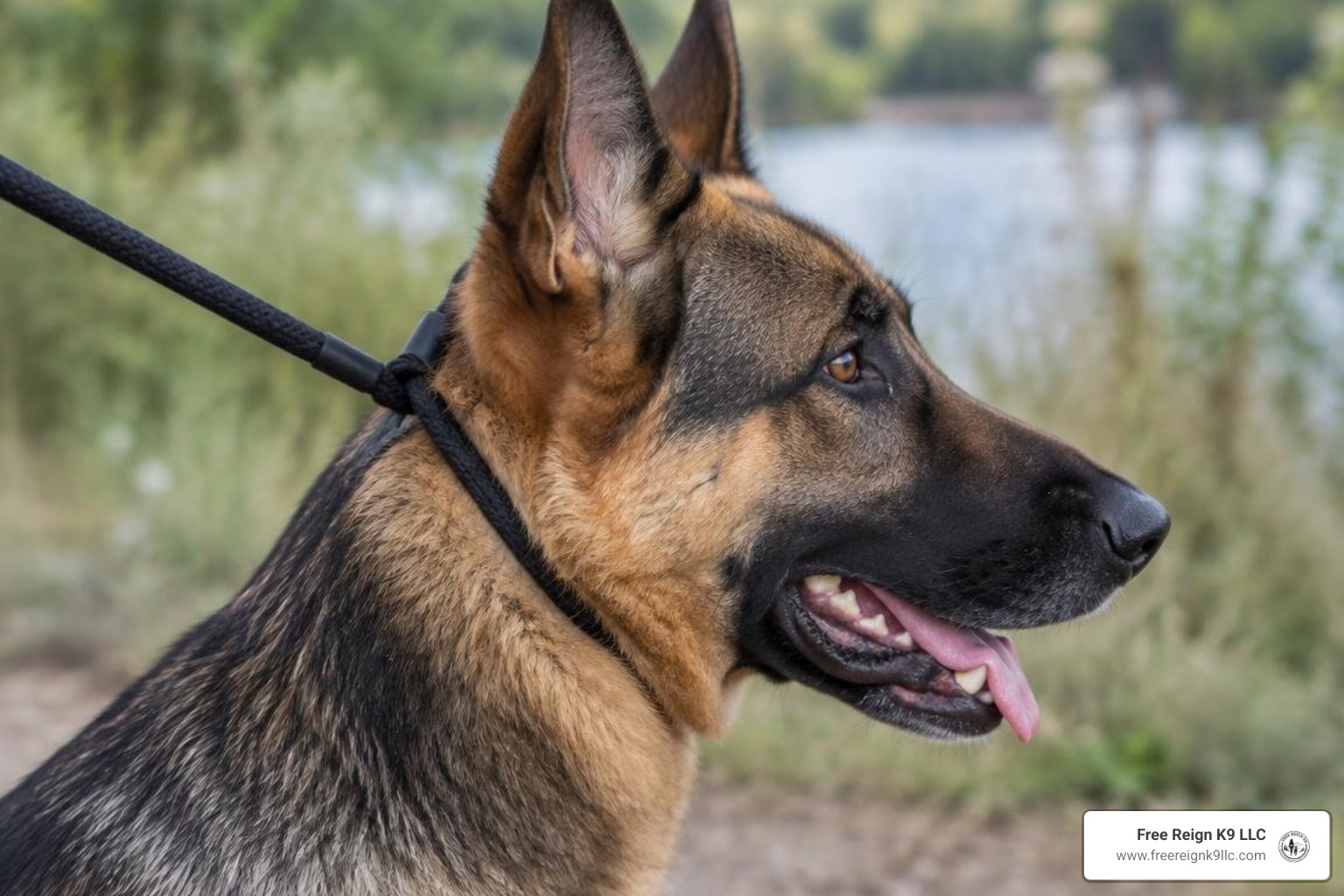
- Position High Behind the Ears: Slip the loop over your dog’s head so it rests high on the neck, directly behind the ears and under the jawline. This position gives you control with less effort and keeps the lead from resting low over the windpipe. It does not remove the risks of neck pressure.
- Set the Anti-Choke Limiter: Adjust the inner safety stopper to set the smallest loop size for your dog’s upper neck. Use the two-finger rule as a fit check: you should be able to slide two fingers comfortably between the rope and your dog’s neck when the loop is tightened against the stop. Follow the lead maker’s fitting instructions, too.
- Secure the Outer Slide Stopper: Move the outer leather or rubber stopper toward the ring until the loop stays in place without falling toward the shoulders. Check that it helps keep your dog from backing out while still allowing the rope to slide freely when you release tension.
Common Handling Mistakes and Safety Precautions
- Continuous Leash Tension: Avoid holding constant backward tension. A slip lead relies on giving a cue and promptly releasing pressure. Steady tension can make your dog less responsive to leash cues and can strain the neck.
- Letting the Lead Drop to the Lower Throat: A loop resting low on the neck can put pressure over the thyroid gland in the neck and the trachea (windpipe). Keep the outer stopper adjusted so the loop stays in its intended position.
- Unsupervised Tethering and Tie-Outs: Never tie your dog up or leave them unattended while wearing any slip-style lead. If they panic or get tangled, serious injury can occur.
- Believing Myths Over Mechanics: Resources like Slip Leads in Modern Dog Training: Myths vs. Facts - FIDA Pet discuss common claims about slip leads. A slip lead is not an automatic fix for pulling. Safe, proper use takes education and handling suited to your dog and the situation.
Is an Anti-Choke Lead Safe for All Dog Breeds?
While an anti-choke design provides significant physical protection compared to standard slips, breed anatomy, size, and medical history determine whether this tool is appropriate for your dog:
- Strong Pullers and Working Breeds: For medium-to-large working breeds, such as German Shepherds, Belgian Malinois, Labradors, and Bully breeds, choose equipment based on the individual dog rather than breed alone. A strong lead that loosens promptly can help teach your dog to walk attentively beside you instead of pulling, but it is not an automatic fix.
- Brachycephalic (Flat-Faced) Breeds: Breeds with breathing concerns, such as French Bulldogs, Pugs, and English Bulldogs, need particular care with neck pressure. Free Reign K9 LLC does not condone walking dogs with body harnesses. If your dog has breathing concerns, ask your veterinarian and trainer which walking equipment is appropriate before using a slip lead.
- Toy and Small Breeds: Toy breeds, like Chihuahuas and Yorkshire Terriers, are prone to tracheal collapse, a condition in which the windpipe narrows or collapses. Ask your veterinarian and trainer whether a slip lead is appropriate. If it is, consider lightweight options, including 6mm rope with a small stopper, and carefully check the fit. Rope size alone does not establish safety.
- Puppies: Young puppies should first get comfortable wearing a collar, learn to follow a food reward, and learn how your position and movement guide them. Structured training programs like dog obedience training camps can help build these basics before introducing more detailed leash work.
Frequently Asked Questions About Slip Training Leads
If you have more questions about walking equipment or how to handle a leash, our frequently asked questions dog training in seattle resource covers training topics for dog owners in the Seattle-Tacoma area.
Can a slip lead be used without a separate collar or harness?
Yes. One of the greatest advantages of an anti-choke slip lead is its all-in-one functionality. Because it combines both the collar loop and leash line into a single unit, you do not need an underlying flat collar or harness. This makes it ideal for:
- Quick crate transfers in training facilities.
- Fast potty breaks during travel or bad weather.
- Field trial transitions where dogs work off-leash and must be secured quickly without fumbling for collar D-rings.
What is the difference between the upper and lower stoppers?
An anti-choke slip lead features two separate stoppers that serve opposite functions:
- The Anti-Choke Limiter (Lower/Inner Stop): Prevents the metal ring from sliding too far down the rope, setting the minimum loop size so the lead cannot over-cinch or strangle the dog.
- The Slide Stopper (Upper/Outer Keeper): Prevents the loop from opening too wide when slack is introduced, ensuring your dog cannot back out of the lead and escape.
What do professional dog trainers and veterinarians recommend?
Ask your veterinarian about any health concerns affecting your dog's neck bones or windpipe, and ask your trainer to show you how to fit and handle the equipment. A dual-stop lead limits how small the loop can become, but that feature alone does not make it safe for every dog. Free Reign K9 LLC advocates education and safe, proper tool use based on your dog and the situation, rather than a one-size-fits-all recommendation.
Training equipment should help you communicate clearly with your dog, not force them to comply through pain. By enrolling in comprehensive programs & services, handlers learn the nuances of timing, leash guidance, and positive reinforcement to build long-term loose-leash success.
Choosing the Right Lead for Your Dog
Building loose-leash skills can help you and your dog enjoy calmer walks together. An anti-choke slip lead keeps the convenience and leash cues of a traditional slip lead, with an added stop to limit tightening around your dog's neck. That stop does not remove neck-pressure risks, so choose and use equipment with your dog's needs in mind.
At Free Reign K9 LLC, our philosophy of "Freedom Through Balanced Training" centers on empowering both ends of the leash. By combining reliable safety gear with structured obedience, clear boundaries, and fair handling, we help you achieve real-world reliability on every walk. We also use tools such as prong collars and e-collars (electronic training collars) to teach dogs through feedback, with education and proper use tailored to the dog and situation.
Ready to take your dog's leash manners and off-leash freedom to the next level? Explore our comprehensive balanced dog training programs today to build confidence, control, and lasting companionship.