
Board and Train Programs: The Ultimate Buyer's Guide
How a Board and Train Program Works
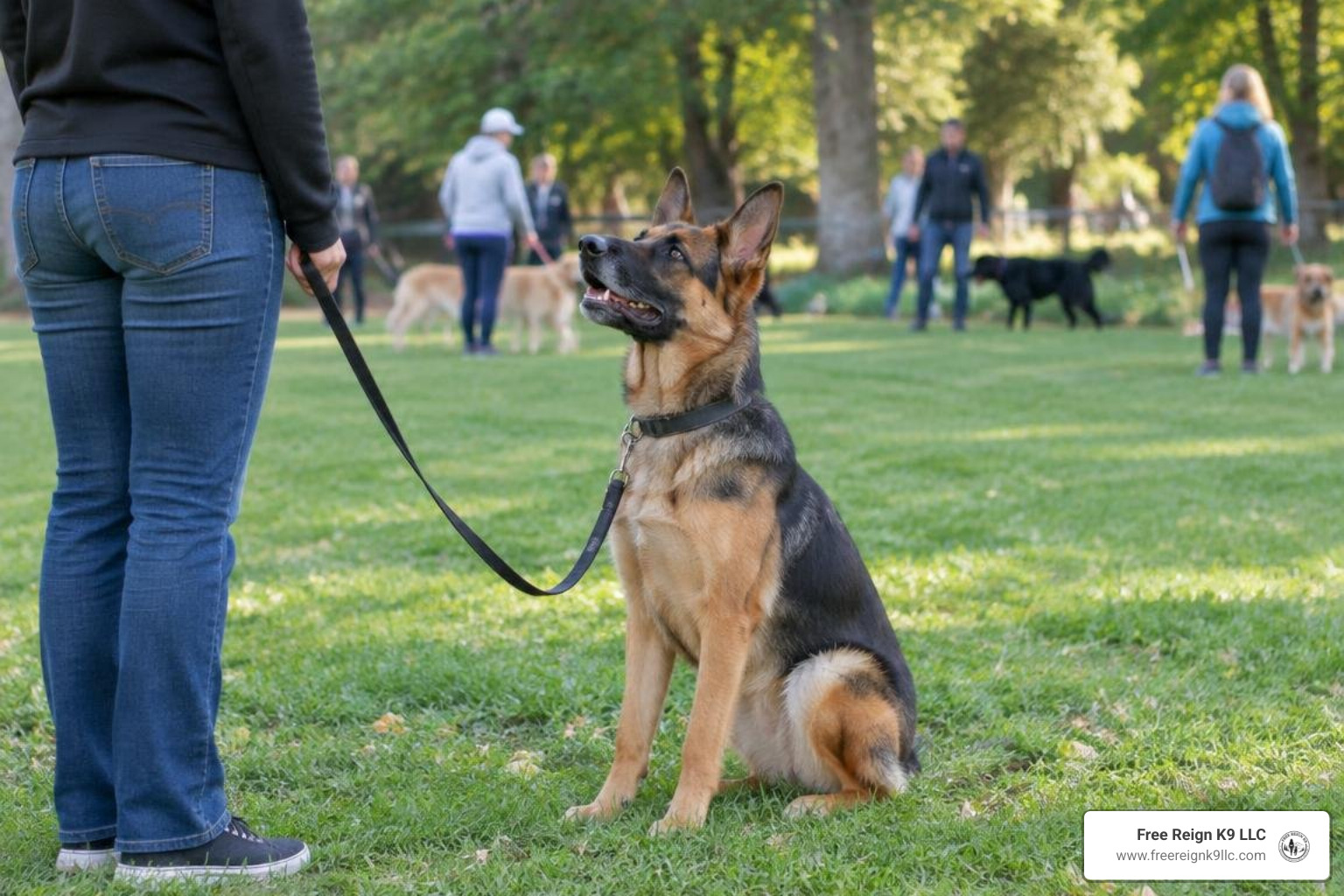
When your dog stays with us, they step into a structured daily routine designed to build clear communication, practical manners, and genuine confidence. Rather than getting a quick twenty-minute training session followed by hours of boredom, dogs in immersion programs experience consistent learning woven directly into their daily schedules.
From morning potty breaks and structured pack walks to targeted obedience sessions, every interaction teaches a dog how to navigate the world calmly. We focus on foundational cues such as reliable recalls, loose-leash walking, staying on a designated bed or mat, and waiting calmly at doorways. Along the way, dogs learn essential impulse control, discovering that calm focus earns them rewards, freedom, and outdoor fun.
Behavior modification is also a central piece of the puzzle. Whether a dog struggles with jumping on houseguests, pulling on the leash around town, or reacting to passing dogs, an immersion setup allows a professional to address these patterns in real time. We provide structured socialization in controlled environments, exposing dogs to new sounds, surfaces, and distractions at a pace that builds resilience. You can explore our full range of programs services to see how these daily routines lay the groundwork for long-term behavioral balance. For a broader understanding of how professional training fits into a dog's overall development, the American Kennel Club guide to dog training offers helpful context.

Comparing Immersion Training to Owner-Led Practice
Choosing between an immersion program and independent owner-led practice comes down to your schedule, your budget, and your dog's specific learning needs. Both paths can produce wonderful results, but they operate on very different timelines and require different investments of your personal energy.
Solo owner-led training puts you in the driver's seat immediately. You learn how to handle the leash and time your cues, then spend your personal time practicing at home. This path is low-cost upfront, but it puts the responsibility for practice, timing, and problem-solving on your shoulders. If work runs late or family life gets hectic, training momentum can stall quickly.
Immersion programs, on the other hand, shift the initial heavy lifting to a professional trainer. Your dog receives hundreds of clean, properly timed repetitions every single day, developing muscle memory and clear associations much faster than an owner practicing twenty minutes a night can typically achieve.
| Feature | Professional Immersion (Board and Train) | Independent Owner-Led Practice |
|---|---|---|
| Typical Cost | $2,800 to $5,000+ per multi-week stay | Minimal upfront cost for gear and treats |
| Time Investment for Owner | Low during stay, moderate during handoff and transition | High throughout, requiring daily home practice sessions |
| Repetition Speed | Hundreds of daily professional repetitions | 10 to 20 owner-led repetitions per day |
| Practice Around Distractions | Built directly into daily public outings | Limited to personal home and neighborhood sessions |
| Leash Handling and Cue Timing | Mastered first by a professional, then transferred to owner | Learned through solo trial and error by the owner |
| Best Suited For | Busy owners, complex behavioral issues, off-leash goals | Motivated handlers with ample free time and basic puppy manners |
The financial investment reflects this difference in labor and speed. While DIY home practice requires minimal financial outlay, a comprehensive two-week immersion program often ranges around $2,800, with longer three to four week programs scaling upward depending on the curriculum. For many busy families, paying for professional handling speed and learning efficiency is well worth the upfront cost, provided the program includes robust owner education at the finish line.
Key Advantages of Professional Board and Train
The primary benefit of an immersion program is accelerated progress. Professional trainers understand canine body language, when to reward a dog, and when to release leash pressure, helping dogs learn with less confusion. The time needed varies with your dog and their training goals, so ask how the program will measure progress and help you continue practicing at home.
Another major advantage is the depth of real-world exposure. Dogs learn how to hold a stay while watching wildlife, how to walk past other barking dogs without losing their composure, and how to relax in busy outdoor spaces. Our dog obedience training camps are specifically crafted to build reliable obedience in the outdoor environments Pacific Northwest pet owners love to explore.
Helping Your Dog Use Their Skills in New Places
While immersion training can build a strong foundation, dogs do not automatically use their new skills in every location. Where your dog practices makes a big difference. A dog who holds a three-minute down-stay in a quiet training room might get up when a squirrel darts across their own backyard.
To build reliability, dogs need practice in different places, gradually learning to respond when you are farther away, hold behaviors longer, and stay focused around distractions. If a program only trains your dog inside a kennel facility, they may struggle when they return home to familiar distractions like the doorbell, the neighborhood mail carrier, or the kitchen table. Look for programs that include practice in parks, urban streets, and neighborhood settings to help your dog use their new skills in everyday life.
Evaluating Training Philosophy, Safety, and Transparency
Not all training programs are created equal, which makes thorough research vital. When you send your dog away for multiple weeks, you need complete clarity regarding their daily living conditions, training equipment, and physical well-being.

Ethical trainers prioritize humane, balanced reinforcement methods that build confidence rather than fear. We believe in clear communication, fair boundaries, and making sure the dog genuinely understands what is expected before introducing corrections or tools. Avoid trainers who rely on harsh, punishment-based methods or heavy-handed tools to suppress symptoms quickly. Suppressing fear or reactivity through intimidation creates long-term fallout, often leaving dogs more anxious, shut down, or reactive once they return home.
Transparency is non-negotiable. Look for providers who welcome in-person facility tours, supply regular video updates of your dog working in real time, and closely track daily health metrics like appetite, water intake, and body weight.
Selecting an Ethical Board and Train Facility
When researching potential facilities, keep your eyes open for specific warning signs. A quality provider should always be willing to show you where your dog will sleep, exercise, and train.
- Refusal to allow facility tours: If a facility hides behind closed doors or refuses to let you see their boarding setup, look elsewhere.
- Guarantees of a 100% fixed dog: Dogs are living, thinking animals, not robots. Any trainer promising a permanent, effortless cure without requiring your ongoing involvement is making unrealistic claims.
- Lack of progress videos: You should be able to see clear video evidence of your dog learning happily, not just polished promotional clips of other dogs.
- Dramatic weight loss or unmonitored stress: Reputable kennels track daily food intake and health. If a dog refuses food due to stress, the trainer should communicate this immediately rather than allowing the dog to return home noticeably underweight.
- No structured handoff training: A program that drops your dog off at your doorstep without several hours of hands-on coaching is setting you both up for frustration.
If your dog needs a safe, routine-driven environment while you travel, our programs services provide structured boarding options that maintain clear boundaries and daily physical enrichment.
The Critical Role of Owner Follow-Through
No matter how skilled the professional trainer is, the lasting success of any immersion program depends entirely on the family at home. A dog does not simply return from school with a permanent software update. They are constantly reading the humans on the other end of the leash.

Studies and field experience show that improvements from immersion training rarely last past six months if the household slips back into old habits. Dogs are brilliant opportunists; if they learn that jumping or pulling is permitted in your living room, they will quickly abandon their newly learned manners. Handover sessions, follow-up private lessons, and household consistency are what turn a successful two-week camp into a lifetime of reliable freedom.
Frequently Asked Questions About Dog Training Programs
How much does professional immersion training typically cost?
Most reputable board and train programs range between $2,800 and $5,000 depending on the length of stay, the severity of behavioral challenges, and the level of post-stay support provided. This cost covers round-the-clock boarding, daily feeding and health monitoring, multiple daily one-on-one training sessions, public field trips, and detailed owner transition lessons. When compared to the months of personal trial and error required by owner-led training, many owners find the accelerated progress and professional expertise well worth the financial investment.
Can intensive immersion training fix severe behavioral issues permanently?
Immersion programs can help address complex behaviors like fear-driven reactions such as barking or lunging, guarding food or toys, or severe leash pulling. A professional can work in a controlled setting to help your dog practice calmer responses and impulse control. However, no program can promise a permanent fix. Once your dog returns home, you will need to maintain consistent routines, manage situations that bring on unwanted behavior, and practice the handling skills your trainer teaches you. Ask for guidance on the safe, proper use of any training tools recommended for your dog and situation.
What questions should I ask before enrolling my dog?
Before trusting a facility with your dog, ask detailed questions about their daily routines, safety protocols, and training methods. Find out where the dogs sleep, how often they get outside, how medical emergencies are handled, and what tools the trainer uses. To help you prepare your list of questions, browse our frequently asked questions dog training in seattle guide for additional insights on local standards and training philosophies.
Making the Best Decision for Your Dog's Future
Choosing the right training path is all about matching your dog's personality and your family's lifestyle with a proven, humane approach. Whether you want a companion who walks quietly beside you through your neighborhood, settles peacefully at an outdoor cafe, or explores off-leash Pacific Northwest trails with reliable recall, the right program can transform your relationship with your dog.
At Free Reign K9 LLC, our philosophy centers on freedom through balanced training. We focus on clear communication, healthy engagement, and practical skills that hold up in real-world environments across Seattle, Tacoma, and surrounding communities. If you are ready to give your dog a solid behavioral foundation backed by dedicated owner coaching, explore our comprehensive training options today to find the perfect fit for your canine companion.